


B cells and antibody play critical roles in the immediate defense of disseminated infection by West Nile encephalitis virus
- PMID: 12551996
- PMCID: PMC141119
- DOI: 10.1128/jvi.77.4.2578-2586.2003
B cells and antibody play critical roles in the immediate defense of disseminated infection by West Nile encephalitis virus
Abstract
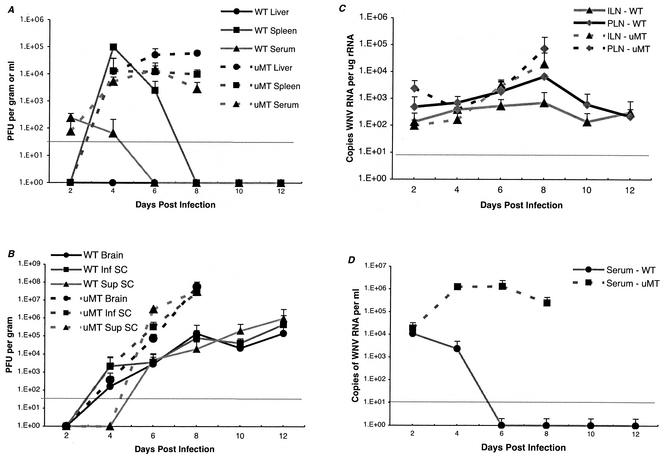
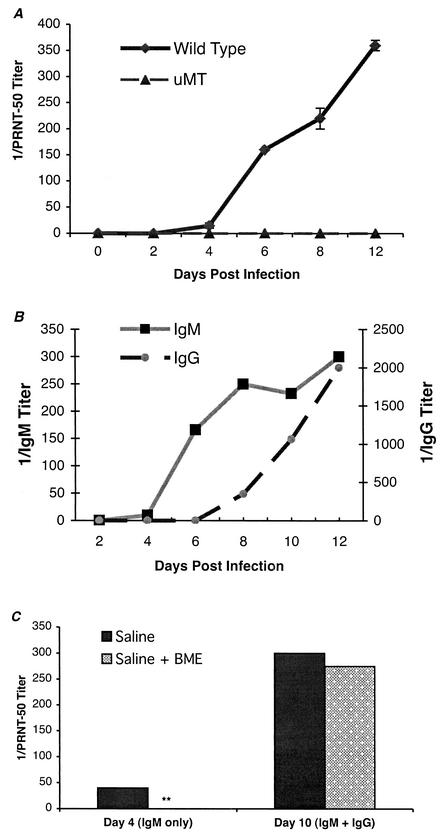
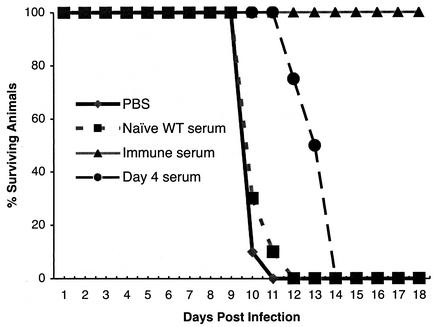
West Nile virus (WNV) causes severe central nervous system (CNS) infection primarily in humans who are immunocompromised or elderly. In this study, we addressed the mechanism by which the immune system limits dissemination of WNV infection by infecting wild-type and immunodeficient inbred C57BL/6J mice with a low-passage WNV isolate from the recent epidemic in New York state. Wild-type mice replicated virus extraneuronally in the draining lymph nodes and spleen during the first 4 days of infection. Subsequently, virus spread to the spinal cord and the brain at virtually the same time. Congenic mice that were genetically deficient in B cells and antibody (microMT mice) developed increased CNS viral burdens and were vulnerable to lethal infection at low doses of virus. Notably, an approximately 500-fold difference in serum viral load was detected in micro MT mice as early as 4 days after infection, a point in the infection when low levels of neutralizing immunoglobulin M antibody were detected in wild-type mice. Passive transfer of heat-inactivated serum from infected and immune wild-type mice protected micro MT mice against morbidity and mortality. We conclude that antibodies and B cells play a critical early role in the defense against disseminated infection by WNV.
Figures
References
-
- Asnis, D. S., R. Conetta, A. A. Teixeira, G. Waldman, and B. A. Sampson. 2000. The West Nile virus outbreak of 1999 in New York: the Flushing Hospital experience. Clin. Infect. Dis. 30:413-418. - PubMed
-
- Bachmann, M. F., U. Kalinke, A. Althage, G. Freer, C. Burkhart, H. Roost, M. Aguet, H. Hengartner, and R. M. Zinkernagel. 1997. The role of antibody concentration and avidity in antiviral protection. Science 276:2024-2027. - PubMed
-
- Beasley, D. W., L. Li, M. T. Suderman, and A. D. Barrett. 2002. Mouse neuroinvasive phenotype of West Nile virus strains varies depending upon virus genotype. Virology 296:17-23. - PubMed
-
- Ben-Nathan, D., I. Huitinga, S. Lustig, N. van Rooijen, and D. Kobiler. 1996. West Nile virus neuroinvasion and encephalitis induced by macrophage depletion in mice. Arch. Virol. 141:459-469. - PubMed
Publication types
MeSH terms
Substances
Grants and funding
LinkOut - more resources
Full Text Sources
Other Literature Sources
Medical
