


Effect of atropine on the biomechanical properties of the oesophageal wall in humans
- PMID: 12562937
- PMCID: PMC2342665
- DOI: 10.1113/jphysiol.2002.028795
Effect of atropine on the biomechanical properties of the oesophageal wall in humans
Abstract
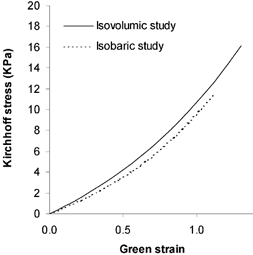
Recently, we reported a novel ultrasound technique to assess biomechanical properties of the oesophagus in human subjects. In the present study, we use the technique, in combination with atropine, to determine the active and passive biomechanical properties of the oesophagus in normal healthy humans. A manometric catheter equipped with a high-compliance bag and a high-frequency intraluminal ultrasonography probe was used to record pressure and oesophageal geometry. Oesophageal distensions with either isovolumic (5-20 ml water) or with isobaric (10-60 mmHg) technique were performed. Intra-bag pressure and ultrasound images of the oesophagus were recorded simultaneously. Following injection of atropine (15 microg kg-1, I.V.), the oesophageal distensions were repeated. The oesophageal wall compliance, circumferential wall tension, stress, strain and elastic modulus were calculated. Atropine resulted in an increase in the oesophageal wall compliance during isobaric distension, but no change in compliance was observed during isovolumic distension. The stress-strain relationship was found to be linear during both types of distension, before as well as after atropine. The Young's modulus, which is the slope of a linear stress-strain relationship, was significantly higher after atropine in the isovolumic study but not in the isobaric study. The stress-strain relationship of the active component (muscle contraction) was different during isovolumic and isobaric distensions but the passive components were similar. The passive and active stress-strain relationships of the human oesophagus resemble those of other soft biological tissues. Furthermore, the method of oesophageal distension has significant influence on the active but not the passive biomechanical properties due to a strain-rate effect.
Figures


References
-
- Assentoft JE, Gregersen H, O'Brien WD. Determination of biomechanical properties in guinea pig oesophagus by means of high frequency ultrasound and impedance planimetry. Dig Dis Sci. 2000;45:1260–1266. - PubMed
-
- Barish CF, Richter JE, Blackwell JN, Castell DO. Pharmacologic testing of oesophageal muscle wall response to bag dilatation in primates. Gastroenterology. 1984;86:1020.
-
- Cox RH. Anisotropic properties of the canine carotid artery in vitro. J Biomech. 1975;8:293–300. - PubMed
-
- Dobrin PB. Biaxial anisotropy of dog carotid artery: estimation of circumferential elastic modulus. J Biomech. 1986;19:351–358. - PubMed
-
- Fung YC. Biomechanics. New York: Springer Verlag; 1993.
MeSH terms
Substances
LinkOut - more resources
Full Text Sources
Other Literature Sources
