


Prevention of arthritis by interleukin 10-producing B cells
- PMID: 12591906
- PMCID: PMC2193864
- DOI: 10.1084/jem.20021293
Prevention of arthritis by interleukin 10-producing B cells
Abstract
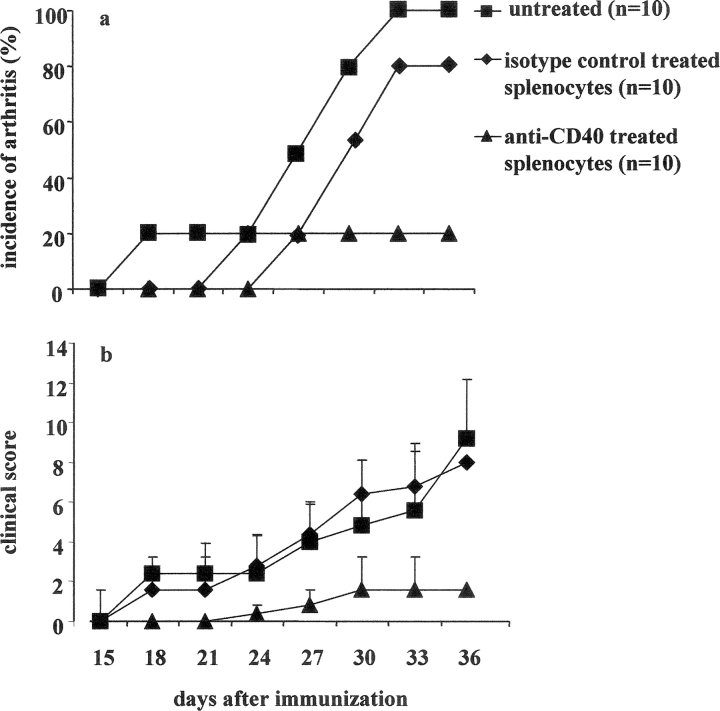
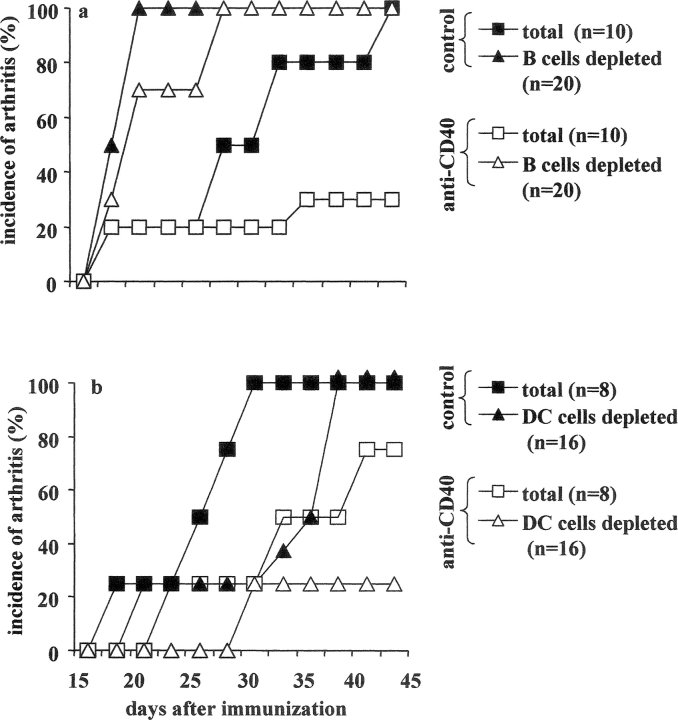
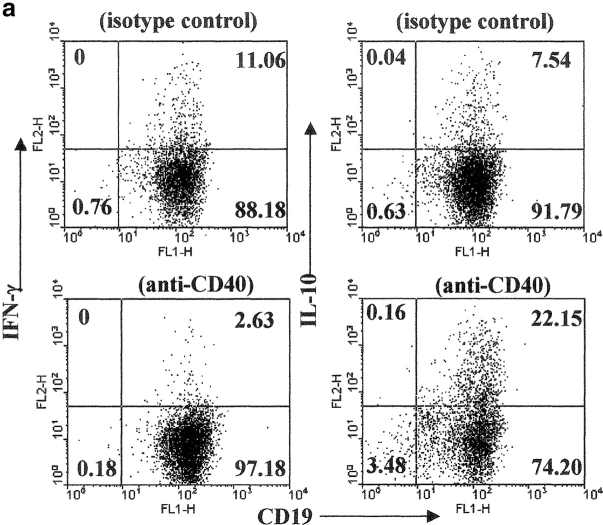
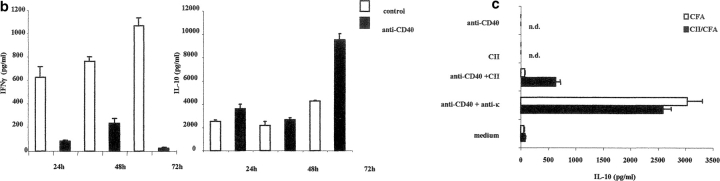
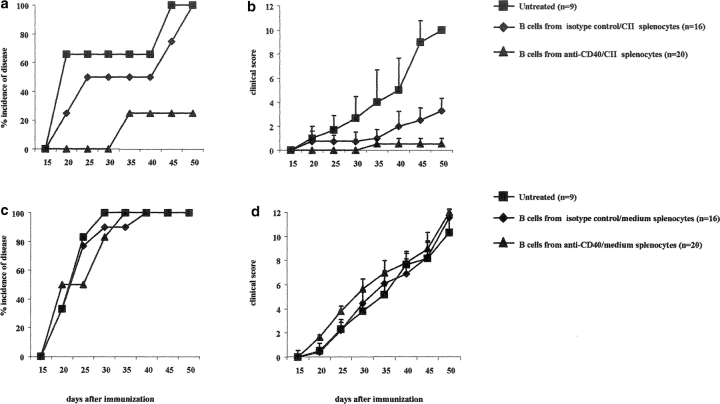
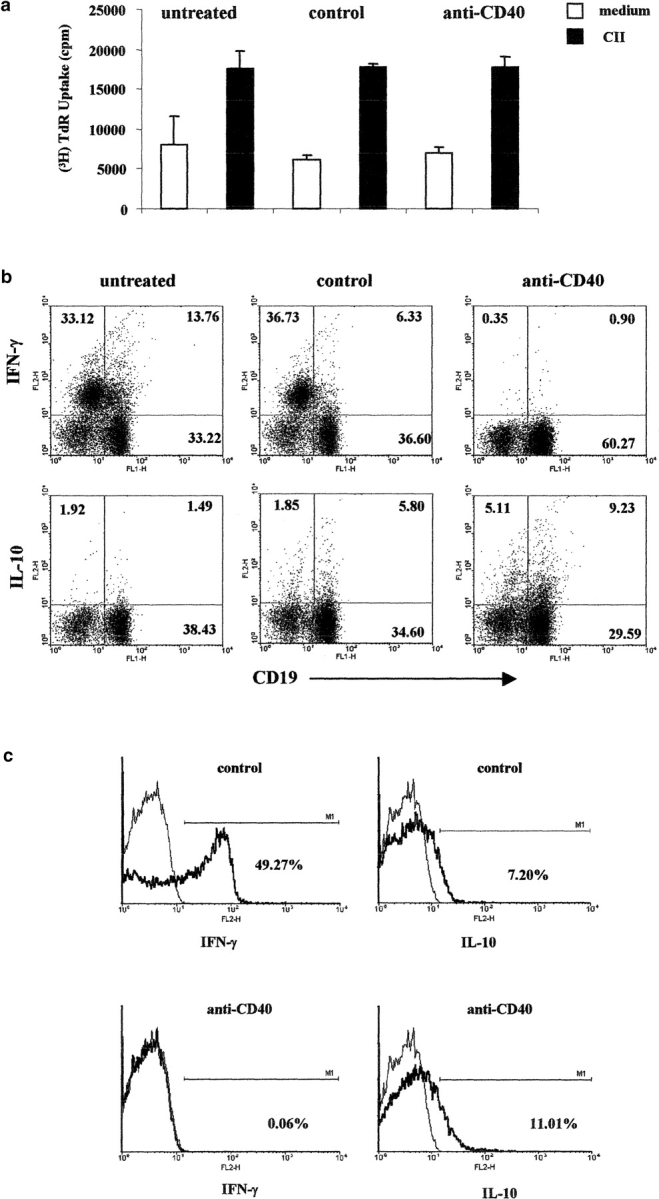
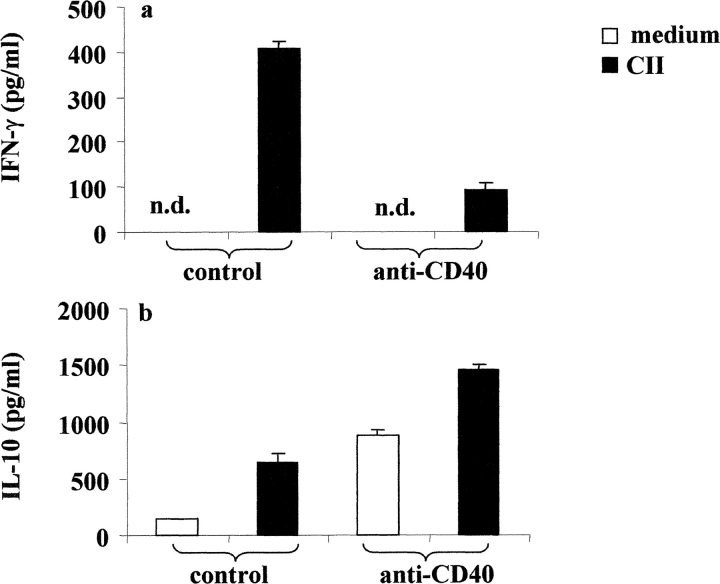
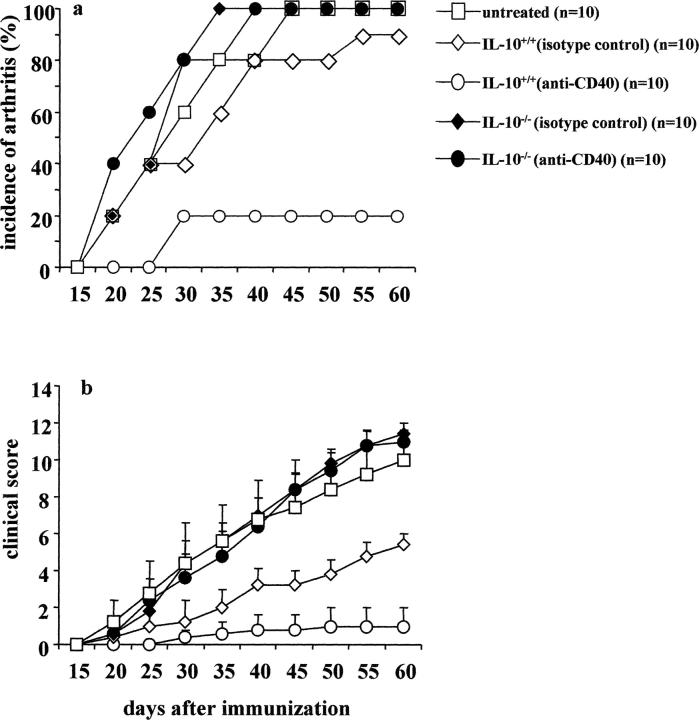
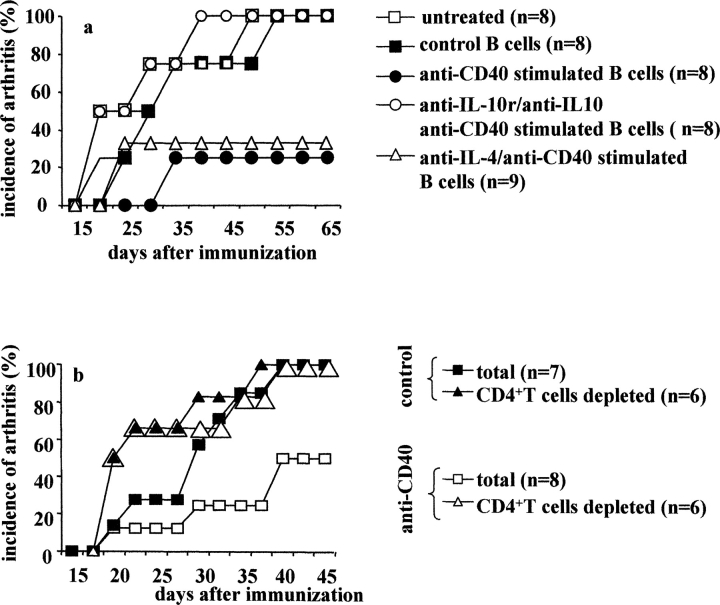
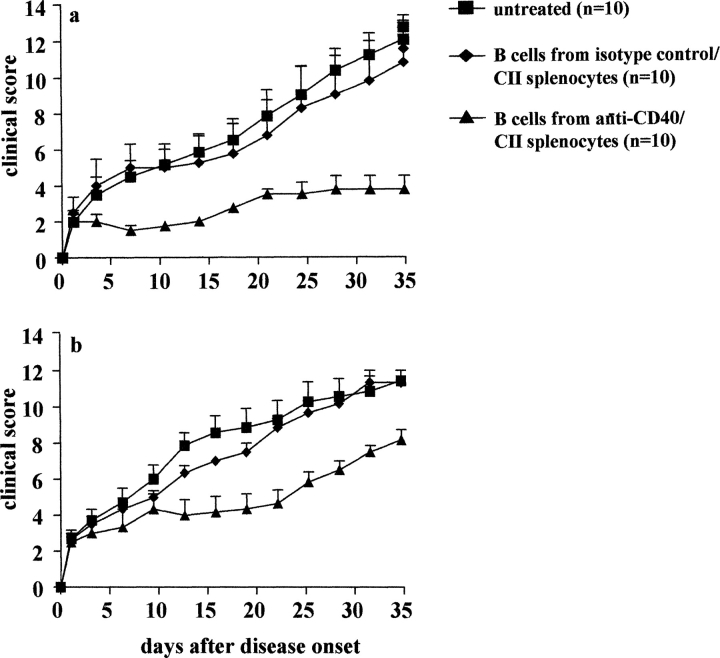
In this study we have shown that activation of arthritogenic splenocytes with antigen and agonistic anti-CD40 gives raise to a B cell population that produce high levels of interleukin (IL)-10 and low levels of interferon (IFN)-gamma. Transfer of these B cells into DBA/1-TcR-beta-Tg mice, immunized with bovine collagen (CII) emulsified in complete Freund's adjuvant inhibited T helper type 1 differentiation, prevented arthritis development, and was also effective in ameliorating established disease. IL-10 is essential for the regulatory function of this subset of B cells, as the B cells population isolated from IL-10 knockout mice failed to mediate this protective function. Furthermore, B cells isolated from arthritogenic splenocytes treated in vitro with anti-IL-10/anti-IL-10R were unable to protect recipient mice from developing arthritis. Our results suggest a new role of a subset of B cells in controlling T cell differentiation and autoimmune disorders.
Figures
References
-
- Banchereau, J., F. Bazan, D. Blanchard, F. Briere, J.P. Galizzi, C. van Kooten, Y.J. Liu, F. Rousset, and S. Saeland. 1994. The CD40 antigen and its ligand. Annu. Rev. Immunol. 12:881–922. - PubMed
-
- Liu, Y.J., D.E. Joshua, G.T. Williams, C.A. Smith, J. Gordon, and I.C. MacLennan. 1989. Mechanism of antigen-driven selection in germinal centres. Nature. 342:929–931. - PubMed
Publication types
MeSH terms
Substances
Grants and funding
LinkOut - more resources
Full Text Sources
Other Literature Sources
Medical
Research Materials
Miscellaneous
