


Clinical implications of quantitative real-time RT-PCR analysis of hTERT gene expression in human gliomas
- PMID: 12592364
- PMCID: PMC2377176
- DOI: 10.1038/sj.bjc.6600754
Clinical implications of quantitative real-time RT-PCR analysis of hTERT gene expression in human gliomas
Abstract
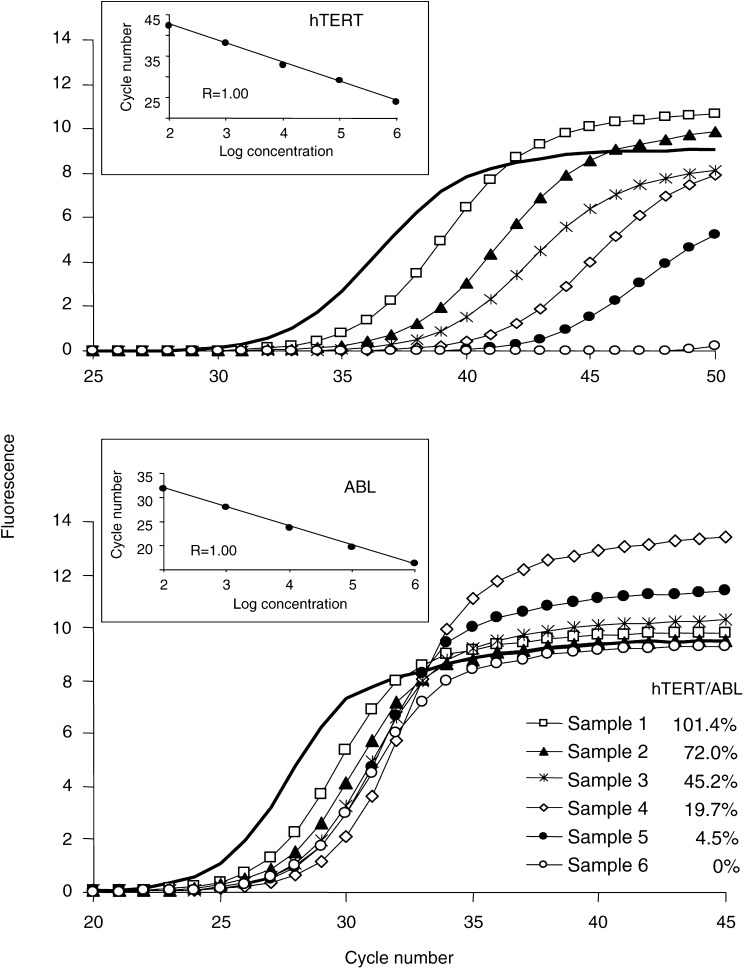
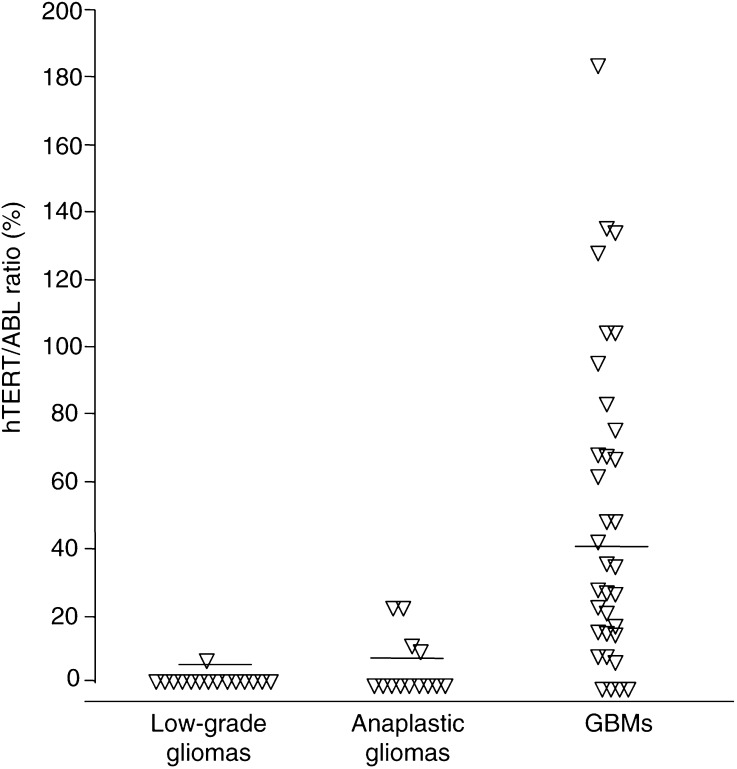
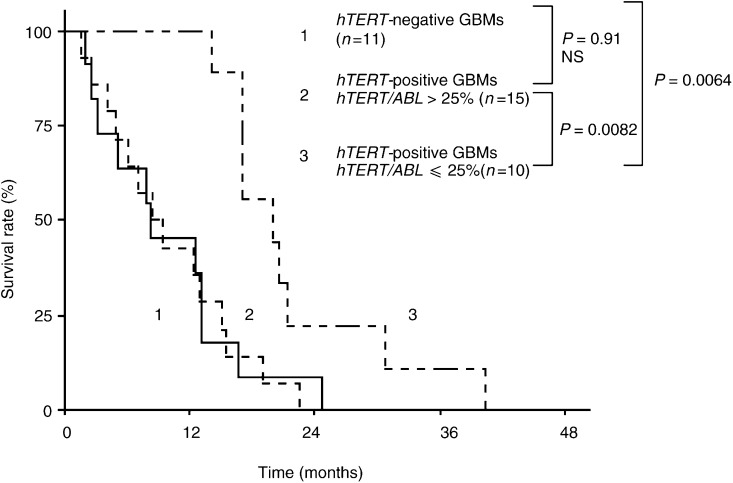
The presence of telomerase activity in a glioma may be a predictor of its malignant potential. Activation of telomerase is regulated at the transcriptional level of the human telomerase reverse transcriptase (hTERT). Here, we evaluated whether the amount of hTERT mRNA provides a molecular marker of glioma malignancy that would have clinical utility. We used a real-time RT-PCR to assess the number of hTERT transcripts in primary tumour samples derived from 70 glioma patients. Results were standardised by quantifying the number of ABL transcripts as internal control and expressed as hTERT/ABL ratio. The percentage of patients with detectable hTERT mRNA markedly increased with enhanced malignancy: low-grade gliomas expressed hTERT in one out of 14 cases (7.1%), anaplastic gliomas in four out of 13 cases (30.8%) and glioblastoma multiforme (GBM) tumours in 30 out of 43 cases (69.8%). The mean hTERT/ABL ratio was significantly higher in GBMs than in non-GBMs. Subdividing hTERT/ABL ratios as low (< pr = 25%) and high (>25%), we found that the overall survival among hTERT-positive GBMs was significantly worse in high hTERT expressors than in low hTERT expressors (P=0.0082). We conclude that the amount of hTERT mRNA may represent a diagnostic and prognostic indicator for GBM patients.
Figures
References
-
- Bamber D (1975) The area above the ordinal dominance graph and the area below the receiver operating characteristic graph. J Math Psychol 12: 387–395
-
- Bryan TM, Reddel RR (1997) Telomere dynamics and telomerase activity in in vitro immortalised human cells. Eur J Cancer 33: 767–773 - PubMed
-
- Buonamici S, Ottaviani E, Testoni N, Montefusco V, Visani G, Bonifazi F, Amabile M, Terragna C, Ruggeri D, Piccaluga PP, Isidori A, Malagola M, Baccarani M, Tura S, Martinelli G (2002) Real-time quantitation of minimal residual disease in inv(16)-positive acute myeloid leukemia may indicate risk for clinical relapse and may identify patients in a curable state. Blood 99: 443–449 - PubMed
-
- Chakravarti A, Delaney MA, Noll E, Black PM, Loeffler JS, Muzikansky A, Dyson NJ (2001) Prognostic and pathologic significance of quantitative protein expression profiling in human gliomas. Clin Cancer Res 7: 2387–2395 - PubMed
MeSH terms
Substances
LinkOut - more resources
Full Text Sources
Research Materials
Miscellaneous
