


Localization of DNA polymerases eta and iota to the replication machinery is tightly co-ordinated in human cells
- PMID: 12606586
- PMCID: PMC150329
- DOI: 10.1093/emboj/cdf618
Localization of DNA polymerases eta and iota to the replication machinery is tightly co-ordinated in human cells
Abstract
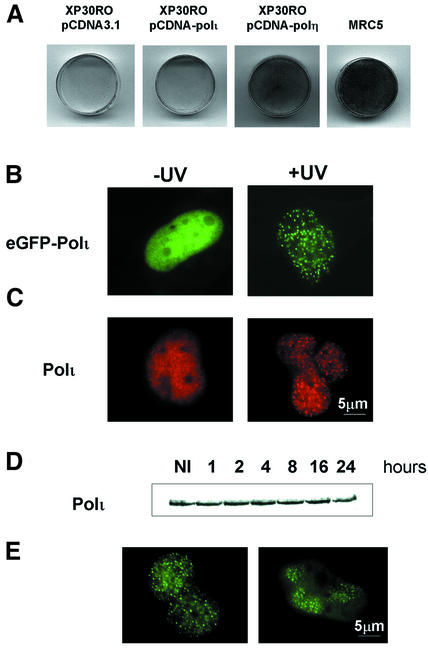
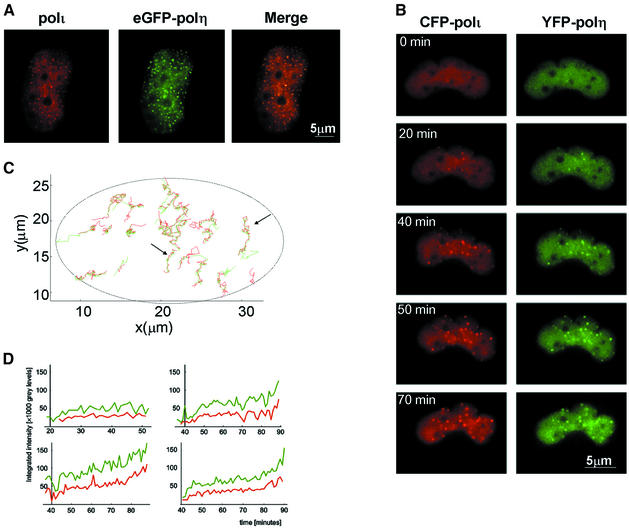
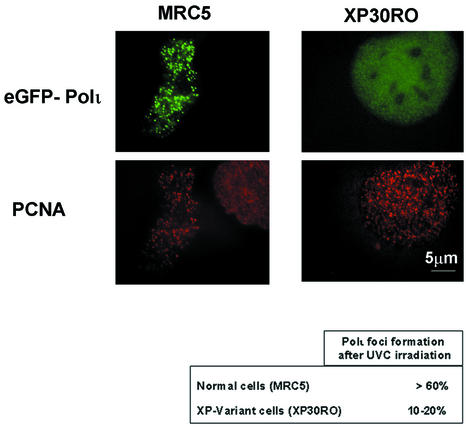
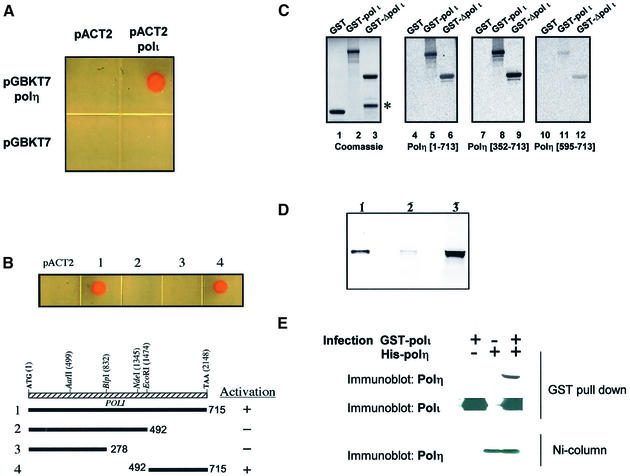
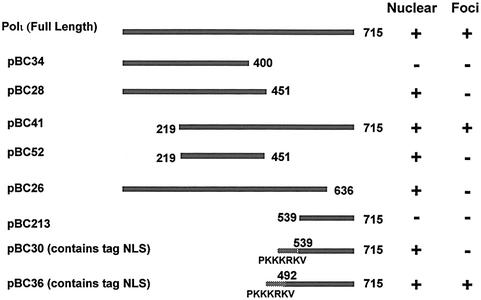
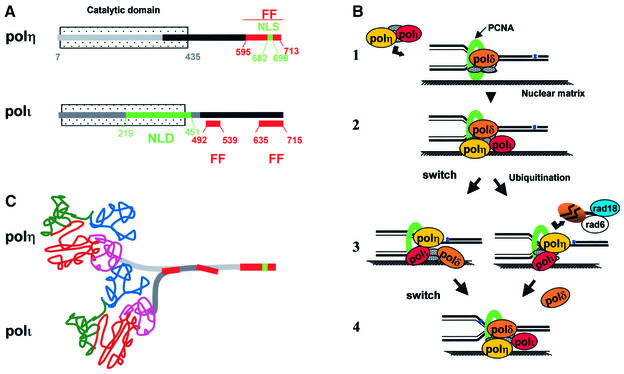
Y-family DNA polymerases can replicate past a variety of damaged bases in vitro but, with the exception of DNA polymerase eta (poleta), which is defective in xeroderma pigmentosum variants, there is little information on the functions of these polymerases in vivo. Here, we show that DNA polymerase iota (poliota), like poleta, associates with the replication machinery and accumulates at stalled replication forks following DNA-damaging treatment. We show that poleta and poliota foci form with identical kinetics and spatial distributions, suggesting that localization of these two polymerases is tightly co-ordinated within the nucleus. Furthermore, localization of poliota in replication foci is largely dependent on the presence of poleta. Using several different approaches, we demonstrate that poleta and poliota interact with each other physically and that the C-terminal 224 amino acids of poliota are sufficient for both the interaction with poleta and accumulation in replication foci. Our results provide strong evidence that poleta targets poliota to the replication machinery, where it may play a general role in maintaining genome integrity as well as participating in translesion DNA synthesis.
Figures
Corrected and republished from
-
Localization of DNA polymerases eta and iota to the replication machinery is tightly co-ordinated in human cells.EMBO J. 2002 Nov 15;21(22):6246-56. doi: 10.1093/emboj/cdf618. EMBO J. 2002. Corrected and republished in: EMBO J. 2003 Mar 3;22(5):1223-33. doi: 10.1093/emboj/cdf618. PMID: 12426396 Free PMC article. Corrected and republished.
References
-
- Arlett C.F., Harcourt,S.A. and Broughton,B.C. (1975) The influence of caffeine on cell survival in excision-proficient and excision-deficient xeroderma pigmentosum and normal human cell strains following ultraviolet light irradiation. Mutat. Res., 33, 341–346. - PubMed
-
- Broomfield S., Hryciw,T. and Xiao,W. (2001) DNA postreplication repair and mutagenesis in Saccharomyces cerevisiae. Mutat. Res., 486, 167–184. - PubMed
-
- Cleaver J.E. et al. (1999) Increased ultraviolet sensitivity and chromosomal instability related to p53 function in the xeroderma pigmentosum variant. Cancer Res., 59, 1102–1108. - PubMed
-
- Friedberg E.C., Wagner,R. and Radman,M. (2002) Specialized DNA polymerases, cellular survival and the genesis of mutations. Science, 296, 1627–1630. - PubMed
-
- Goodman M.F. (2002) Error-prone repair DNA polymerases in prokaryotes and eukaryotes. Annu. Rev. Biochem., 71, 17–50. - PubMed
Publication types
MeSH terms
Substances
LinkOut - more resources
Full Text Sources
Other Literature Sources
Molecular Biology Databases
Miscellaneous
