


Cholesterol-induced protein sorting: an analysis of energetic feasibility
- PMID: 12609909
- PMCID: PMC1302776
- DOI: 10.1016/S0006-3495(03)75015-2
Cholesterol-induced protein sorting: an analysis of energetic feasibility
Abstract
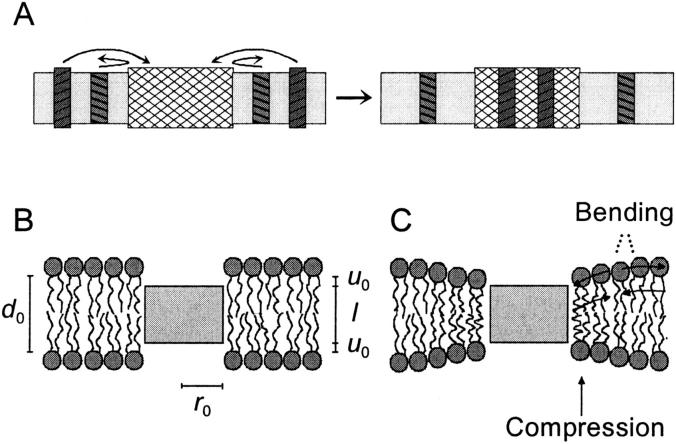
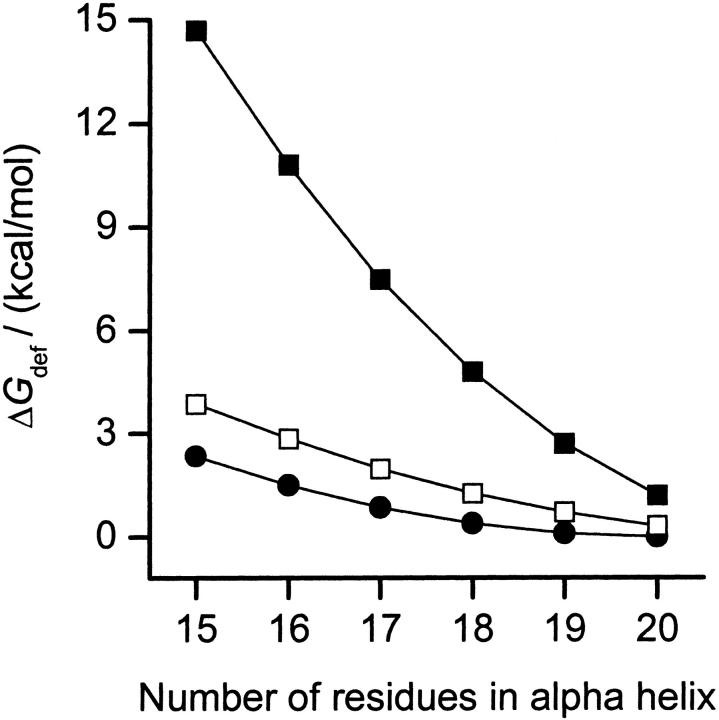
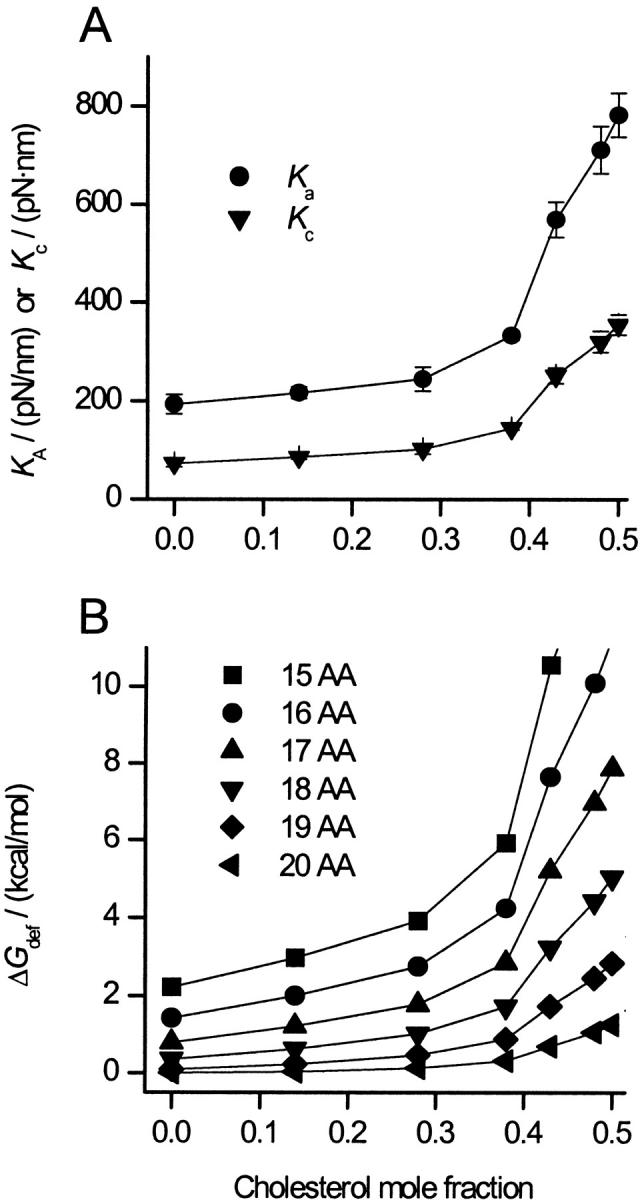
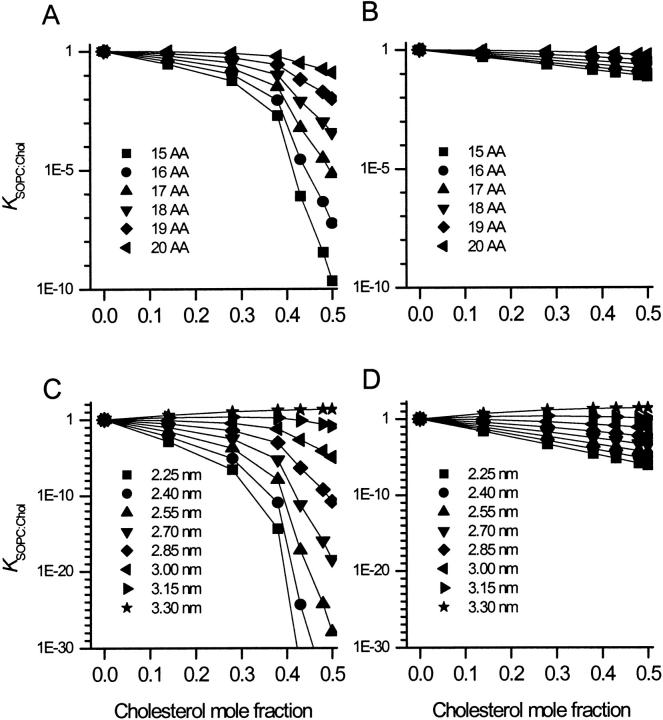
The mechanism(s) underlying the sorting of integral membrane proteins between the Golgi complex and the plasma membrane remain uncertain because no specific Golgi retention signal has been found. Moreover one can alter a protein's eventual localization simply by altering the length of its transmembrane domain (TMD). M. S. Bretscher and S. Munro (SCIENCE: 261:1280-1281, 1993) therefore proposed a physical sorting mechanism based on the hydrophobic match between the proteins' TMD and the bilayer thickness, in which cholesterol would regulate protein sorting by increasing the lipid bilayer thickness. In this model, Golgi proteins with short TMDs would be excluded from cholesterol-enriched domains (lipid rafts) that are incorporated into transport vesicles destined for the plasma membrane. Although attractive, this model remains unproven. We therefore evaluated the energetic feasibility of a cholesterol-dependent sorting process using the theory of elastic liquid crystal deformations. We show that the distribution of proteins between cholesterol-enriched and cholesterol-poor bilayer domains can be regulated by cholesterol-induced changes in the bilayer physical properties. Changes in bilayer thickness per se, however, have only a modest effect on sorting; the major effect arises because cholesterol changes also the bilayer material properties, which augments the energetic penalty for incorporating short TMDs into cholesterol-enriched domains. We conclude that cholesterol-induced changes in the bilayer physical properties allow for effective and accurate sorting which will be important generally for protein partitioning between different membrane domains.
Figures
References
-
- Andersen, O. S., C. Nielsen, A. M. Maer, J. A. Lundbæk, M. Goulian, and R. E. Koeppe, II. 1998. Gramicidin channels: molecular force transducers in lipid bilayers. Biol. Skr. Dan. Vid. Selsk. 49:75–82.
-
- Andersen, O. S., D. B. Sawyer, and R. E. Koeppe, II. 1992. Modulation of channel function by the host bilayer. In Biomembrane Structure and Function. B. Gaber and K.R.K. Easwaran, editors. Adenine Press, Schenectady. pp 227–244.
-
- Bloom, M., E. Evans, and O. G. Mouritsen. 1991. Physical properties of the fluid lipid-bilayer component of cell membranes: a perspective. Q. Rev. Biophys. 24:293–397. - PubMed
Publication types
MeSH terms
Substances
Grants and funding
LinkOut - more resources
Full Text Sources
Medical
