


Identifying barriers and tailoring interventions to improve the management of urinary tract infections and sore throat: a pragmatic study using qualitative methods
- PMID: 12622873
- PMCID: PMC150569
- DOI: 10.1186/1472-6963-3-3
Identifying barriers and tailoring interventions to improve the management of urinary tract infections and sore throat: a pragmatic study using qualitative methods
Abstract
Background: Theories of behaviour change indicate that an analysis of factors that facilitate or impede change is helpful when trying to influence professional practice. The aim of this study was to identify barriers to implementing evidence-based guidelines for urinary tract infection and sore throat in general practice in Norway, and to tailor interventions to address these barriers.
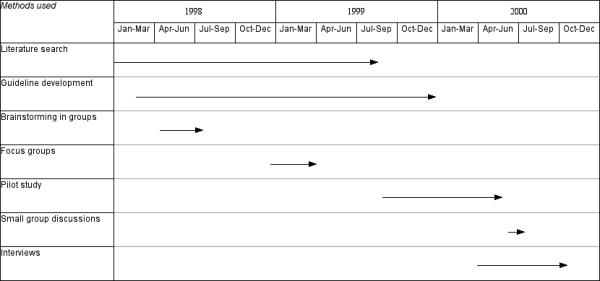
Methods: We used a checklist to identify barriers and possible interventions to address these in an iterative process that included a review of the literature, brainstorming, focus groups, a pilot study, small group discussions and interviews.
Results: We identified at least one barrier for each category. Both guidelines recommended increased use of telephone consultations and reduced use of laboratory tests, and the barriers and the interventions were similar for the two guidelines. The complexity of changing routines involving patients, general practitioners and general practitioner assistants, loss of income with telephone consultations, fear of overlooking serious disease, perceived patient expectations and lack of knowledge about the evidence for the guidelines were the most prominent barriers. The interventions that were tailored to address these barriers included support for change processes in the practices, increasing the fee for telephone consultations, patient information leaflets and computer-based decision support and reminders.
Conclusion: A systematic approach using qualitative methods helped identify barriers and generate ideas for tailoring interventions to support the implementation of guidelines for the management of urinary tract infections and sore throat. Lack of resources limited our ability to address all of the barriers adequately.
Figures
References
-
- Wensing M, Laurant M, Hulscher M, Grol R. Methods for identifying barriers and facilitators for implementation. In: Thorsen T, Mäkelä M, editor. In Changing Professional Practice Theory and Practice of Clinical Guidelines Implementation. Copenhagen: DSI; 1999. pp. 119–132.
Publication types
MeSH terms
LinkOut - more resources
Full Text Sources
Medical
