


Molecular characterization of gentamicin-resistant Enterococci in the United States: evidence of spread from animals to humans through food
- PMID: 12624037
- PMCID: PMC150269
- DOI: 10.1128/JCM.41.3.1109-1113.2003
Molecular characterization of gentamicin-resistant Enterococci in the United States: evidence of spread from animals to humans through food
Abstract
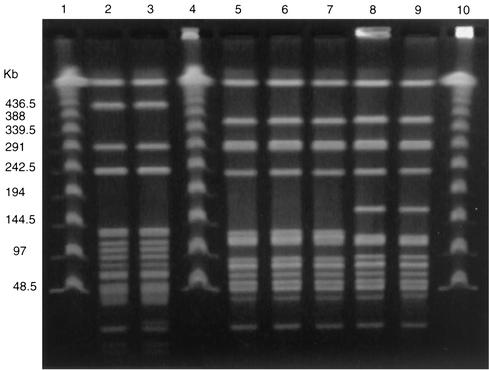
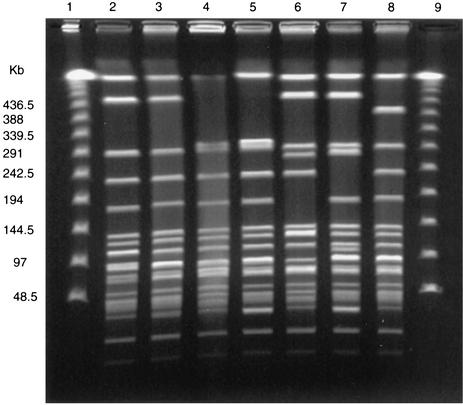
We evaluated the molecular mechanism for resistance of 360 enterococci for which the gentamicin MICs were >/=128 micro g/ml. The aac(6')-Ie-aph(2")-Ia, aph(2")-Ic, and aph(2")-Id genes were identified by PCR in isolates from animals, food, and humans. The aph(2")-Ib gene was not identified in any of the isolates. Two Enterococcus faecalis isolates (MICs > 1,024 micro g/ml) from animals failed to generate a PCR product for any of the genes tested and likely contain a new unidentified aminoglycoside resistance gene. Pulsed-field gel electrophoresis (PFGE) analysis showed a diversity of strains. However, 1 human and 18 pork E. faecalis isolates from Michigan with the aac(6')-Ie-aph(2")-Ia gene had related PFGE patterns and 2 E. faecalis isolates from Oregon (1 human and 1 grocery store chicken isolate) had indistinguishable PFGE patterns. We found that when a gentamicin-resistant gene was present in resistant enterococci from animals, that gene was also present in enterococci isolated from food products of the same animal species. Although these data indicate much diversity among gentamicin-resistant enterococci, the data also suggest similarities in gentamicin resistance among enterococci isolated from humans, retail food, and farm animals from geographically diverse areas and provide evidence of the spread of gentamicin-resistant enterococci from animals to humans through the food supply.
Figures
References
-
- Aarestrup, F. M. 1995. Occurrence of glycopeptide resistance among Enterococcus faecium isolates from conventional and ecological poultry farms. Microb. Drug. Resist. 1:255-257. - PubMed
-
- Aarestrup, F. M., P. Ahrens, M. Madsen, L. V. Pallesen, R. L. Poulsen, and H. Westh. 1996. Glycopeptide susceptibility among Danish Enterococcus faecium and Enterococcus faecalis isolates of animal and human origin and PCR identification of genes within the VanA cluster. Antimicrob. Agents Chemother. 40:1938-1940. - PMC - PubMed
-
- Bates, J., J. Z. Jordens, and D. T. Griffiths. 1994. Farm animals as a putative reservoir for vancomycin-resistant enterococcal infection in man. J. Antimicrob. Chemother. 34:507-514. - PubMed
-
- Bates, J., J. Z. Jordens, and J. B. Selkon. 1993. Evidence for an animal origin of vancomycin-resistant enterococci. Lancet 342:490-491. - PubMed
Publication types
MeSH terms
Substances
Grants and funding
LinkOut - more resources
Full Text Sources
