COX-2 dependent inflammation increases spinal Fos expression during rodent postoperative ileus
- PMID: 12631664
- PMCID: PMC1773580
- DOI: 10.1136/gut.52.4.527
COX-2 dependent inflammation increases spinal Fos expression during rodent postoperative ileus
Abstract
Background and aims: Cyclooxygenase 2 (COX-2) and prostaglandins (PGs) participate in the pathogenesis of inflammatory postoperative ileus. We sought to determine whether the emerging neuronal modulator COX-2 plays a significant role in primary afferent activation during postoperative ileus using spinal Fos expression as a marker.
Methods: Rats, and COX-2(+/+) and COX-2(-/-) mice underwent simple intestinal manipulation. The effect of intestinal manipulation on Fos immunoreactivity (IR) in the L(5)-S(1) spinal cord, in situ circumference, and postoperative leucocytic infiltrate of the intestinal muscularis was measured. Postoperative PGE(2) production was measured in peritoneal lavage fluid. The dependence of these parameters on COX-2 was studied in pharmacological (DFU, Merck- Frosst, selective COX-2 inhibitor) and genetic (COX-2(-/-) mice) models.
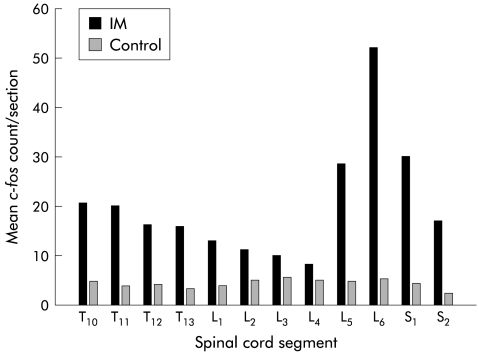
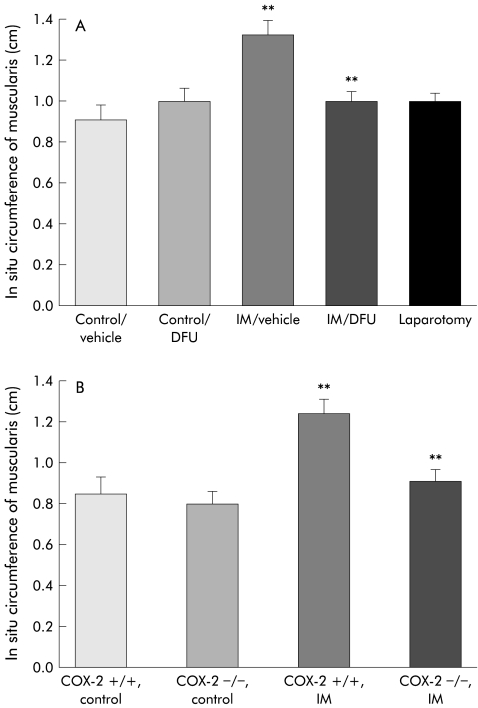
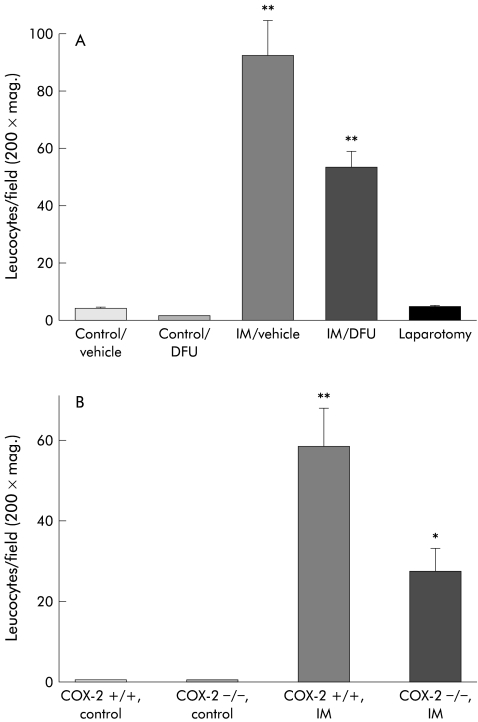
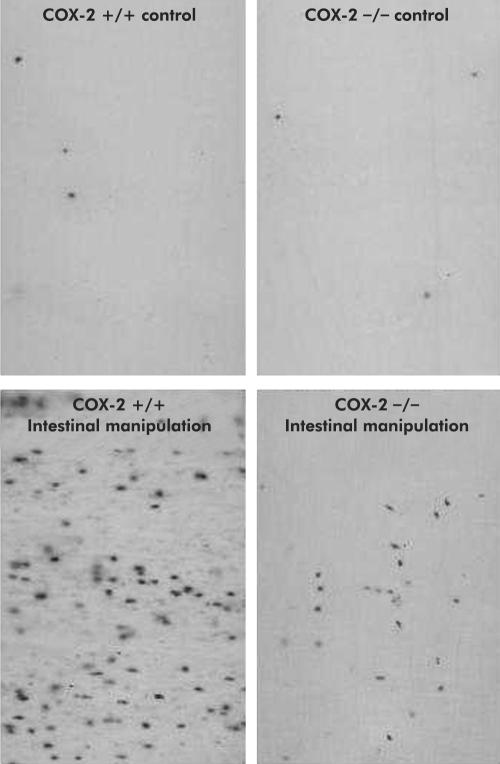
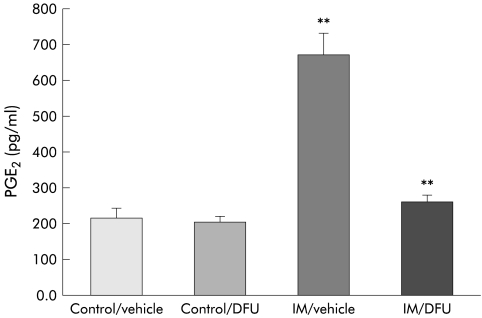
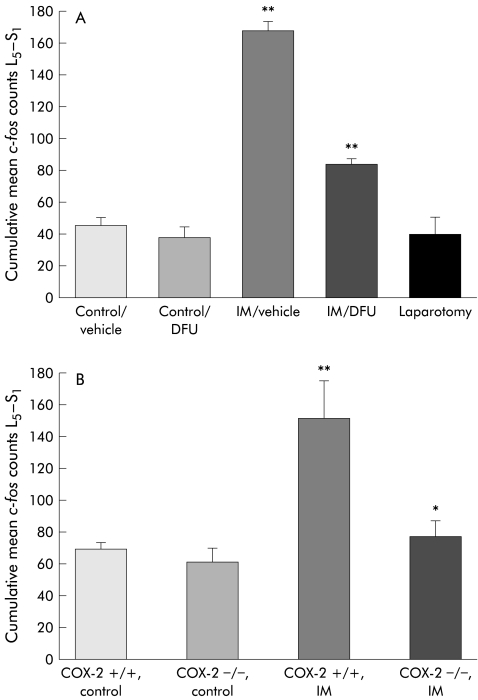
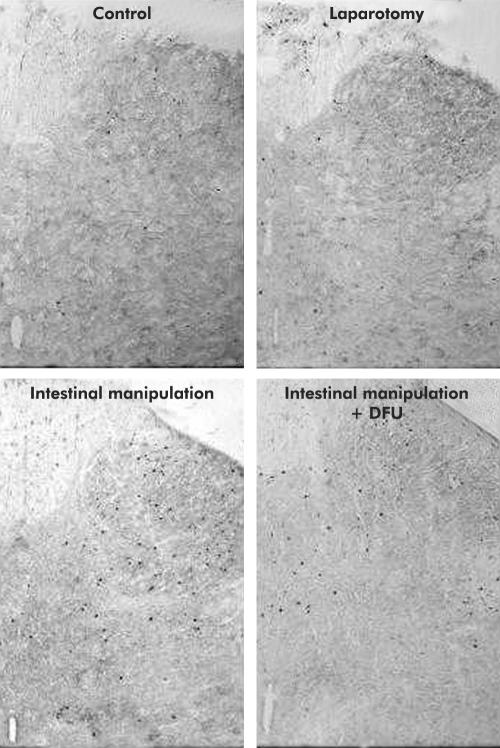
Results: Postoperative Fos IR increased 3.7-fold in rats and 2.2-fold in mice. Both muscularis leucocytic infiltrate and the circumference of the muscularis increased significantly in rats and COX-2(+/+) mice postoperatively, indicating dilating ileus. Surgical manipulation markedly increased PGE(2) levels in the peritoneal cavity. DFU pretreatment and the genetic absence of COX-2(-/-) prevented dilating ileus, and leucocytic infiltrate was diminished by 40% with DFU and by 54% in COX-2(-/-) mice. DFU reversed postsurgical intra- abdominal PGE(2) levels to normal. Fos IR after intestinal manipulation was attenuated by approximately 50% in DFU treated rats and in COX-2(-/-) mice.
Conclusions: Postoperatively, small bowel manipulation causes a significant and prolonged increase in spinal Fos expression, suggesting prolonged primary afferent activation. COX-2 plays a key role in this response. This activation of primary afferents may subsequently initiate inhibitory motor reflexes to the gut, contributing to postoperative ileus.
Figures
References
-
- Holte K, Kehlet H. Postoperative ileus: a preventable event. Br J Surg 2000;87:1480–93. - PubMed
-
- Holzer P, Lippe IT, Holzer-Petsche U. Inhibition of gastrointestinal transit due to surgical trauma or peritoneal irritation is reduced in capsaicin-treated rats. Gastroenterology 1986;91:360–3. - PubMed
-
- Zittel TT, Meile T, Jehle EC, et al. Intraperitoneal capsaicin treatment reduces postoperative gastric ileus in awake rats. Langenbecks Arch Surg 2001;386:204–11. - PubMed
-
- Zittel TT, Lloyd KC, Rothenhofer I, et al. Calcitonin gene-related peptide and spinal afferents partly mediate postoperative colonic ileus in the rat. Surgery 1998;123:518–27. - PubMed
-
- Kalff JC, Schraut WH, Billiar TR, et al. Role of inducible nitric oxide synthase in postoperative intestinal smooth muscle dysfunction in rodents. Gastroenterology 2000;118:316–27. - PubMed
Publication types
MeSH terms
Substances
Grants and funding
LinkOut - more resources
Full Text Sources
Medical
Research Materials