


A selective tropism of transfused oval cells for liver
- PMID: 12632515
- PMCID: PMC4621579
- DOI: 10.3748/wjg.v9.i3.544
A selective tropism of transfused oval cells for liver
Abstract
Aim: To explore the biological behaviors of hepatic oval cells after transfused into the circulation of experimental animals.
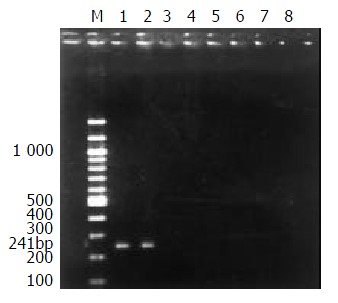
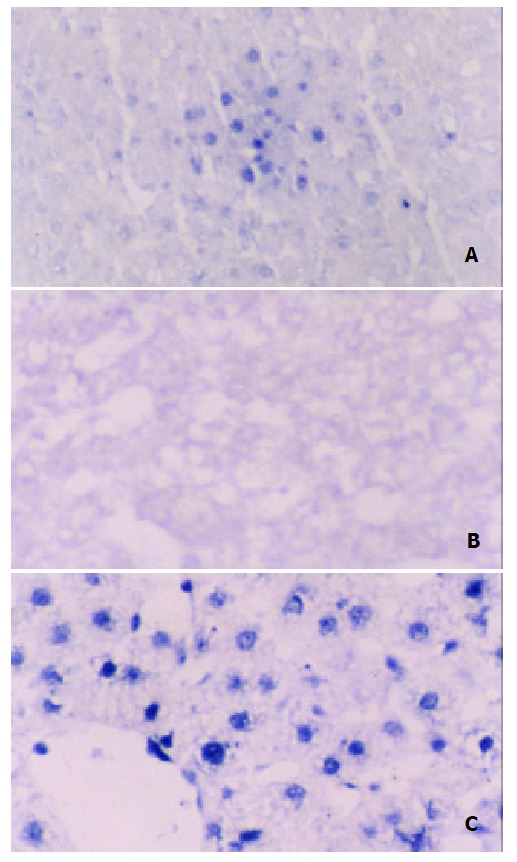
Methods: Oval cells from male SD rat were transfused into the circulation of a female rat which were treated by a 2-AAF/CCl(4) program, through caudal vein. Sex-determining gene sry which located on Y chromosome was examined by PCR and in situ hybridization technique in liver, kidney and spleen of the experimental animals, respectively.
Results: The results of the cell-transplant experiment showed that the sry gene was detectable only in the liver but not in spleen and kidney of the experimental rats, and no signals could be detected in the control animals. It can be also morphologically proved that some exogenous cells had migrated into the parenchyma of the liver and settled there.
Conclusion: The result means that there are exogenous cells located in the liver of the experimental animal and the localization is specific to the liver. This indicates that some "signal molecules" must exist in the circulation of the rats treated by 2-AAF/CCl(4). These "signal molecules" might play an important role in specific localization and differentiation of transfused oval cells.
Figures
References
-
- FARBER E. Similarities in the sequence of early histological changes induced in the liver of the rat by ethionine, 2-acetylamino-fluorene, and 3'-methyl-4-dimethylaminoazobenzene. Cancer Res. 1956;16:142–148. - PubMed
-
- Crosby HA, Hubscher S, Fabris L, Joplin R, Sell S, Kelly D, Strain AJ. Immunolocalization of putative human liver progenitor cells in livers from patients with end-stage primary biliary cirrhosis and sclerosing cholangitis using the monoclonal antibody OV-6. Am J Pathol. 1998;152:771–779. - PMC - PubMed
-
- Theise ND, Saxena R, Portmann BC, Thung SN, Yee H, Chiriboga L, Kumar A, Crawford JM. The canals of Hering and hepatic stem cells in humans. Hepatology. 1999;30:1425–1433. - PubMed
Publication types
MeSH terms
LinkOut - more resources
Full Text Sources
