Affect as information in persuasion: a model of affect identification and discounting
- PMID: 12635909
- PMCID: PMC4797933
- DOI: 10.1037//0022-3514.84.3.453
Affect as information in persuasion: a model of affect identification and discounting
Abstract
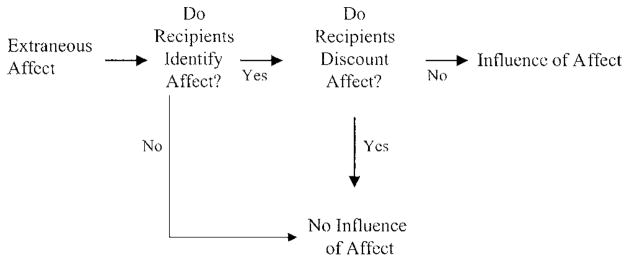
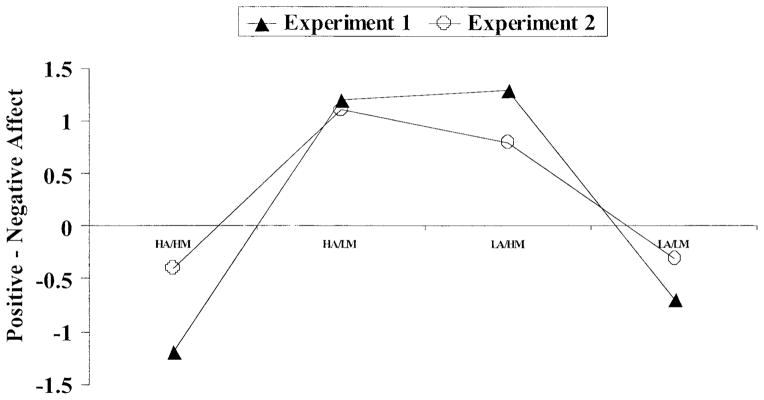
Three studies examined the implications of a model of affect as information in persuasion. According to this model, extraneous affect may have an influence when message recipients exert moderate amounts of thought, because they identify their affective reactions as potential criteria but fail to discount them as irrelevant. However, message recipients may not use affect as information when they deem affect irrelevant or when they do not identify their affective reactions at all. Consistent with this curvilinear prediction, recipients of a message that either favored or opposed comprehensive exams used affect as a basis for attitudes in situations that elicited moderate thought. Affect, however, had no influence on attitudes in conditions that elicited either large or small amounts of thought.
Figures
References
-
- Abelson RP. Statistics as a principled argument. Hillsdale, NJ: Erlbaum; 1995.
-
- Adolphs R, Damasio AR. The interaction of affect and cognition: A neurobiological perspective. In: Forgas JP, editor. Handbook of affect and social cognition. Mahwah, NJ: Erlbaum; 2001. pp. 27–49.
-
- Ajzen I, Fishbein M. Understanding attitudes and predicting social behavior. Englewood Cliffs, NJ: Prentice-Hall; 1980.
-
- Ajzen I, Madden TJ. Prediction of goal-directed behavior, attitudes, intentions, and perceived behavioral control. Journal of Experimental Social Psychology. 1986;22:453–474.
-
- Albarracín D. Unpublished doctoral dissertation. University of Illinois; Urbana–Champaign: 1997. Processing of behavior-related communications as a function of cognitive elaboration: A multiple-stage model.