


Enterovirus 71 outbreaks, Taiwan: occurrence and recognition
- PMID: 12643822
- PMCID: PMC2963902
- DOI: 10.3201/eid0903.020285
Enterovirus 71 outbreaks, Taiwan: occurrence and recognition
Abstract
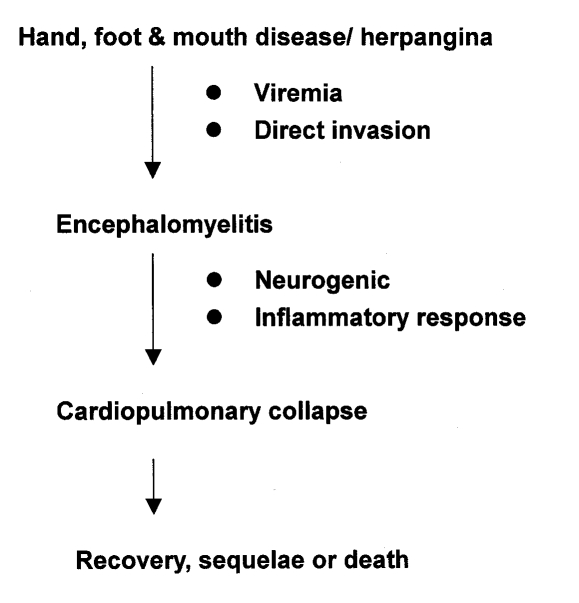
Enterovirus 71 (EV71) caused a large outbreak in Taiwan in 1998 with 78 deaths, and smaller outbreaks recurred in 2000 and 2001. The outbreak was recognized because of a large number of hand, foot, and mouth disease cases and the rapid deaths of children with the disease. Virologic and pathologic studies indicated that EV71 was the most important agent related to severe and fatal cases and that a neurogenic inflammatory response was involved in the pathogenesis of cardiopulmonary collapse resulting from fulminant EV71 infection. Seroepidemiologic study suggested that EV71 had circulated for at least 16 years and that the accumulation of susceptible hosts might have triggered the 1998 outbreak. However, a change in EV71 neurovirulence and host genetic susceptibility may also have affected the clinical outcome. The Taiwan outbreak shows that worldwide attention should be paid to such outbreaks, new antiviral drugs should be developed, and that vaccination of children under 5 years of age may be warranted.
Figures
References
-
- Schmidt NJ, Lennett EH, Ho HH. An apparently new enterovirus isolated from patients with disease of central nervous system. J Infect Dis. 1974;129:304–9. - PubMed
-
- Shindarov LM, Chumakov MP, Voroshilova MK, Bojinov S, Vasilenko SM, Iordanov I, et al. Epidemiological, clinical and pathomorphological characteristics of epidemic poliomyelitis-like disease caused by enterovirus 71. J Hyg Epidemiol Microbiol Immunol. 1979;23:284–95. - PubMed
MeSH terms
LinkOut - more resources
Full Text Sources