


Major histocompatibility complex heterozygote superiority during coinfection
- PMID: 12654829
- PMCID: PMC152037
- DOI: 10.1128/IAI.71.4.2079-2086.2003
Major histocompatibility complex heterozygote superiority during coinfection
Abstract
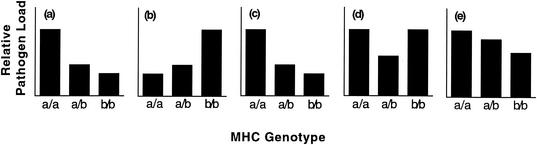
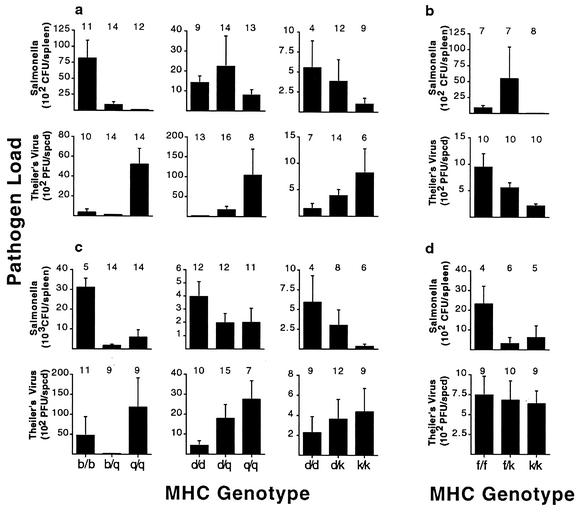
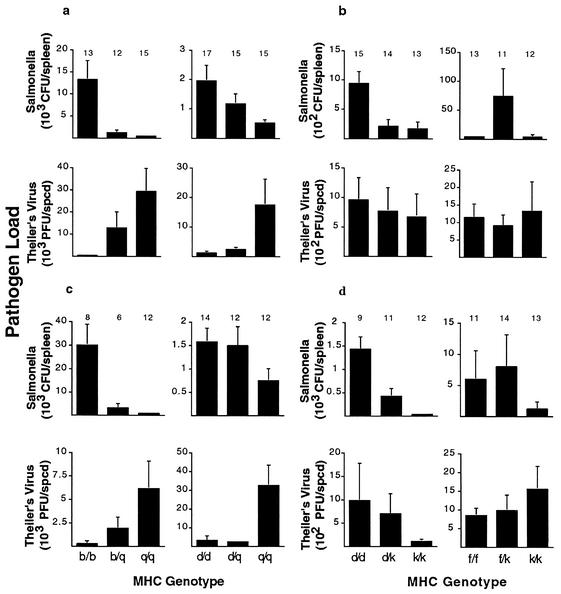
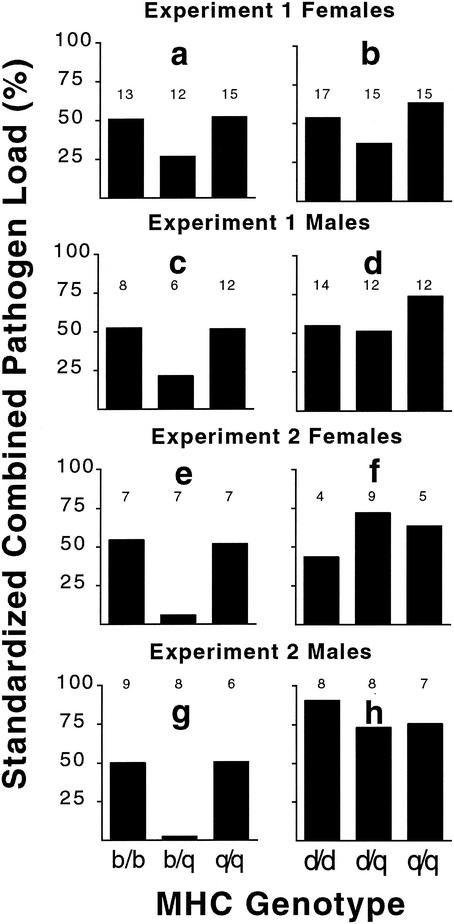
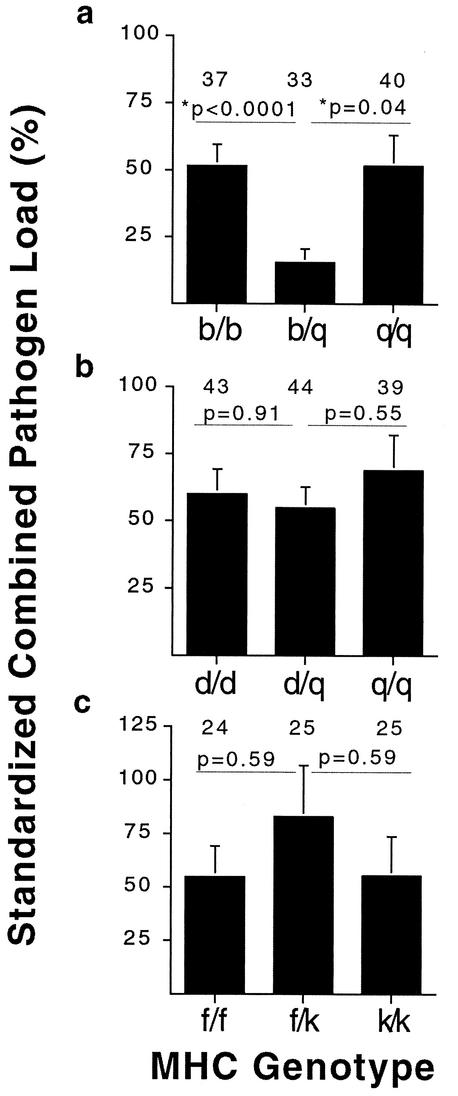
Genes of the major histocompatibility complex (MHC) play a critical role in immune recognition, and many alleles confer susceptibility to infectious and autoimmune diseases. How these deleterious alleles persist in populations is controversial. One hypothesis postulates that MHC heterozygote superiority emerges over multiple infections because MHC-mediated resistance is generally dominant and many allele-specific susceptibilities to pathogens will be masked by the resistant allele in heterozygotes. We tested this hypothesis by using experimental coinfections with Salmonella enterica (serovar Typhimurium C5TS) and Theiler's murine encephalomyelitis virus (TMEV) in MHC-congenic mouse strains where one haplotype was resistant to Salmonella and the other was resistant to TMEV. MHC heterozygotes were superior to both homozygotes in 7 out of 8 comparisons (P = 0.0024), and the mean standardized pathogen load of heterozygotes was reduced by 41% over that of homozygotes (P = 0.01). In contrast, no heterozygote superiority was observed when the MHC haplotype combinations had similar susceptibility profiles to the two pathogens. This is the first experimental evidence for MHC heterozygote superiority against multiple pathogens, a mechanism that would contribute to the evolution of MHC diversity and explain the persistence of alleles conferring susceptibility to disease.
Figures
References
-
- Allen, T. M., D. H. O'Connor, P. Jing, J. L. Dzuris, B. R. Mothe, T. U. Vogel, E. Dunphy, M. E. Liebl, C. Emerson, N. Wilson, K. J. Kunstman, X. Wang, D. B. Allison, A. L. Hughes, R. C. Desrosiers, J. D. Altman, S. M. Wolinsky, A. Sette, and D. I. Watkins. 2000. Tat-specific cytotoxic T lymphocytes select for SIV escape variants during resolution of primary viraemia. Nature 407:386-390. - PubMed
-
- Apanius, V., D. Penn, P. Slev, L. R. Ruff, and W. K. Potts. 1997. The nature of selection on the major histocompatibility complex. Crit. Rev. Immunol. 17:179-224. - PubMed
-
- Baum, H., and N. A. Staines. 1997. MHC-derived peptides and the CD4+ T-cell repertoire: implications for autoimmune disease. Cytokines Cell. Mol. Ther. 3:115-125. - PubMed
-
- Behnke, J. M., and F. N. Wahid. 1991. Immunological relationships during primary infection with Heligmosomoides polygyrus (Nematospiroides dubius): H-2 linked genes determine worm survival. Parasitology 103:157-164. - PubMed
-
- Bertoletti, A., A. Sette, F. V. Chisari, A. Penna, M. Levrero, M. De Carli, F. Fiaccadori, and C. Ferrari. 1994. Natural variants of cytotoxic epitopes are T-cell receptor antagonists for antiviral cytotoxic T cells. Nature 369:407-410. - PubMed
Publication types
MeSH terms
Grants and funding
LinkOut - more resources
Full Text Sources
Research Materials
