


Pulmonary necrosis resulting from DNA vaccination against tuberculosis
- PMID: 12654841
- PMCID: PMC152079
- DOI: 10.1128/IAI.71.4.2192-2198.2003
Pulmonary necrosis resulting from DNA vaccination against tuberculosis
Abstract
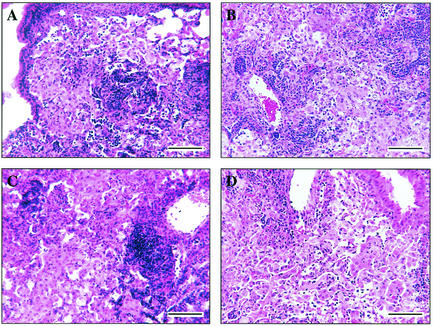
The use of DNA constructs encoding mycobacterial proteins is a promising new approach to vaccination against tuberculosis. A DNA vaccine encoding the hsp60 molecule of Mycobacterium leprae has previously been shown to protect against intravenous infection of mice with Mycobacterium tuberculosis in both the prophylactic and immunotherapeutic modes. It is shown here, however, that this vaccine was not effective in a more realistic aerosol infection model or in a model of latent tuberculosis in the lungs. Moreover, when given in an immunotherapeutic model the immunized mice developed classical Koch reactions characterized by multifocal discrete regions of cellular necrosis throughout the lung granulomas. Similar and equally severe reactions were seen in mice given a vaccine with DNA coding for the Ag85 antigen of M. tuberculosis. This previously unanticipated safety problem indicates that DNA vaccines should be used with caution in individuals who may have already been exposed to tuberculosis.
Figures



References
-
- Colditz, G. A., T. F. Brewer, C. S. Berkey, M. E. Wilson, E. Burdick, H. V. Fineberg, and F. Mosteller. 1994. Efficacy of BCG vaccine in the prevention of tuberculosis. Meta-analysis of the published literature. JAMA 271:698-702. - PubMed
-
- Dye, C., S. Scheele, P. Dolin, V. Pathania, M. C. Raviglione, et al. 1999. Consensus statement. Global burden of tuberculosis: estimated incidence, prevalence, and mortality by country. JAMA 282:677-686. - PubMed
Publication types
MeSH terms
Substances
Grants and funding
LinkOut - more resources
Full Text Sources
Other Literature Sources
Medical
Research Materials
Miscellaneous
