


Characterization of lymphocyte responses to peanuts in normal children, peanut-allergic children, and allergic children who acquired tolerance to peanuts
- PMID: 12671056
- PMCID: PMC152580
- DOI: 10.1172/JCI16142
Characterization of lymphocyte responses to peanuts in normal children, peanut-allergic children, and allergic children who acquired tolerance to peanuts
Abstract
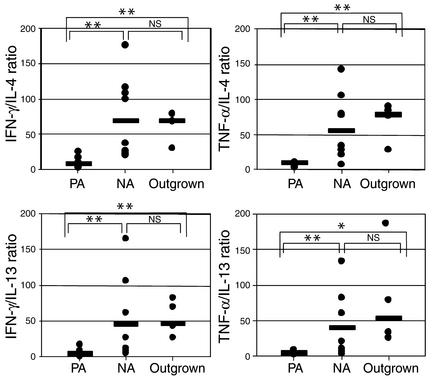
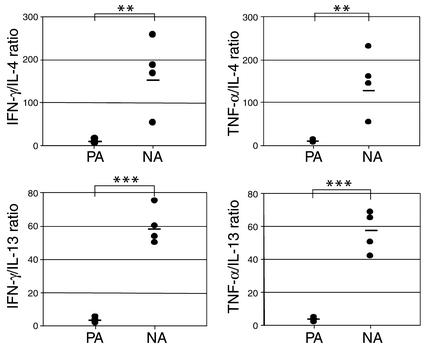
Comparing lymphocyte responses to allergenic and nonallergenic foods could reveal the differences between pathogenic and normal immune responses to foods. Defining the cytokine-producing phenotypes of peanut-specific lymphocytes from peanut-allergic children, children who outgrew peanut allergy, and children who have always tolerated peanuts may be useful for understanding the mechanisms of food tolerance. Investigating immune responses against foods is hindered, however, by the fact that circulating food antigen-specific lymphocytes are very rare. In a novel approach we used carboxyfluorescein succinimidyl ester to detect peanut-specific lymphocytes by flow cytometry. We confirmed that these cells are indeed peanut specific by cloning. Peanut-allergic donors show Th2 polarization of cytokine production by peanut-specific cells (IFN-gamma (low), TNF-alpha (low), IL-4 (high), IL-5 (high), IL-13 (high)). Conversely, nonallergic children and children who have outgrown their allergy show Th1 skewing to peanut antigens (IFN-gamma(high), TNF-alpha (high), IL-4 (low), IL-5 (low), IL-13(low)), similarly to nonallergenic food antigens (beta-lactoglobulin, OVA). This finding suggests that peanut antigens do not intrinsically induce Th2 skewing, but that the type of response depends upon the donor's allergic status. In conclusion, food allergic status is characterized by a Th2 response whereas Th1-skewed responses underlie oral tolerance.
Figures


Comment in
-
Peanut allergy: a growing phenomenon.J Clin Invest. 2003 Apr;111(7):950-2. doi: 10.1172/JCI18233. J Clin Invest. 2003. PMID: 12671042 Free PMC article. Review. No abstract available.
References
-
- Bock SA. Prospective appraisal of complaints of adverse reactions to foods in children during the first 3 years of life. Pediatrics. 1987;79:683–688. - PubMed
-
- Hourihane JO’B, Dean TP, Warner JO. Peanut allergic subjects’ peripheral blood mononuclear cell proliferative responses to crude peanut protein. Clin. Exp. Allergy. 1998;28:163–168. - PubMed
-
- Sampson HA. Immunological approaches to the treatment of food allergy. Ped. Allergy Immunol. 2001;12:91–96. - PubMed
-
- de Jong EC, et al. Food allergen (peanut)-specific TH2 clones generated from the peripheral blood of a patient with peanut allergy. J. Allergy Clin. Immunol. 1996;98:73–81. - PubMed
Publication types
MeSH terms
Substances
LinkOut - more resources
Full Text Sources
Other Literature Sources
Medical
