Expression of the cathelicidin LL-37 is modulated by short chain fatty acids in colonocytes: relevance of signalling pathways
- PMID: 12692061
- PMCID: PMC1773650
- DOI: 10.1136/gut.52.5.735
Expression of the cathelicidin LL-37 is modulated by short chain fatty acids in colonocytes: relevance of signalling pathways
Abstract
Background and aims: Short chain fatty acids (SCFA) exert profound effects on the colonic mucosa. In particular, SCFA modulate mucosal immune functions. The antimicrobial cathelicidin LL-37 is expressed by colon epithelial cells. In the present study the effect of SCFA on LL-37 expression was investigated.
Methods: LL-37 expression in vivo was assessed by immunohistochemistry. Real time quantitative reverse transcription-polymerase chain reaction was employed to determine LL-37 expression in colonocytes in vitro after treatment with various cytokines, SCFA, or flavone. LL-37 levels were correlated to cell differentiation which was determined by alkaline phosphatase (AP) activity. In addition, intracellular signalling pathways such as MEK-ERK (mitogen/extracellular signal protein kinase (MEK)/extracellular signal regulated protein kinase (ERK)) and p38/mitogen activated protein (MAP) kinase were explored.
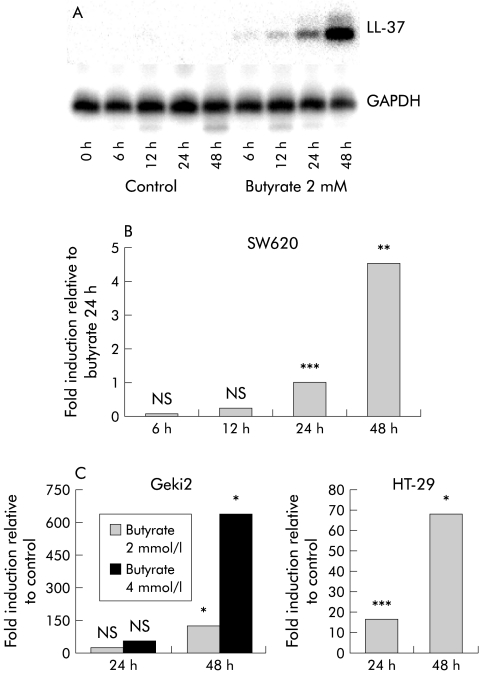
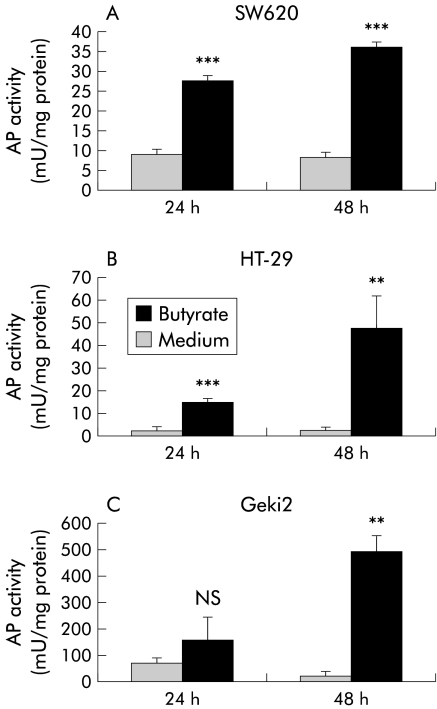
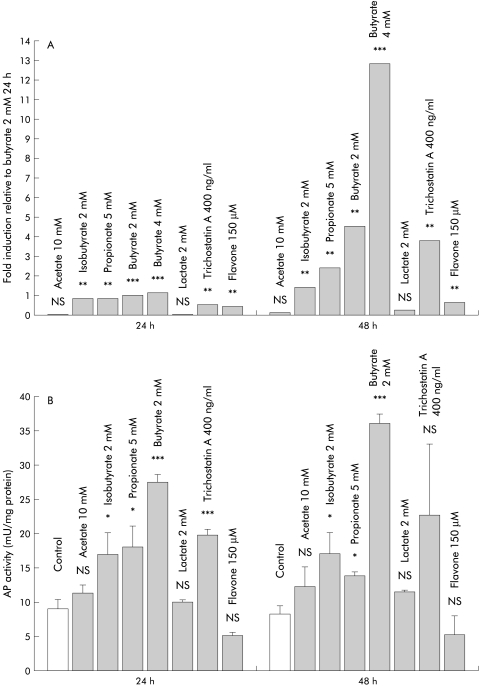
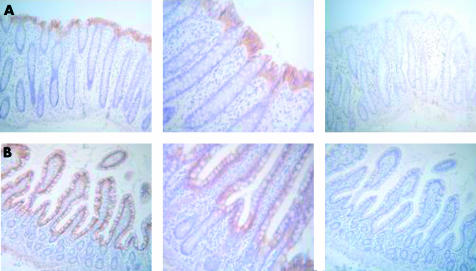
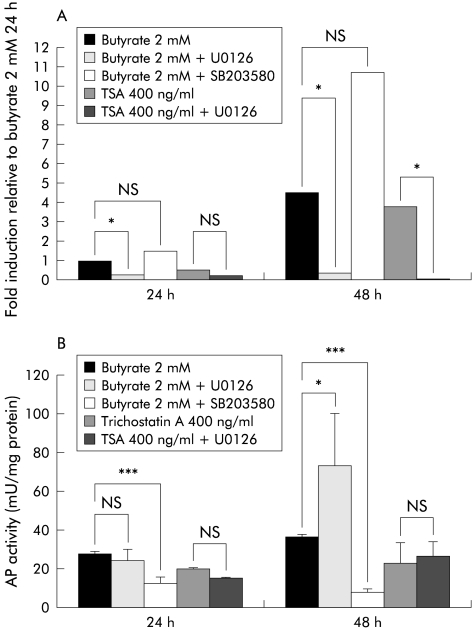
Results: In vivo, LL-37 expression in healthy mucosa was restricted to differentiated epithelial cells in human colon and ileum. In colonocytes, increased LL-37 expression associated with cell differentiation was detected in vitro following treatment with butyrate, isobutyrate, propionate, and trichostatin A. Flavone induced LL-37 transcription but did not affect AP activity while cytokines had no effect. To dissect pathways mediating differentiation and LL-37 expression, specific inhibitors were applied. Inhibition of the protein kinase MEK enhanced butyrate induced AP activity while LL-37 expression in colon epithelial cells was blocked. In contrast, inhibition of p38/MAP kinase blocked cell differentiation without inhibiting LL-37 expression.
Conclusions: Expression of the cathelicidin LL-37 in colonocytes and cellular differentiation are separately modulated by SCFA via distinct signalling pathways. These data may provide a rationale for dietary modulation of mucosal defence mechanisms.
Figures
References
-
- Gudmundsson GH, Agerberth B. Neutrophil antibacterial peptides, multifunctional effector molecules in the mammalian immune system. J Immunol Methods 1999;232:45–54. - PubMed
-
- Garcia JR, Krause A, Schulz S, et al. Human beta-defensin 4: a novel inducible peptide with a specific salt-sensitive spectrum of antimicrobial activity. FASEB J 2001;15:1819–21. - PubMed
-
- Harder J, Bartels J, Christophers E, et al. A peptide antibiotic from human skin. Nature 1997;387:861. - PubMed
-
- Gudmundsson GH, Agerberth B, Odeberg J, et al. The human gene FALL39 and processing of the cathelin precursor to the antibacterial peptide LL-37 in granulocytes. Eur J Biochem 1996;238:325–32. - PubMed
Publication types
MeSH terms
Substances
LinkOut - more resources
Full Text Sources
Other Literature Sources
Miscellaneous