Importance of respiratory viruses in acute otitis media
- PMID: 12692096
- PMCID: PMC153141
- DOI: 10.1128/CMR.16.2.230-241.2003
Importance of respiratory viruses in acute otitis media
Abstract
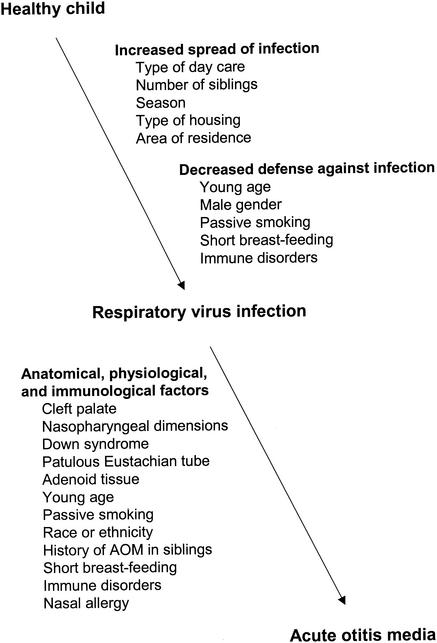
Acute otitis media is usually considered a simple bacterial infection that is treated with antibiotics. However, ample evidence derived from studies ranging from animal experiments to extensive clinical trials supports a crucial role for respiratory viruses in the etiology and pathogenesis of acute otitis media. Viral infection of the upper respiratory mucosa initiates the whole cascade of events that finally leads to the development of acute otitis media as a complication. The pathogenesis of acute otitis media involves a complex interplay between viruses, bacteria, and the host's inflammatory response. In a substantial number of children, viruses can be found in the middle-ear fluid either alone or together with bacteria, and recent studies indicate that at least some viruses actively invade the middle ear. Viruses appear to enhance the inflammatory process in the middle ear, and they may significantly impair the resolution of otitis media. Prevention of the predisposing viral infection by vaccination against the major viruses would probably be the most effective way to prevent acute otitis media. Alternatively, early treatment of the viral infection with specific antiviral agents would also be effective in reducing the occurrence of acute otitis media.
Figures

References
-
- Abramson, J. S., and J. G. Wheeler. 1994. Virus-induced neutrophil dysfunction: role in the pathogenesis of bacterial infections. Pediatr. Infect. Dis. J. 13:643-652. - PubMed
-
- Alho, O. P., M. Koivu, M. Sorri, and P. Rantakallio. 1990. Risk factors for recurrent acute otitis media and respiratory infection in infancy. Int. J. Pediatr. Otorhinolaryngol. 19:151-161. - PubMed
-
- Alho, O. P., M. Koivu, M. Sorri, and P. Rantakallio. 1991. The occurrence of acute otitis media in infants: a life-table analysis. Int. J. Pediatr. Otorhinolaryngol. 21:7-14. - PubMed
-
- Arola, M., O. Ruuskanen, T. Ziegler, J. Mertsola, K. Näntö-Salonen, A. Putto-Laurila, M. K. Viljanen, and P. Halonen. 1990. Clinical role of respiratory virus infection in acute otitis media. Pediatrics 86:848-855. - PubMed
Publication types
MeSH terms
Substances
LinkOut - more resources
Full Text Sources
Other Literature Sources
Medical