Tn7-based genome-wide random insertional mutagenesis of Candida glabrata
- PMID: 12695329
- PMCID: PMC430877
- DOI: 10.1101/gr.848203
Tn7-based genome-wide random insertional mutagenesis of Candida glabrata
Abstract
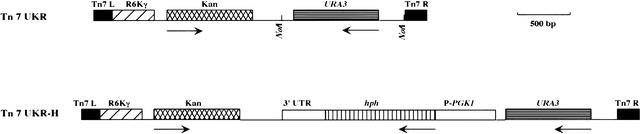
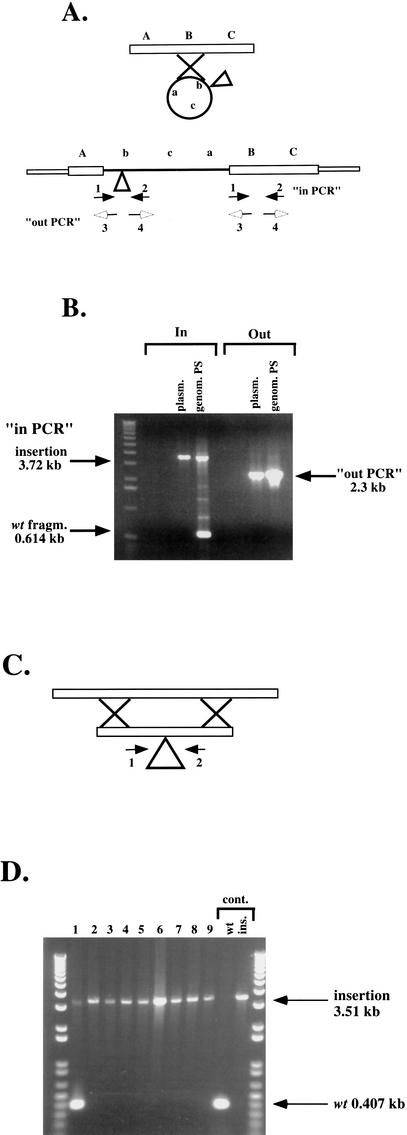
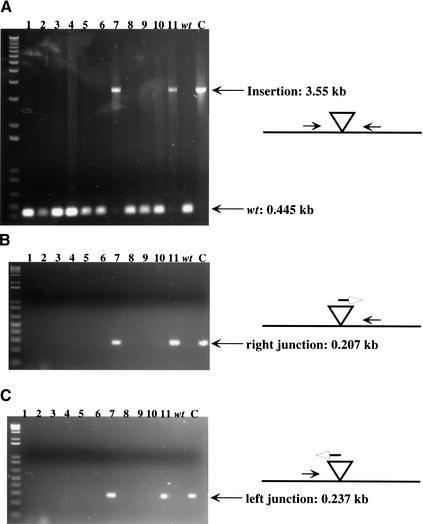
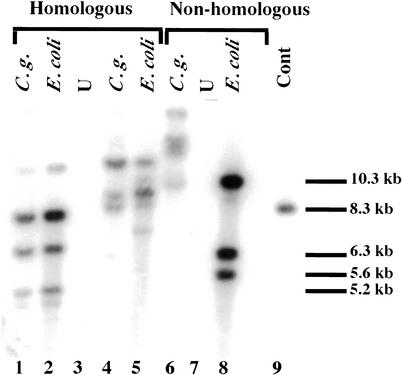
We describe and characterize a method for insertional mutagenesis of the yeast pathogen Candida glabrata using the bacterial transposon Tn7. Tn7 was used to mutagenize a C. glabrata genomic fosmid library. Pools of random Tn7 insertions in individual fosmids were recovered by transformation into Escherichia coli. Subsequently, these were introduced by recombination into the C. glabrata genome. We found that C. glabrata genomic fragments carrying a Tn7 insertion could integrate into the genome by nonhomologous recombination, by single crossover (generating a duplication of the insertionally mutagenized locus), and by double crossover, yielding an allele replacement. We were able to generate a highly representative set of approximately 10(4) allele replacements in C. glabrata, and an initial characterization of these shows that a wide diversity of genes were targeted in the mutagenesis. Because the identity of disrupted genes for any mutant of interest can be rapidly identified, this method should be of general utility in functional genomic characterization of this important yeast pathogen. In addition, the method might be broadly applicable to mutational analysis of other organisms.
Figures
References
-
- Balzi E., Wang, M., Leterme, S., Van Dyck, L., and Goffeau, A. 1994. PDR5, a novel yeast multidrug resistance conferring transporter controlled by the transcription regulator PDR1. J. Biol. Chem. 269: 2206-2214. - PubMed
-
- Calderone R.A. and Fonzi, W.A. 2001. Virulence factors of Candida albicans. Trends Microbiol. 9: 327-335. - PubMed
Publication types
MeSH terms
Substances
Grants and funding
LinkOut - more resources
Full Text Sources
Other Literature Sources