


CD4+CD25+ immunoregulatory T cells may not be involved in controlling autoimmune arthritis
- PMID: 12718754
- PMCID: PMC165034
- DOI: 10.1186/ar624
CD4+CD25+ immunoregulatory T cells may not be involved in controlling autoimmune arthritis
Abstract
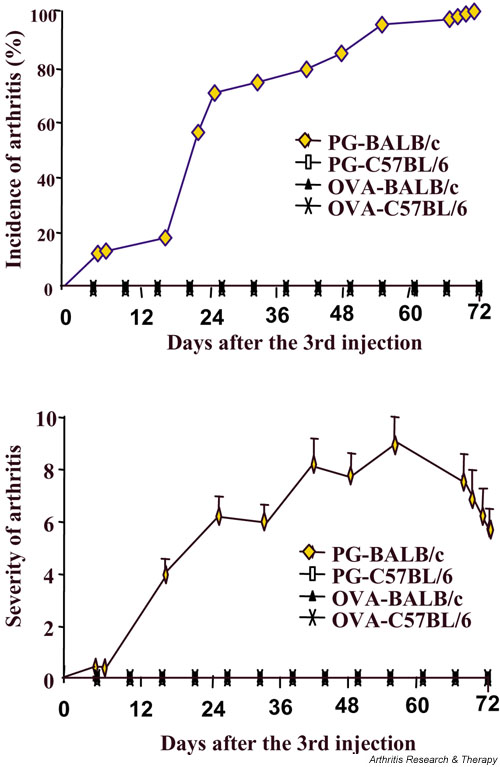
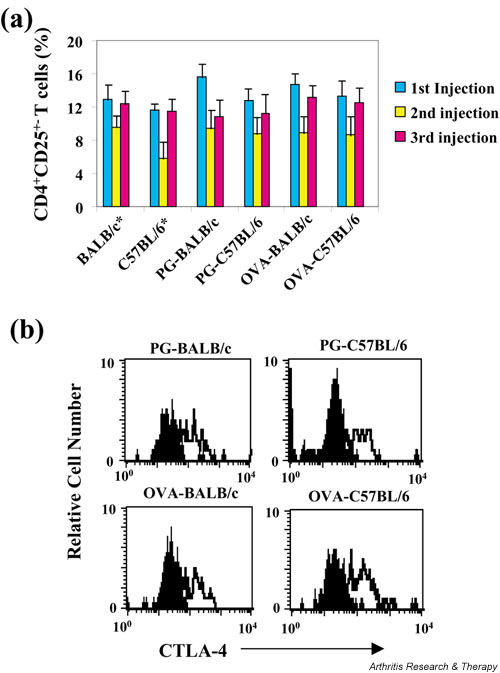
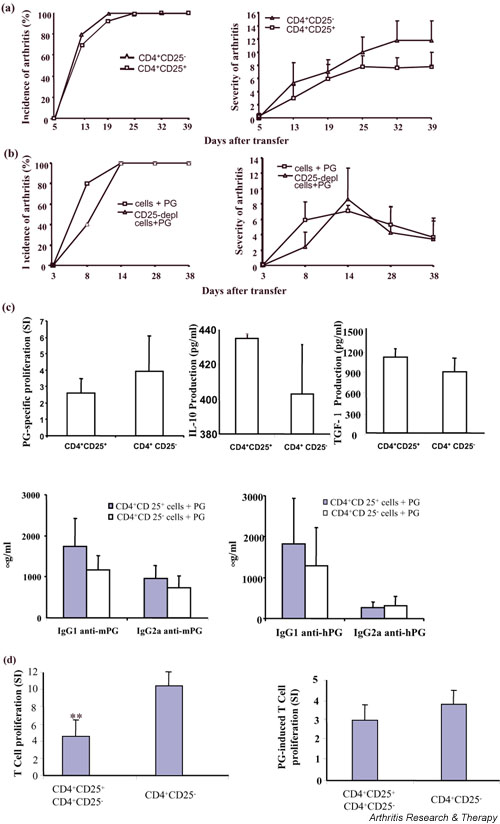
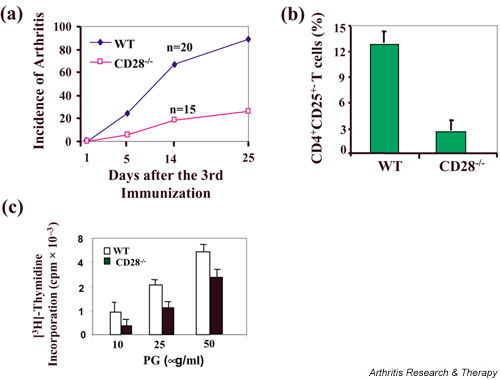
Accumulating evidence suggests that regulatory T cells play a crucial role in preventing autoimmunity. Recently, a naturally occurring CD4+CD25+ T-cell subset that is anergic and also suppressive has been shown to suppress autoimmunity in several animal models. We used proteoglycan-induced arthritis (PGIA) as a study model to investigate the role of the CD4+CD25+ regulatory T cells in autoimmune arthritis. There was no significant change in the percentage of CD4+CD25+ T cells during the immunization period when proteoglycan- or ovalbumin-immunized BALB/c and C57BL/6 mice were compared. An adoptive transfer study showed that the CD4+CD25+ T cells did not protect severe combined immunodeficient mice from arthritis when they were cotransferred with splenocytes from arthritic animals. Similarly, depletion of the CD4+CD25+ T cells did not enhance the onset of the disease or disease severity in severe combined immunodeficient mice. Moreover, CD28-deficient mice, which have very few CD4+CD25+ T cells, were highly resistant to PGIA. These findings indicate that the CD4+CD25+ regulatory T cells may not play a critical role in controlling PGIA.
Figures
References
-
- Ohashi PS. T-cell signaling and autoimmunity: molecular mechanisms of disease. Nat Rev Immunol. 2002;2:427–438. - PubMed
-
- Sakaguchi S, Sakaguchi N, Asano M, Itoh M, Toda M. Immunologic self-tolerance maintained by activated T cells expressing IL-2 receptor alpha-chains (CD25). Breakdown of a single mechanism of self-tolerance causes various autoimmune diseases. J Immunol. 1995;155:1151–1164. - PubMed
Publication types
MeSH terms
Substances
Grants and funding
LinkOut - more resources
Full Text Sources
Medical
Research Materials
