


Two major histocompatibility complex class I-restricted epitopes of the Borna disease virus p10 protein identified by cytotoxic T lymphocytes induced by DNA-based immunization
- PMID: 12719601
- PMCID: PMC154008
- DOI: 10.1128/jvi.77.10.6076-6081.2003
Two major histocompatibility complex class I-restricted epitopes of the Borna disease virus p10 protein identified by cytotoxic T lymphocytes induced by DNA-based immunization
Abstract
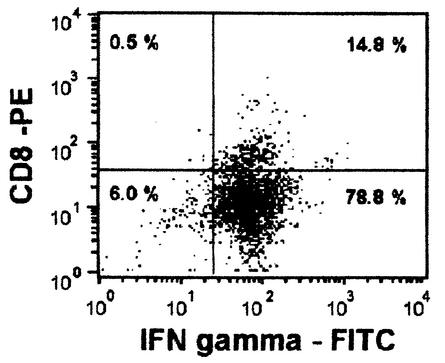
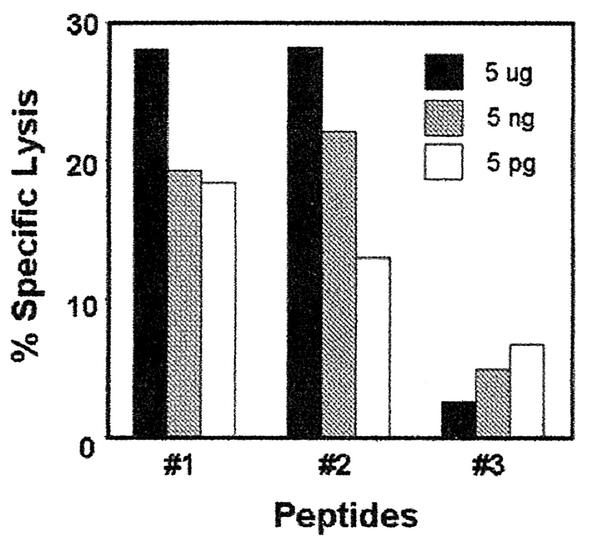
Borna disease virus (BDV) infection of Lewis rats is the most studied animal model of Borna disease, an often fatal encephalomyelitis. In this experimental model, BDV-specific CD8(+) cytotoxic T lymphocytes (CTLs) play a prominent role in the immunopathogenesis of infection by the noncytolytic, persistent BDV. Of the six open reading frames of BDV, CTLs to BDV X (p10) and the L-polymerase have never been studied. In this study, we used plasmid immunization to investigate the CTL response to BDV X and N. Plasmid-based immunization was a potent CTL inducer in Lewis rats. Anti-X CTLs were primed by a single injection of the p10 cDNA. Two codominant p10 epitopes, M(1)SSDLRLTLL(10) and T(8)LLELVRRL(16), associated with the RT1.A(l) major histocompatibility complex class I molecules of the Lewis rats, were identified. In addition, immunization with a BDV p40-expressing plasmid confirmed the previously reported RT1.A(l)-restricted A(230)SYAQMTTY(238) peptide as the CTL target for BDV N. In contrast to the CTL responses, plasmid vaccination was a poor inducer of an antibody response to p10. Three injections of a recombinant eukaryotic expression plasmid of BDV p10 were needed to generate a weak anti-p10 immunoglobulin M response. However, the antibody response could be optimized by a protein boost after priming with cDNA.
Figures

References
-
- Albert, M. L., B. Sauter, and N. Bhardwaj. 1998. Dendritic cells acquire antigen from apoptotic cells and induce class I-restricted CTLs. Nature 392:86-89. - PubMed
-
- Bilzer, T., and L. Stitz. 1994. Immune-mediated brainatrophy. CD8+ T cells contribute to tissue destruction during Borna disease. J. Immunol. 153:818-823. - PubMed
-
- Bode, L., W. Zimmerman, R. Ferszt, F. Steinbach, and H. Ludwig. 1995. Borna disease virus genome transcribed and expressed in psychiatric patients. Nat. Med. 1:232-236. - PubMed
-
- Bode, L., R. Durrwald, F. A. Rantam, R. Ferszt, and H. Ludwig. 1996. First isolates of infectious human Borna disease virus from patients with mood disorders. Mol. Psych. 1:200-212. - PubMed
Publication types
MeSH terms
Substances
Grants and funding
LinkOut - more resources
Full Text Sources
Other Literature Sources
Molecular Biology Databases
Research Materials
