


doi: 10.1251/bpo6.
Methods for microbial DNA extraction from soil for PCR amplification
Affiliations
- PMID: 12734590
- PMCID: PMC140122
- DOI: 10.1251/bpo6
Item in Clipboard
Methods for microbial DNA extraction from soil for PCR amplification
Biol Proced Online.
.
Abstract
Amplification of DNA from soil is often inhibited by co-purified contaminants. A rapid, inexpensive, large-scale DNA extraction method involving minimal purification has been developed that is applicable to various soil types (1). DNA is also suitable for PCR amplification using various DNA targets. DNA was extracted from 100g of soil using direct lysis with glass beads and SDS followed by potassium acetate precipitation, polyethylene glycol precipitation, phenol extraction and isopropanol precipitation. This method was compared to other DNA extraction methods with regard to DNA purity and size.
Figures
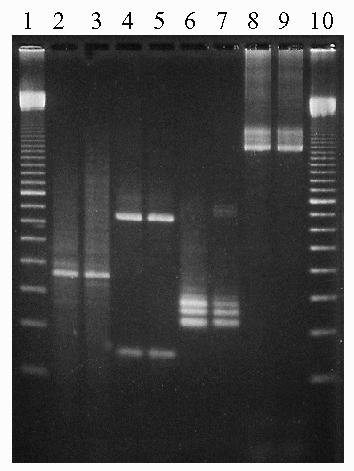
Example of PCR amplification products using various DNA targets with soil extracted by enzymatic lysis or bead beating. Lane 1: 100 bp marker; lane 2: enzymatic lysis DNA with 16S rRNA primers (19); lane 3: bead beating DNA with 16S rRNA primers (19); lane 3: enzymatic lysis DNA with fungal ITS primers (22); lane 4: bead beating DNA with fungal ITS primers (22); lane 5: enzymatic lysis DNA with hsp70 primers (23); lane 6: bead beating DNA with hsp70 primers (23); lane 7: enzymatic lysis DNA with nifH primers (25); lane 8: bead beating DNA with nifH primers (26); lane 9: 100 bp marker.
References
-
- Yeates C, Gillings MR, Davison AD, Altavilla N, Veal DA. PCR amplification of crude microbial DNA extracted from soil. Letters in Applied Microbiology. 1997;25:303–307. - PubMed
-
- Atlas RM. Diversity of microbial communities. Advances in Microbial Ecology. 1984;7:1–47.
-
- Ogram A, Sayler GS, Barkay T. The extraction and purification of microbial DNA from sediments. Journal of Microbiological Methods. 1987;7:57–66.
LinkOut - more resources
Full Text Sources
Other Literature Sources
