Transcaruncular approach for the management of frontoethmoid mucoceles
- PMID: 12770964
- PMCID: PMC1771719
- DOI: 10.1136/bjo.87.6.699
Transcaruncular approach for the management of frontoethmoid mucoceles
Abstract
Aims: To present transcaruncular medial orbitotomy as the preferred approach to manage frontoethmoid mucoceles.
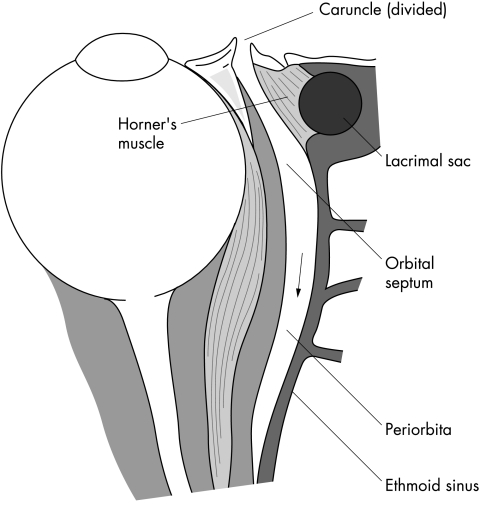
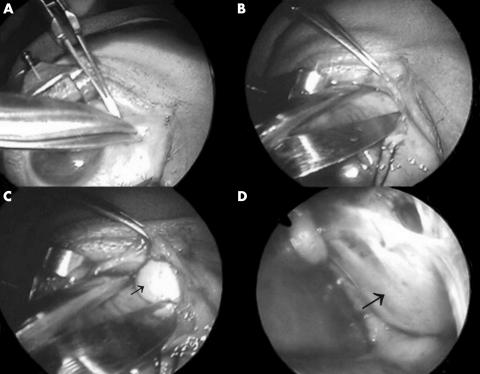
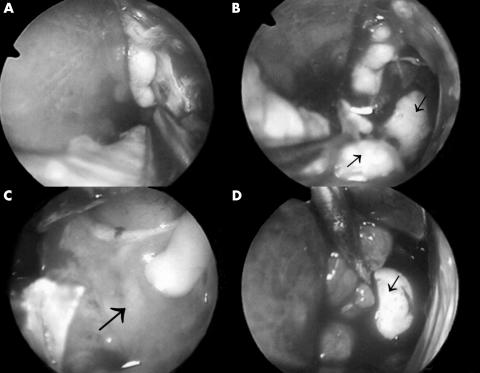
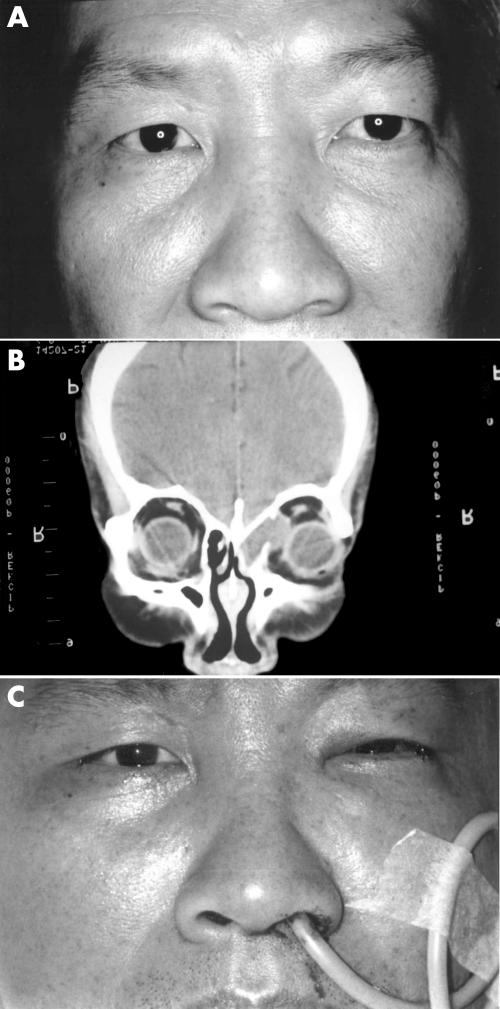
Methods: 11 patients with frontoethmoid mucoceles received transcaruncular orbitotomy from 2000 to 2002 at the National Taiwan University Hospital. The incision was made through the caruncle to explore the medial wall periosteum. Then the periosteum was opened and extended to provide adequate surgical field exposure. Frontoethmoid mucoceles could be viewed and removed directly. A transnasal drainage tube was inserted before closure of the caruncle wound.
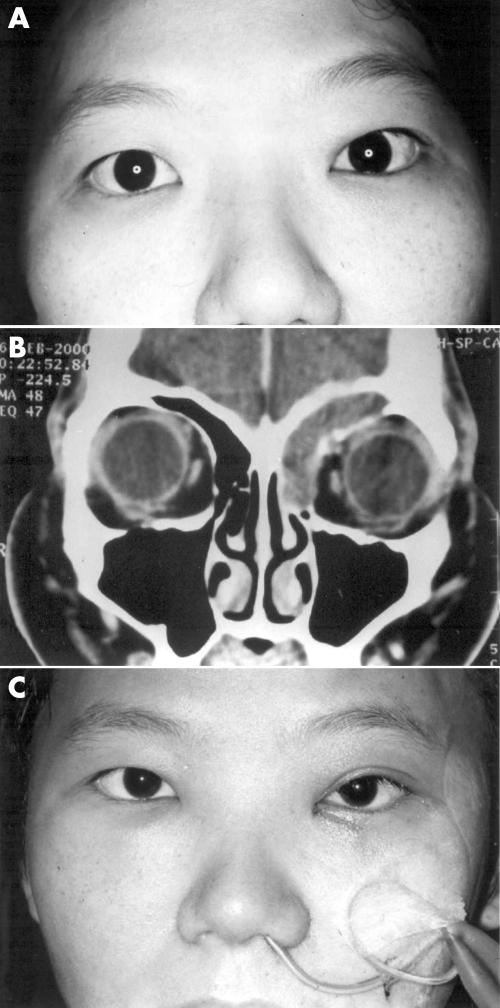
Results: The mean follow up period was 12 (SD 9.1) months (range 1-26). Both functional recovery and cosmetic outcome were excellent. There was no recurrence of mucoceles. One patient complained of diplopia, which subsided after 2 months.
Conclusion: Transcaruncular orbitotomy provides a wide exposure and a safe access to the medial orbital extraperiosteal space. Furthermore, there is less damage to skin and muscle layer and less manipulation of other ocular adnexal structures, such as medial canthal tendon and lacrimal sac. It can be an excellent approach for the management of frontoethmoid mucoceles.
Figures
Comment in
-
Transcaruncular approach for the management of frontoethmoidal mucoceles: a comment.Br J Ophthalmol. 2004 May;88(5):725. Br J Ophthalmol. 2004. PMID: 15090440 Free PMC article. No abstract available.
References
-
- Evans C. Aetiology and treatment of frontoethmoidal mucocele. J Laryngol Otol 1981;95:361–75. - PubMed
-
- Valerie JL, Muriel ER. Ophthalmic considerations in fronto-ethmoid mucoceles. J Laryngol Otol 1989;103:667–9. - PubMed
-
- Lynch RC. The technique of a radical sinus operation which has given me the best result. Laryngoscope 1921;31:1–5.
-
- Balch KC, Goldberg RA, Green JP, et al. The transcaruncular approach to the medial orbit and ethmoid sinus. A cosmetically superior option to the cutaneous (Lynch) incision. Facial Plast Surg Clin North Am 1998;6:71–7.
-
- Garcia GH, Goldberg RA, Shorr N. The transcaruncular approach in repair of orbital fracture: a retrospective study. J Cranio Maxillofac Trauma 1998;4:7–12. - PubMed
Publication types
MeSH terms
LinkOut - more resources
Full Text Sources