Field-delivered therapy increases treatment for chlamydia and gonorrhea
- PMID: 12773344
- PMCID: PMC1447859
- DOI: 10.2105/ajph.93.6.882
Field-delivered therapy increases treatment for chlamydia and gonorrhea
Abstract
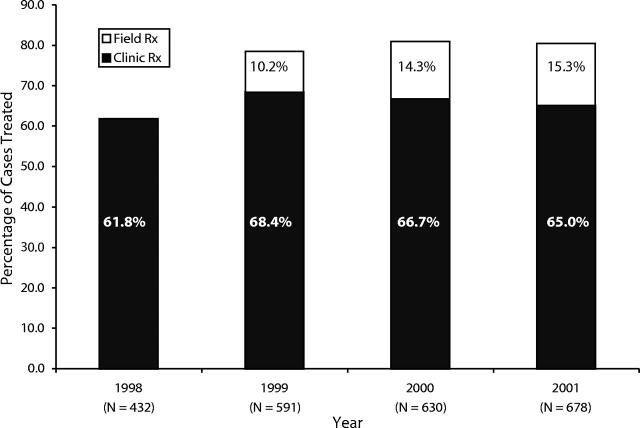
In 1998, treatment completion was low among chlamydia and gonorrhea cases reported to the San Francisco Department of Public Health and assigned for treatment follow-up. To improve treatment completion among growing numbers of chlamydia and gonorrhea cases, the department implemented field-delivered therapy (FDT), a single-dose, directly observed therapy protocol for uncomplicated chlamydial and gonococcal infections. After the protocol was implemented in March 1999, the proportion of cases completing treatment increased significantly, from 61.8% in 1998 to 81.0% in 2000. The greatest increases in treatment completion were observed for females and individuals younger than 20 years old. FDT is an effective, feasible, and convenient way to reach and treat individuals who are unlikely to return for chlamydia and gonorrhea treatment.
Figures
References
-
- Sexually Transmitted Diseases Surveillance, 2001. Atlanta, Ga: Centers for Disease Control and Prevention; September2002.
-
- Cates W, Wasserheit JN. Genital chalmydial infections: epidemiology and reproductive sequelae. Am J Obstet Gynecol. 1991;164:1771–1781. - PubMed
-
- Sweet RL. Pelvic Inflammatory disease: etiology, diagnosis, and treatment. Sex Transm Dis. 1981;8(suppl 4): 308–315. - PubMed
-
- Korenromp EL, Sudaryo MK, de Vlas SJ, et al. What proportion of episodes of gonorrhoea and chlamydia becomes symptomatic? Int J STD AIDS. 2002;13:91–101. - PubMed
MeSH terms
Substances
LinkOut - more resources
Full Text Sources
Medical