The efficacy of a relationship-based HIV/STD prevention program for heterosexual couples
- PMID: 12773363
- PMCID: PMC1447878
- DOI: 10.2105/ajph.93.6.963
The efficacy of a relationship-based HIV/STD prevention program for heterosexual couples
Abstract
Objectives: This study examined the efficacy of a relationship-based HIV/sexually transmitted disease prevention program for heterosexual couples and whether it is more effective when delivered to the couple or to the woman alone.
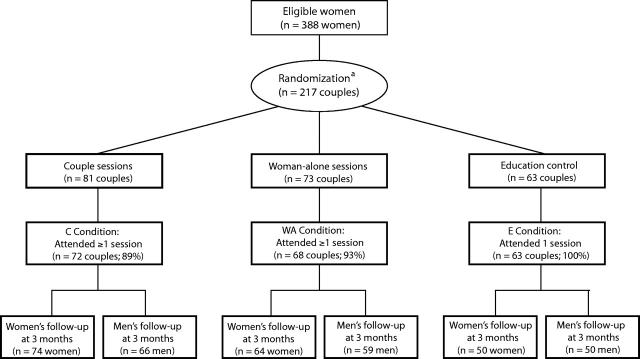
Methods: Couples (n = 217) were recruited and randomized to (1) 6 sessions provided to couples together (n = 81), (2) the same intervention provided to the woman alone (n = 73), or (3) a 1-session control condition provided to the woman alone (n = 63).
Results: The intervention was effective in reducing the proportion of unprotected and increasing the proportion of protected sexual acts. No significant differences in effects were observed between couples receiving the intervention together and those in which the woman received it alone.
Conclusions: This study demonstrates the efficacy of a relationship-based prevention program for couples at risk for HIV infection.
Figures
References
-
- Centers for Disease Control and Prevention. HIV/AIDS Surveillance Report. Atlanta, Ga: US Dept of Health and Human Services; 2000.
-
- Ehrhardt AA, Exner TM. Prevention of sexual risk behavior for HIV infection with women. AIDS. 2000;14:S53–S58. - PubMed
-
- El-Bassel N, Gilbert L, Rajah V, Foleno A, Frye V. Social support among women in methadone treatment who experience partner violence. Violence Against Women. 2001;7:246–274.
-
- Harvey S. New kinds of data, new options for HIV prevention among women: a public health challenge. Health Educ Behav. 2000;27:539–565. - PubMed
Publication types
MeSH terms
Grants and funding
LinkOut - more resources
Full Text Sources
Medical
Research Materials