


Both high intratumoral microvessel density determined using CD105 antibody and elevated plasma levels of CD105 in colorectal cancer patients correlate with poor prognosis
- PMID: 12778073
- PMCID: PMC2741032
- DOI: 10.1038/sj.bjc.6600874
Both high intratumoral microvessel density determined using CD105 antibody and elevated plasma levels of CD105 in colorectal cancer patients correlate with poor prognosis
Abstract
CD105 and its ligand transforming growth factor beta (TGFbeta) are modulators of angiogenesis, which drives tumour growth and metastasis. Tumour microvessel density (MVD) has proven to be an important determinant of prognosis. In this study, we have examined the prognostic value of MVD identified using Mabs to the pan-endothelial marker CD34 and to CD105 in 111 patients with colorectal cancer. The Mab to CD105 preferentially reacts with angiogenic endothelial cells. Of the 111 patients studied, 38 were alive and 73 had died of the disease. The median MVD values counted using anti-CD34 and anti-CD105 were 5 (range 1.40-9.00) and 3.10 (range 0.90-8.00), respectively. Kaplan-Meier survival analysis revealed that only MVD values obtained using CD105 Mab correlated with survival. Patients with a high MVD, above the median (3.10), showed the worst prognosis. A similar outcome was observed when MVD was divided into quartiles. In order to ascertain if this strong expression of CD105 in the tumour vasculature is reflected in patients' plasma, circulating levels of CD105, TGFbeta1 and TGFbeta3 together with the receptor-ligand complexes were quantified in patients with colorectal carcinoma and normal controls. Results showed that except for TGFbeta1, the levels of all other molecules were significantly elevated compared with controls. The levels of CD105 were positively correlated with Dukes' stages. A lower TGFbeta1 level was noted in patients with carcinoma over the controls. Furthermore, TGFbeta3 and CD105/TGFbeta3 complexes were markedly lowered in postoperative compared with preoperative plasma samples. Immunostaining revealed that TGFbeta1 was expressed in cancer cells but TGFbeta3 in the stromal cells, whereas CD105 was exclusively expressed in vascular endothelial cells of tumour blood vessels. In conclusion, this study demonstrates that MVD quantified using a Mab to CD105 is an independent prognostic parameter for survival of patients with colorectal cancer, and that plasma levels of CD105, TGFbeta1, TGFbeta3 and CD105/TGFbeta complexes may be useful markers for assessing disease progression. These data have led us to propose that quantification of these determinants may prove useful to monitor therapeutic efficacy in patients with colorectal cancer, especially those who are being treated with antiangiogenic therapies.
Figures
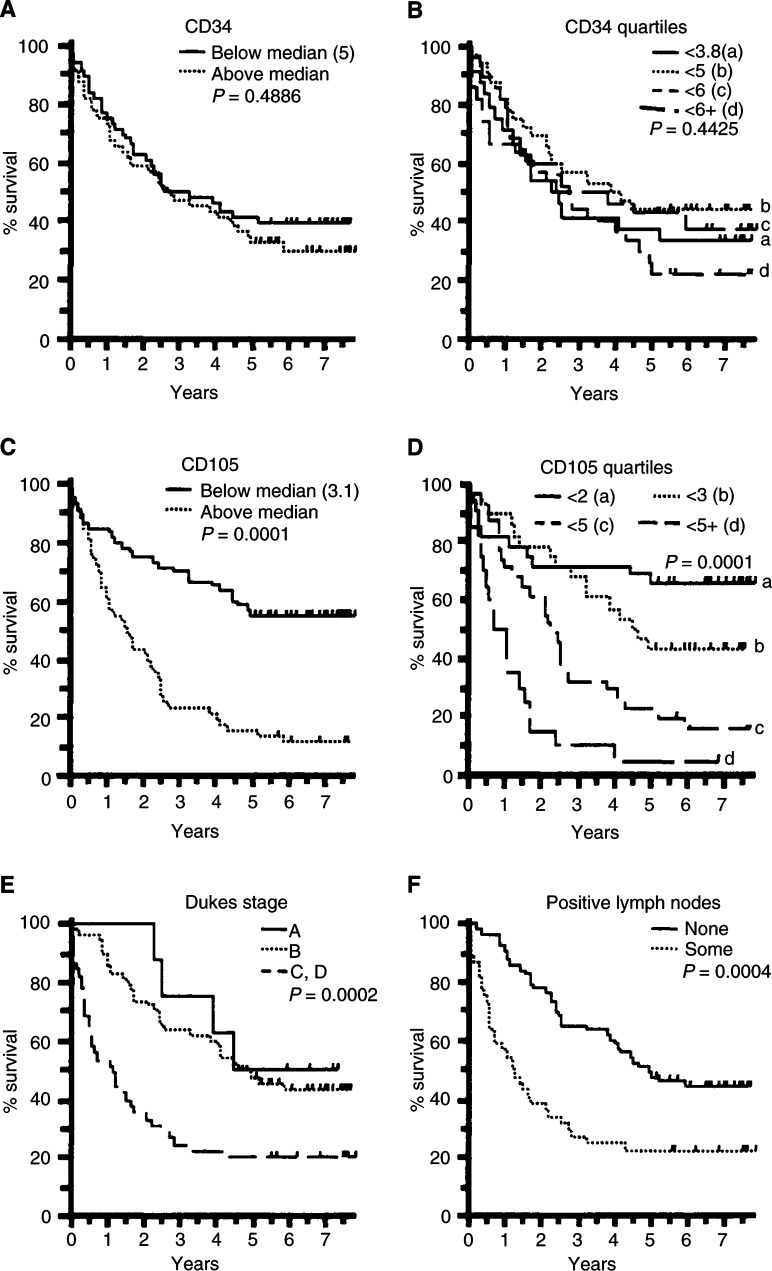
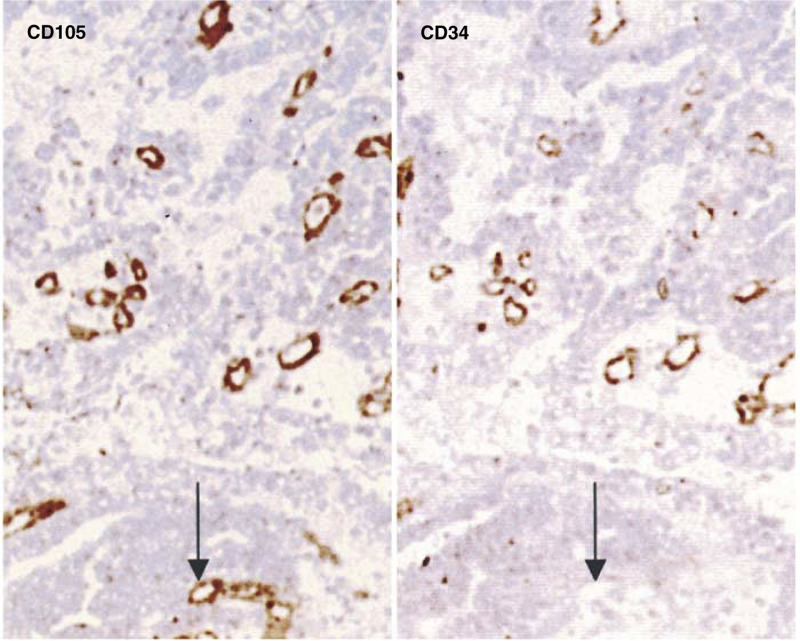
 ), demonstrating the distinctive expression of CD105 and CD34 in tumour vasculature (× 250).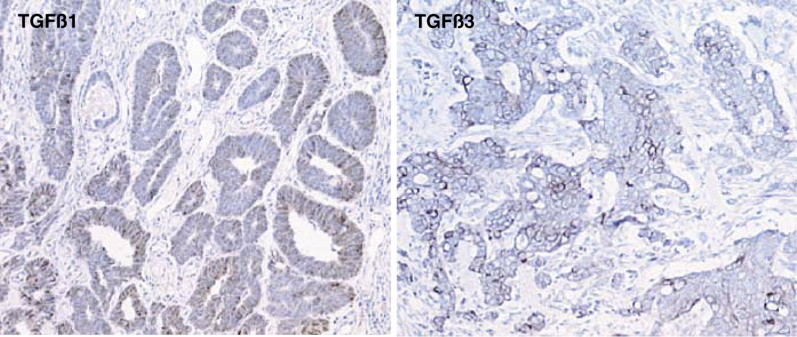
References
-
- Abdalla S, Behzad F, Bsharah S, Kumar S, Amini S, O'Dwyer S, Haboubi N (1999) Prognostic relevance of microvessel density in colorectal tumours. Oncol Rep 6: 839–842 - PubMed
-
- Akagi K, Ikeda Y, Sumiyoshi Y, Kimura Y, Kinoshita J, Miyazaki M, Abe T (2002) Estimation of angiogenesis with anti-CD105 immunostaining in the process of colorectal cancer development. Surgery 131(Suppl 1): S109–S113 - PubMed
-
- Akslen L, Livolsi V (2000) Increased angiogenesis in papillary thyroid carcinoma but lack of prognostic importance. Hum Pathol 31: 439–442 - PubMed
-
- Bodey B, Bodey BJ, Siegel S, Kaiser H (1998) Over-expression of endoglin (CD105): a marker of breast carcinoma-induced neo-vascularization. Anticancer Res 18: 3621–3628 - PubMed
-
- Brewer C, Setterdahl J, Li M, Johnston J, McAsey M (2000) Endoglin expression as a measure of microvessel density in cervical cancer. Obstet Gynecol 96: 224–228 - PubMed
Publication types
MeSH terms
Substances
LinkOut - more resources
Full Text Sources
