


Creatine therapy provides neuroprotection after onset of clinical symptoms in Huntington's disease transgenic mice
- PMID: 12787055
- PMCID: PMC2866522
- DOI: 10.1046/j.1471-4159.2003.01706.x
Creatine therapy provides neuroprotection after onset of clinical symptoms in Huntington's disease transgenic mice
Abstract
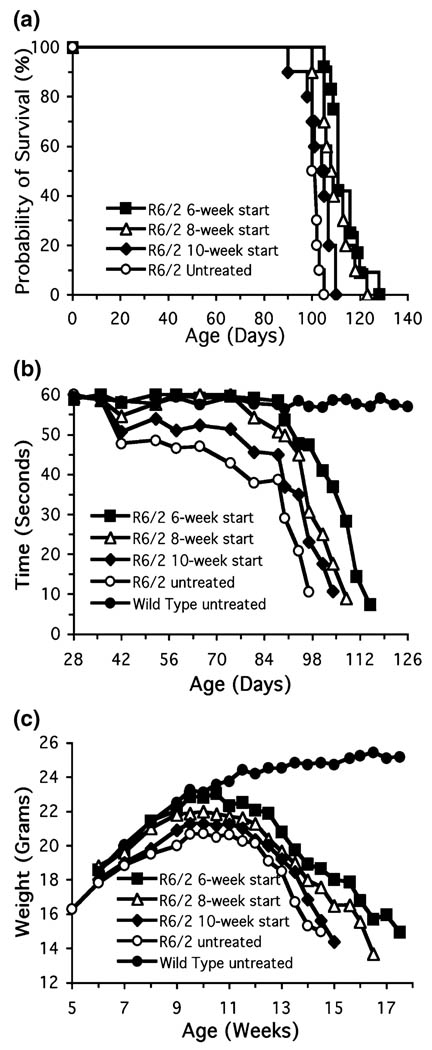
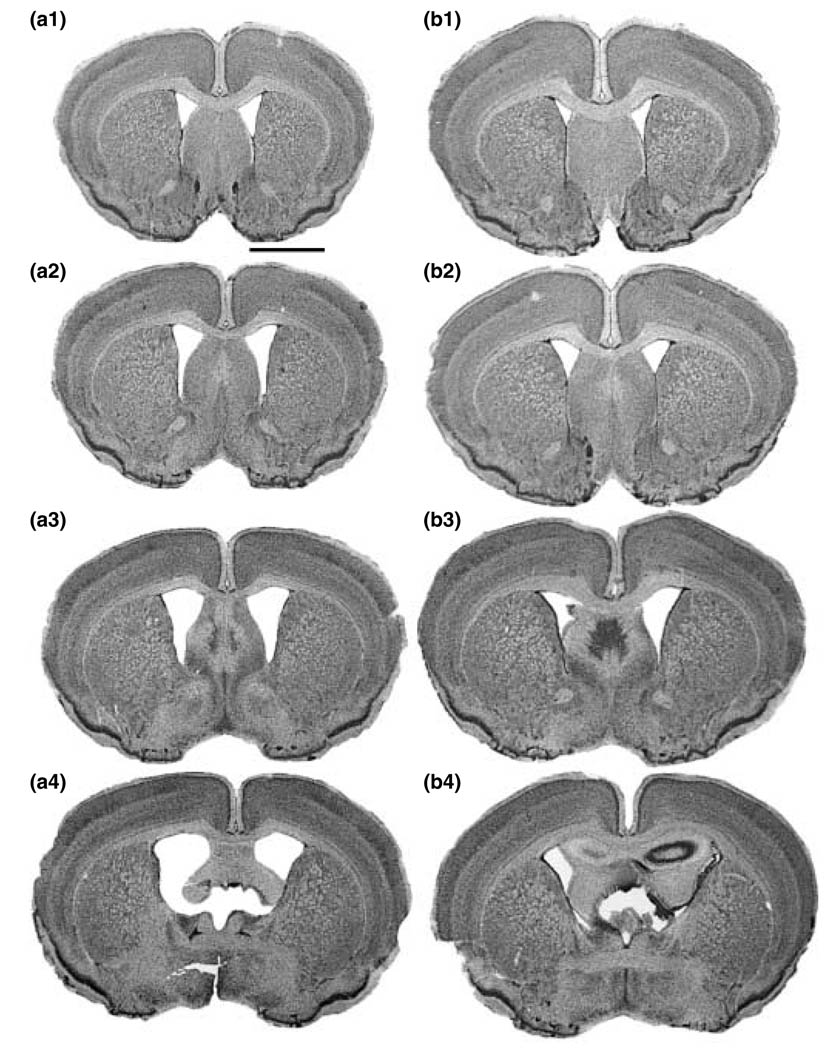
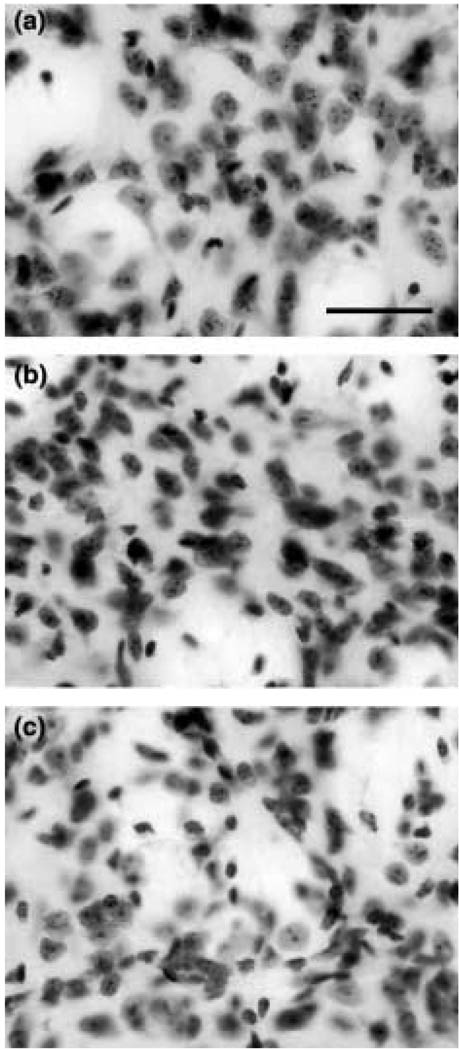
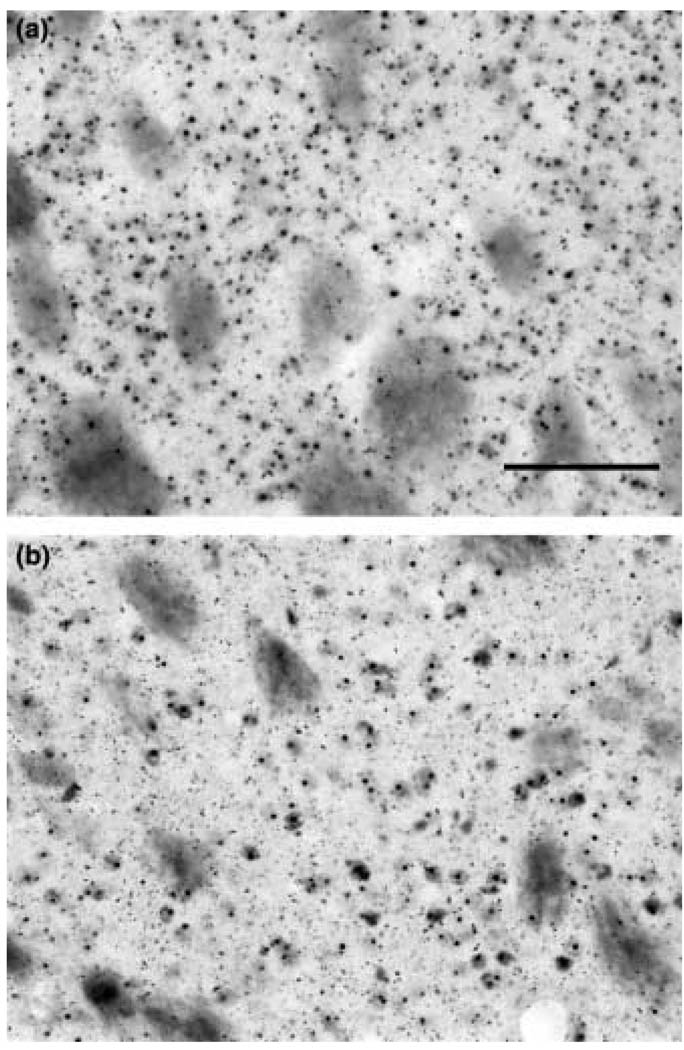
While there have been enormous strides in the understanding of Huntington's disease (HD) pathogenesis, treatment to slow or prevent disease progression remains elusive. We previously reported that dietary creatine supplementation significantly improves the clinical and neuropathological phenotype in transgenic HD mice lines starting at weaning, before clinical symptoms appear. We now report that creatine administration started after onset of clinical symptoms significantly extends survival in the R6/2 transgenic mouse model of HD. Creatine treatment started at 6, 8, and 10 weeks of age, analogous to early, middle, and late stages of human HD, significantly extended survival at both the 6- and 8-week starting points. Significantly improved motor performance was present in both the 6- and 8-week treatment paradigms, while reduced body weight loss was only observed in creatine-supplemented R6/2 mice started at 6 weeks. Neuropathological sequelae of gross brain and neuronal atrophy and huntingtin aggregates were delayed in creatine-treated R6/2 mice started at 6 weeks. We show significantly reduced brain levels of both creatine and ATP in R6/2 mice, consistent with a bioenergetic defect. Oral creatine supplementation significantly increased brain concentrations of creatine and ATP to wild-type control levels, exerting a neuroprotective effect. These findings have important therapeutic implications, suggesting that creatine therapy initiated after diagnosis may provide significant clinical benefits to HD patients.
Figures
References
-
- Andreassen OA, Dedeoglu A, Ferrante RJ, Jenkins BG, Ferrante KL, Thomas M, Borchelt DR, Hersch SM, Ross CR, Beal MF. Creatine increases survival and delays motor symptoms in a transgenic animal model of Huntington’s disease. J. Neurobiol. 2001a;8:479–491. - PubMed
-
- Andreassen OA, Ferrante RJ, Huang HM, Dedeoglu A, Park L, Ferrante KL, Kwon J, Borchelt DR, Ross CA, Gibson GE, Beal MF. Dichloroacetate exerts therapeutic effects in transgenic mouse models of Huntington’s disease. Ann. Neurol. 2001b;50:112–117. - PubMed
-
- Andreassen OA, Ferrante RJ, Dedeoglu A, Beal MF. Lipoic acid improves survival in transgenic mouse models of Huntington’s disease. Neuroreport. 2001c;29:3371–3373. - PubMed
-
- Balestrino M, Lensman M, Parodi M, Perasso L, Rebaudo R, Melani R, Polenov S, Cupello A. Role of creatine and phosphocreatine in neuronal protection from anoxic and ischemic damage. Amino Acids. 2002;23:221–229. - PubMed
-
- Beal MF. Energetics in the pathogenesis of neurodegenerative diseases. TINS. 2000;23:298–304. - PubMed
Publication types
MeSH terms
Substances
Grants and funding
- NS39258/NS/NINDS NIH HHS/United States
- U01 AT000613/AT/NCCIH NIH HHS/United States
- R01 AT000613/AT/NCCIH NIH HHS/United States
- R01 NS039258/NS/NINDS NIH HHS/United States
- NS38180/NS/NINDS NIH HHS/United States
- AG12992/AG/NIA NIH HHS/United States
- AT00613/AT/NCCIH NIH HHS/United States
- P01 AG014930/AG/NIA NIH HHS/United States
- NS35255/NS/NINDS NIH HHS/United States
- P30 AG013846/AG/NIA NIH HHS/United States
- P01 AG012992/AG/NIA NIH HHS/United States
- NS37102/NS/NINDS NIH HHS/United States
- AG13846/AG/NIA NIH HHS/United States
- AG14930/AG/NIA NIH HHS/United States
LinkOut - more resources
Full Text Sources
Other Literature Sources
Medical
Molecular Biology Databases
