


Nitric oxide reductase (norB) genes from pure cultures and environmental samples
- PMID: 12788753
- PMCID: PMC161466
- DOI: 10.1128/AEM.69.6.3476-3483.2003
Nitric oxide reductase (norB) genes from pure cultures and environmental samples
Abstract
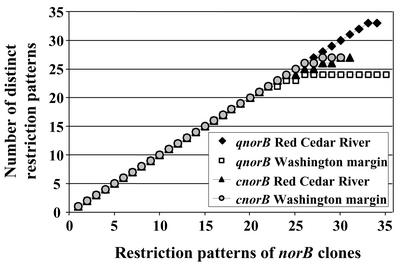
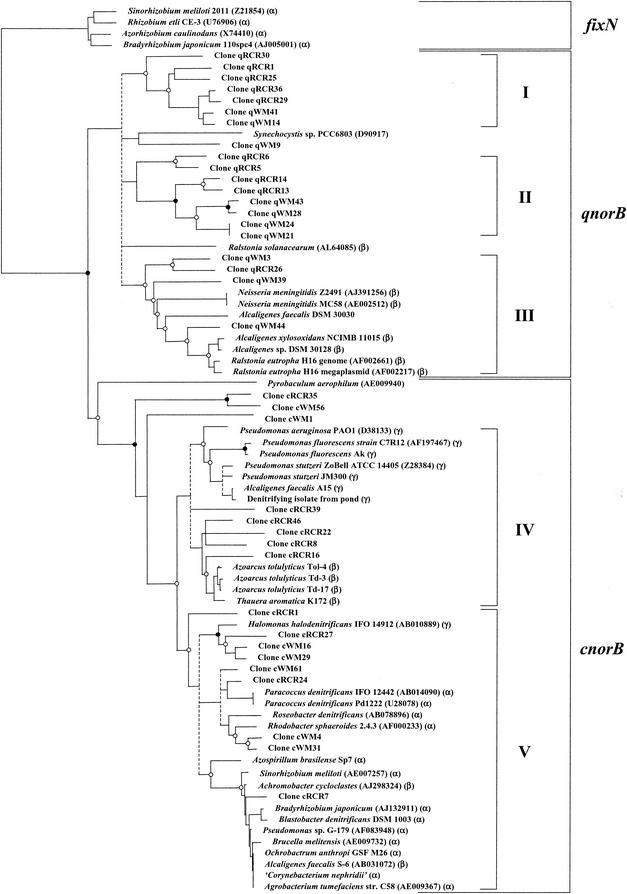
A PCR-based approach was developed to recover nitric oxide (NO) reductase (norB) genes as a functional marker gene for denitrifying bacteria. norB database sequences grouped in two very distinct branches. One encodes the quinol-oxidizing single-subunit class (qNorB), while the other class is a cytochrome bc-type complex (cNorB). The latter oxidizes cytochrome c, and the gene is localized adjacent to norC. While both norB types occur in denitrifying strains, the qnorB type was also found in a variety of nondenitrifying strains, suggesting a function in detoxifying NO. Branch-specific degenerate primer sets detected the two norB types in our denitrifier cultures. Specificity was confirmed by sequence analysis of the norB amplicons and failure to amplify norB from nondenitrifying strains. These primer sets also specifically amplified norB from freshwater and marine sediments. Pairwise comparison of amplified norB sequences indicated minimum levels of amino acid identity of 43.9% for qnorB and 38% for cnorB. Phylogenetic analysis confirmed the existence of two classes of norB genes, which clustered according to the respective primer set. Within the qnorB cluster, the majority of genes from isolates and a few environmental clones formed a separate subcluster. Most environmental qnorB clones originating from both habitats clustered into two distinct subclusters of novel sequences from presumably as yet uncultivated organisms. cnorB clones were located on separate branches within subclusters of genes from known organisms, suggesting an origin from similar organisms.
Figures
References
-
- Arai, H., Y. Igarashi, and T. Kodama. 1995. The structural genes for nitric oxide reductase from Pseudomonas aeruginosa. Biochim. Biophys. Acta 1261:279-284. - PubMed
Publication types
MeSH terms
Substances
Associated data
- Actions
- Actions
- Actions
- Actions
- Actions
- Actions
- Actions
- Actions
- Actions
- Actions
- Actions
- Actions
- Actions
- Actions
- Actions
- Actions
- Actions
- Actions
- Actions
- Actions
- Actions
- Actions
- Actions
- Actions
- Actions
- Actions
- Actions
- Actions
- Actions
- Actions
- Actions
- Actions
- Actions
- Actions
- Actions
- Actions
- Actions
- Actions
- Actions
- Actions
- Actions
- Actions
- Actions
- Actions
- Actions
- Actions
- Actions
- Actions
- Actions
- Actions
- Actions
- Actions
LinkOut - more resources
Full Text Sources
Molecular Biology Databases
