


Chemotherapy alone versus endocrine therapy alone for metastatic breast cancer
- PMID: 12804433
- PMCID: PMC8094405
- DOI: 10.1002/14651858.CD002747
Chemotherapy alone versus endocrine therapy alone for metastatic breast cancer
Abstract
Background: Both chemotherapy and endocrine therapy can be used as treatments for metastatic breast cancer.
Objectives: To review the evidence and determine whether chemotherapy or endocrine therapy has the most beneficial effect on treatment outcomes (survival, response rate, toxicity and quality of life).
Search strategy: The specialised register maintained by the Editorial Base of the Cochrane Breast Cancer Group was searched on 16th September 2002 using the codes for "advanced breast cancer", "chemotherapy" and "endocrine therapy". Details of the search strategy applied by the Group to create the register, and the procedure used to code references, are described in the Group's module on the Cochrane Library.
Selection criteria: Randomised trials comparing the effects of chemotherapy alone with endocrine therapy alone on pre-specified endpoints in metastatic breast cancer.
Data collection and analysis: Data were collected from published trials. Hazard ratios were derived for survival analysis and a fixed effect model was used for meta-analysis. Response rates were analysed as dichotomous variables. Toxicity and quality of life data were extracted where present.
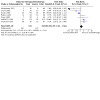
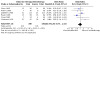
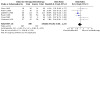
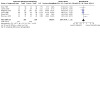
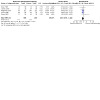
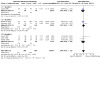
Main results: The primary analysis of overall effect using hazard ratios derived from published survival curves involved six trials (692 women). There was no significant difference seen (HR=0.94, 95%CI 0.79-1.12, p=0.5). A test for heterogeneity was p=0.1. A pooled estimate of reported response rates in eight trials involving 817 women shows a significant advantage for chemotherapy over endocrine therapy with RR=1.25 (1.01-1.54, p=0.04). However the two largest trials showed trends in opposite directions, and a test for heterogeneity was p=0.0018. There was little information available on toxicity and quality of life. Six of the seven fully published trials commented on increased toxicity with chemotherapy, mentioning nausea, vomiting and alopecia. Three of the seven mentioned aspects of quality of life, with differing results. Only one trial formally measured quality of life, concluding that it was better with chemotherapy.
Reviewer's conclusions: In women with metastatic breast cancer and where hormone receptors are present, a policy of treating first with endocrine therapy rather than chemotherapy is recommended except in the presence of rapidly progressive disease.
Conflict of interest statement
None known
Figures

References
References to studies included in this review
Abe 1995 {published data only}
-
- Abe O, Asaishi K, Izuo M, Enomoto K, Koyama H, Tominaga T, et al. Effects of medroxyprogesterone acetate therapy on advanced or recurrent breast cancer and its influences on blood coagulation and the fibrinolytic system. Surgery Today 1995;25(8):701-10. - PubMed
ANZBCTG 1986 {published data only}
-
- ANZBCTG. A randomized trial in postmenopausal patients with advanced breast cancer comparing endocrine and cytotoxic therapy given sequentially or in combination. The Australian and New Zealand Breast Cancer Trials Group, Clinical Oncological Society of Australia. Journal of Clinical Oncology 1986;4(2):186-93. - PubMed
-
- Forbes JF. A randomized trial of sequential antioestrogen/cytotoxic chemotherapy versus sequential cytotoxic chemotherapy/antioestrogen therapy, versus combined modality therapy, in 339 patients with advanced breast cancer. Reviews on Endocrine-related Cancer 1986;Suppl 18:43-50.
Clavel 1982 {published data only}
-
- Clavel B, Cappelaere JP, Guerin J, Klein T, Pommatau E, Berlie J. Management of advanced breast cancer in post-menopausal women. A comparative trial of hormonal therapy, chemotherapy, and a combination of both. Semaine des Hopitaux 1982;58(34):1919-23. - PubMed
Dixon 1992 {published data only}
-
- Dixon AR, Jackson L, Ellis IO, Elston C, Nicholson RI, Chan S, et al. A randomized study of mitozantrone and megesterol acetate in tamoxifen resistant advanced breast cancer. British Journal of Cancer 1990;62(Suppl 12):31.
Edinburgh 1979 {published data only}
-
- Scottish Cancer Therapy Network. Edinburgh controlled trials for breast cancer: systemic therapy in the treatment of advanced breast cancer. 212.219.75.236/scripts/ukcccr_test/ibmhpj/bin/report.exe?B18:0:Reg:passwd:user:guest (accessed September 5 2006).
Goldenberg 1975 {published data only}
-
- Goldenberg IS, Sedransk N, Volk H, Segaloff A, Kelley RM, Haines CR. Combined androgen and antimetabolite therapy of advanced female breast cancer. A report of the Cooperative Breast Cancer Group. Cancer 1975;36(2):308-10. - PubMed
Priestman 1978 {published data only}
Rosner 1974 {published data only}
-
- Rosner D, Dao TL, Horton J, Cunningham T, Diaz R, Taylor S, et al. Randomized study of adriamycin (ADM) vs. combined therapy (FCP) vs. adrenalectomy (ADX) in breast cancer. Proceedings of the American Association of Cancer Research 1974;15:number 252.
Tashiro 1990 {published data only}
-
- Tashiro H, Nomura Y, Hisamatsu K. A randomized trial of endocrine therapy, chemotherapy, and chemo-endocrine therapy in advanced breast cancer. Gan to Kagaku Ryoho [Japanese Journal of Cancer & Chemotherapy] 1990;17(12):2369-73. - PubMed
Taylor 1986 {published data only}
-
- Taylor SG, Gelman RS, Falkson G, Cummings FJ, Taylor SG. Combination chemotherapy compared to tamoxifen as initial therapy for stage IV breast cancer in elderly women. Annals of Internal Medicine 1986;104(4):455-61. - PubMed
References to studies excluded from this review
Auperin 1995a {published data only}
-
- Auperin A, Jouve M, Asselain B, Beuzeboc P, Dorval T, Garcia-Girald E, et al. Therapeutic combinations in metastatic breast cancer: results of two phase III trials based on hormonal status. Bulletin du Cancer 1995;82:479.
Cole 1973 {published data only}
Newsome 1963 {published data only}
-
- Newsome JF, Powers JA. The comparative results of combined cytotoxic and hormonal agent in the treatment of disseminated breast cancer. Proceedings of the American Association for Cancer Research 1963;4(1):48.
Villalon 1993 {published data only}
-
- Villalon AH, Ngelangel CA, Eufemio G, Laudico AV. Cyclophosphamide methotrexate 5-fluorouracil (CMF), vs. CMF megestrol acetate (CMF-M), vs. Megestrol acetate (M) for advanced breast cancer in Filipino women. Phillipine Journal of Internal Medicine 1993;31:115-26.
Additional references
EBCTCG 2005
-
- Early Breast Cancer Trialists' Collaborative Group. Effects of chemotherapy and hormonal therapy for early breast cancer on recurrence and 15-year survival: an overview of the randomised trials. Lancet 2005;365:1687-717. - PubMed
Ghersi 2005
Henderson 2002
-
- Henderson IC. A rose is no longer a rose. Journal of Clinical Oncology 2002;20(16):3365-8. - PubMed
Higgins 2005
-
- Higgins JPT, Green S, editors. Cochrane Handbook for Systematic Reviews of Interventions 4.2.5. In: http://www.cochrane.org/resources/handbook/hbook.htm. Chicester: John Wiley and Sons, (accessed September 5 2006).
Hortobagyi 1998
-
- Hortobagyi GN. Drug therapy: Treatment of breast cancer (Review article). New England Journal of Medicine 1998;339(14):974-84. - PubMed
Klijn 2001
-
- Klijn JGM, Blamey RW, Boccardo F, Tominaga T, Duchateau L, Sylvester R for the Combined Hormone Agents Trialists' Group and the EORTC . Combined tamoxifen and luteinizing hormone-releasing hormone (LHRH) agonist versus LHRH agonist alone in premenopausal advanced breast cancer: A meta-analysis of four randomized trials. Journal of Clinical Oncology 2001;19:343-53. - PubMed
Parmar 1998
-
- Parmar MKB, Torri V, Stewart L. Extracting summary statistics to perform meta-analyses of the published literature for survival endpoints. Statistics in Medicine 1998;17:2815-34. - PubMed
Stockler 1997a
-
- Stockler M, Wilcken N, Ghersi D, Simes J. The management of advanced breast cancer: systematic reviews of randomised controlled trials regarding the use of cytotoxic chemotherapy and endocrine therapy. NHMRC 1997;(ISBN 1-876319-01-1).
Stockler 1997b
-
- Stockler M, Wilcken N, Coates A. Chemotherapy for metastatic breast cancer - When is enough enough? European Journal of Cancer 1997;33(13):2147-8. - PubMed
Stockler 2000
-
- Stockler MR, Wilcken NRC, Ghersi D, Simes RJ. The use of chemotherapy and endocrine therapy in the management of metastatic breast cancer: a series of systematic reviews. Cancer Treatment Reviews 2000;26(3):151-68. - PubMed
WHO 2006
-
- World Health Organisation. Cancer. Fact sheet number 297. http://www.who.int/mediacentre/factsheets/fs297/en/index.html (accessed September 5 2006).
Yusuf 1985
-
- Yusuf S, Peto R, Lewis J, Collins R, Sleight P. Beta-blockade during and after myocardial infarction: An overview of the randomised trials. Progress in Cardiovascular Diseases 1985;27(5):335-71. - PubMed
References to other published versions of this review
Publication types
MeSH terms
Substances
LinkOut - more resources
Full Text Sources
Other Literature Sources
Medical
