


Evidence for enhanced neurobehavioral vulnerability to nicotine during periadolescence in rats
- PMID: 12805310
- PMCID: PMC6740776
- DOI: 10.1523/JNEUROSCI.23-11-04712.2003
Evidence for enhanced neurobehavioral vulnerability to nicotine during periadolescence in rats
Abstract
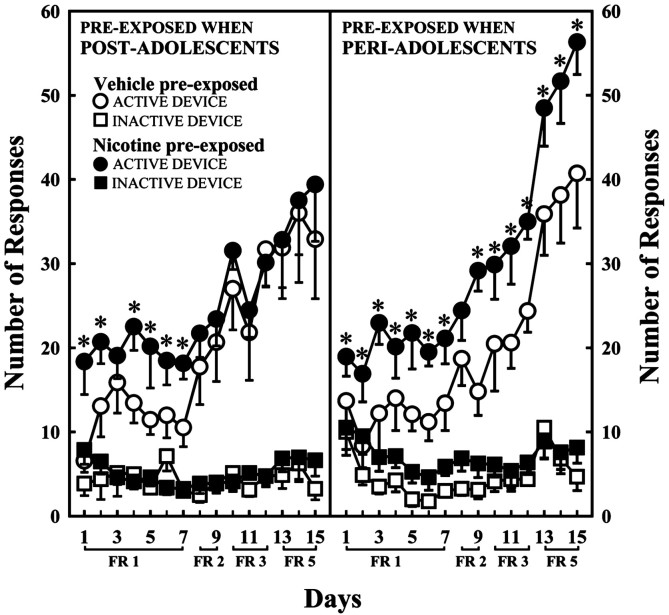
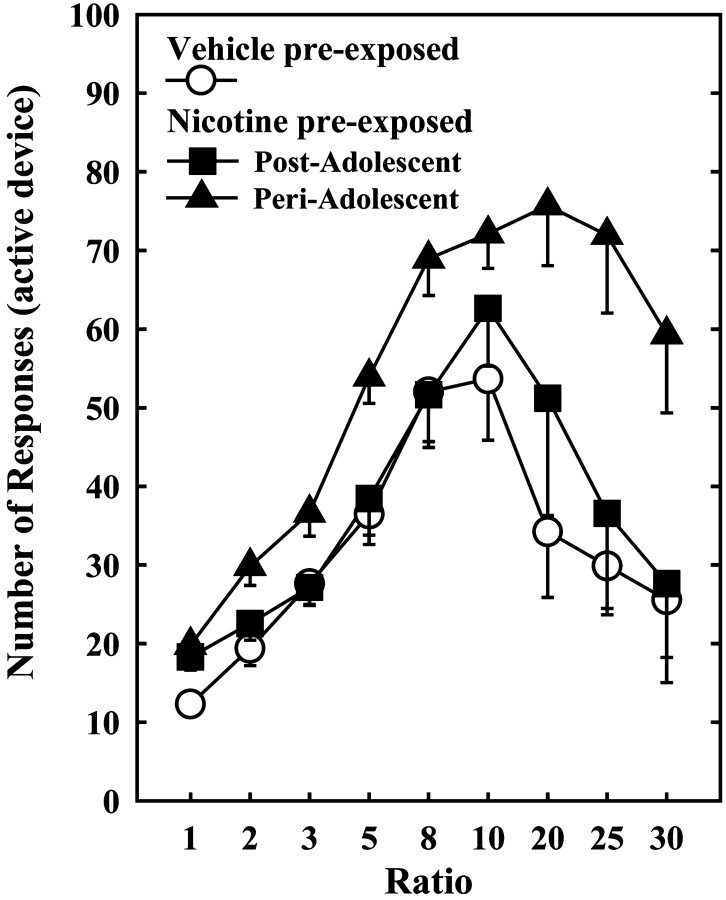
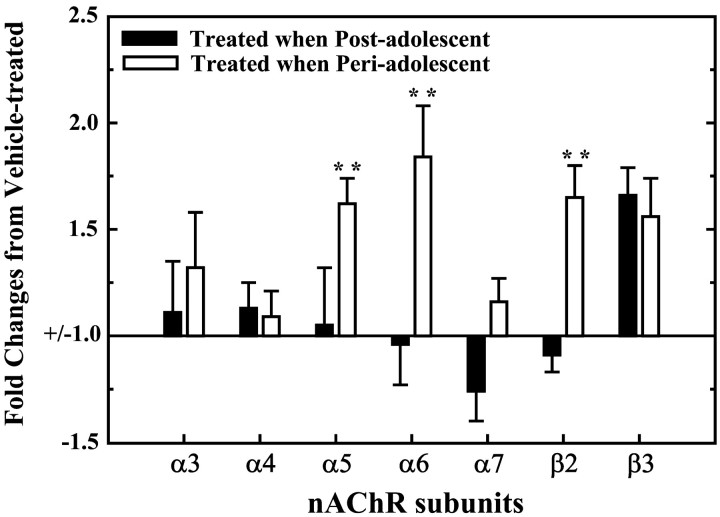
Epidemiological studies indicate that there is an increased likelihood for the development of nicotine addiction when cigarette smoking starts early during adolescence. These observations suggest that adolescence could be a "critical" ontogenetic period, during which drugs of abuse have distinct effects responsible for the development of dependence later in life. We compared the long-term behavioral and molecular effects of repeated nicotine treatment during either periadolescence or postadolescence in rats. It was found that exposure to nicotine during periadolescence, but not a similar exposure in the postadolescent period, increased the intravenous self-administration of nicotine and the expression of distinct subunits of the ligand-gated acetylcholine receptor in adult animals. Both these changes indicated an increased sensitivity to the addictive properties of nicotine. In conclusion, adolescence seems to be a critical developmental period, characterized by enhanced neurobehavioral vulnerability to nicotine.
Figures
References
-
- Adriani W, Macri S, Pacifici R, Laviola G ( 2002) Peculiar vulnerability to nicotine oral self-administration in mice during early adolescence. Neuropsychopharmacology 27: 212–224. - PubMed
-
- Andersen SL, Rutstein M, Benzo JM, Hostetter JC, Teicher MH ( 1997) Sex differences in dopamine receptor over-production and elimination. NeuroReport 8: 1495–1498. - PubMed
-
- Caine SB, Lintz R, Koob GF ( 1993) Intravenous drug self-administration techniques in animals. In: Behavioural neuroscience: a practical approach (Sahgal A, ed), pp 117–143. Oxford: Oxford University.
-
- Chomczynski P, Sacchi N ( 1987) Single-step method of RNA isolation by acid guanidinium thiocyanate-phenol-chloroform extraction. Anal Biochem 162: 156–159. - PubMed
Publication types
MeSH terms
Substances
LinkOut - more resources
Full Text Sources
