


Reexamining age, race, site, and thermometer type as variables affecting temperature measurement in adults - A comparison study
- PMID: 12807535
- PMCID: PMC166172
- DOI: 10.1186/1472-6955-2-1
Reexamining age, race, site, and thermometer type as variables affecting temperature measurement in adults - A comparison study
Abstract
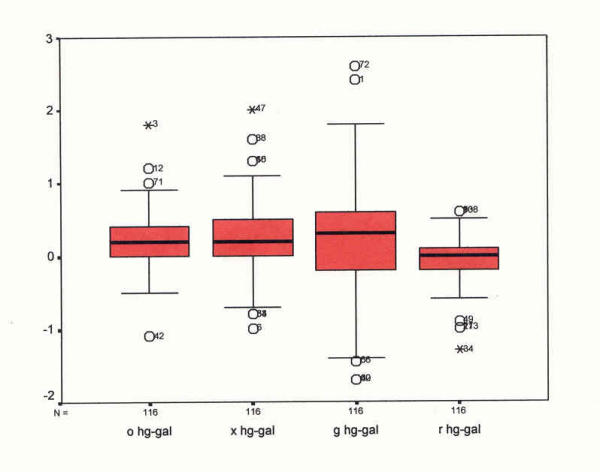
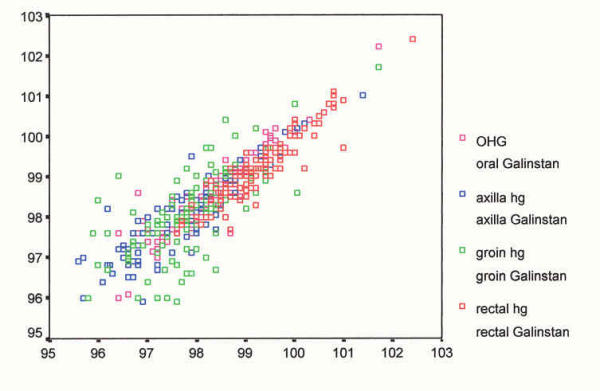
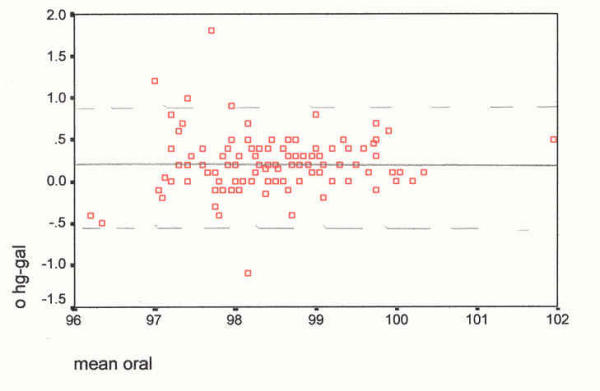
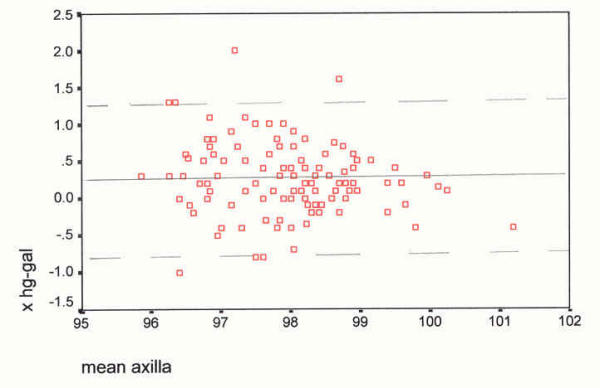
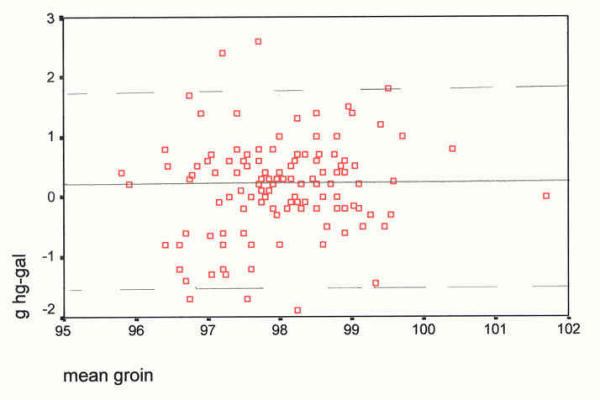
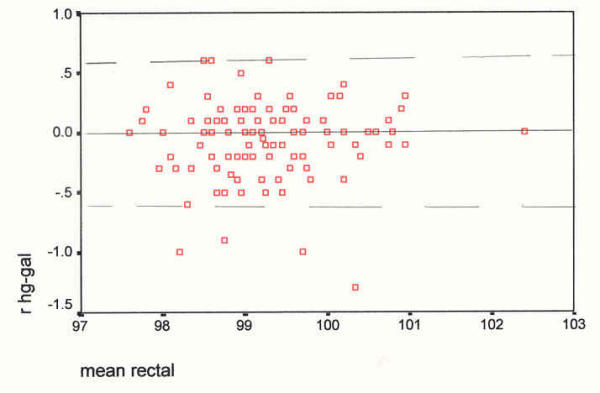
BACKGROUND: As a result of the recent international vigilance regarding disease assessment, accurate measurement of body temperature has become increasingly important. Yet, trusted low-tech, portable mercury glass thermometers are no longer available. Thus, comparing accuracy of mercury-free thermometers with mercury devices is essential. Study purposes were 1) to examine age, race, site as variables affecting temperature measurement in adults, and 2) to compare clinical accuracy of low-tech Galinstan-in-glass device to mercury-in-glass at oral, axillary, groin, and rectal sites in adults. METHODS: Setting 176 bed accredited healthcare facility, rural northwest USParticipants Convenience sample (N = 120) of hospitalized persons GreaterEqual; 18 years old.Instruments Temperatures ( degrees F) measured at oral, skin (simultaneous), immediately followed by rectal sites with four each mercury-glass (BD) and Galinstan-glass (Geratherm) thermometers; 10 minute dwell times. RESULTS: Participants averaged 61.6 years (SD 17.9), 188 pounds (SD 55.3); 61% female; race: 85% White, 8.3% Native Am., 4.2% Hispanic, 1.7 % Asian, 0.8% Black. For both mercury and Galinstan-glass thermometers, within-subject temperature readings were highest rectally; followed by oral, then skin sites. Galinstan assessments demonstrated rectal sites 0.91 degrees F > oral and FullEqual; 1.3 degrees F > skin sites. Devices strongly correlated between and across sites. Site difference scores between devices showed greatest variability at skin sites; least at rectal site. 95% confidence intervals of difference scores by site ( degrees F): oral (0.142 - 0.265), axilla (0.167 - 0.339), groin (0.037 - 0.321), and rectal (-0.111 - 0.111). Race correlated with age, temperature readings each site and device. CONCLUSION: Temperature readings varied by age, race. Mercury readings correlated with Galinstan thermometer readings at all sites. Site mean differences between devices were considered clinically insignificant. Still considered the gold standard, mercury-glass thermometers may no longer be available worldwide. Therefore, mercury-free, environmentally safe low-tech Galinstan-in-glass may be an appropriate replacement. This is especially important as we face new, internationally transmitted diseases.
Figures
References
-
- Wunderlich CA. On the temperature in diseases: A manual of medical thermometry. In: Woodman WB MD, editor. London: The New Sydenham Society. 2. 1871. Original work published 1870 in Stuttgart: Ebner & Seubert.
-
- Sganga A, Wallace R, Kiehl E, Irving T, Witter L. A comparison of four methods of normal newborn temperature measurement. MCN, Am J Matern Child Nurs. 2000;25:76–79. - PubMed
-
- Hooker EA, Smith SW, Miles T, King L. Subjective assessment of fever by parents: Comparison with measurement by non-contact tympanic thermometer and calibrated rectal glass mercury thermometer. Ann Emerg Med. 1996;28:313–317. - PubMed
-
- Muma BK, Treloar DJ, Wurmlinger K, Peterson E, Vitae A. Comparison of rectal, axillary, and tympanic membrane temperatures in infants and young children. Ann Emerg Med. 1991;20:41–44. - PubMed
LinkOut - more resources
Full Text Sources
Research Materials
