


Effects of nimesulide on kainate-induced in vitro oxidative damage in rat brain homogenates
- PMID: 12807536
- PMCID: PMC165434
- DOI: 10.1186/1471-2210-3-7
Effects of nimesulide on kainate-induced in vitro oxidative damage in rat brain homogenates
Abstract
Background: The cyclooxygenase-2 inhibitor nimesulide is able to reduce kainate-induced oxidative stress in vivo. Here we investigate if this effect is mediated by the direct antioxidant properties of nimesulide using a well-characterized in vitro model of kainate toxicity.
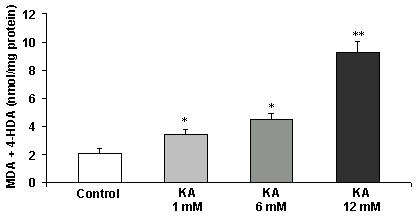
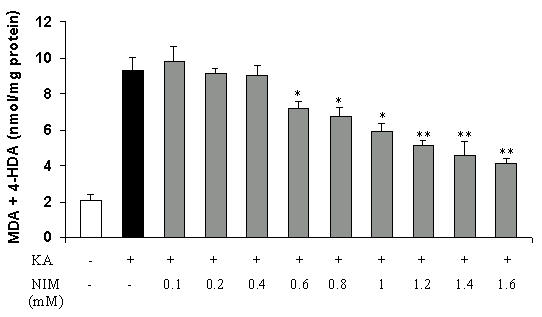
Results: Exposure of rat brain homogenates to kainate (12 mM) caused a significant (p < 0.01) increase in the concentrations of malondialdehyde and 4-hydroxy-alkenals and a significant (p < 0.01) decrease in sulfhydryl levels. High concentrations of nimesulide (0.6-1.6 mM) reduced the extent of lipid peroxidation and the decline in both total and non-protein sulfhydryl levels induced by kainate in a concentration-dependent manner.
Conclusions: Our results suggest that the neuroprotective effects of nimesulide against kainate-induced oxidative stress in vivo are not mediated through its direct free radical scavenging ability because the concentrations at which nimesulide is able to reduce in vitro kainate excitotoxicity are excessively higher than those attained in plasma after therapeutic doses.
Figures
References
-
- Davis R, Brogden RN. Nimesulide. An update of its pharmacodynamic and pharmacokinetic properties and therapeutic efficacy. Drugs. 1994;48:431–454. - PubMed
-
- Rabasseda X. Nimesulide: a selective cyclooxygenase 2 inhibitor antiinflammatory dru. Drugs Today. 1996;32:1–23.
-
- Rossoni G, Berti F, Buschi LM, Della Bella D. New data concerning the anaphylactic and antihistaminic activity of nimesulid. Drugs. 1993;46:22–28. - PubMed
-
- Ferreira SH. The role of interleukins and nitric oxide in the mediation of inflammatory pain and its control by peripheral analgesic. Drugs. 1993;46:1–9. - PubMed
MeSH terms
Substances
LinkOut - more resources
Full Text Sources
Research Materials
