Disasters and the public health safety net: Hurricane Floyd hits the North Carolina Medicaid program
- PMID: 12835196
- PMCID: PMC1447920
- DOI: 10.2105/ajph.93.7.1122
Disasters and the public health safety net: Hurricane Floyd hits the North Carolina Medicaid program
Abstract
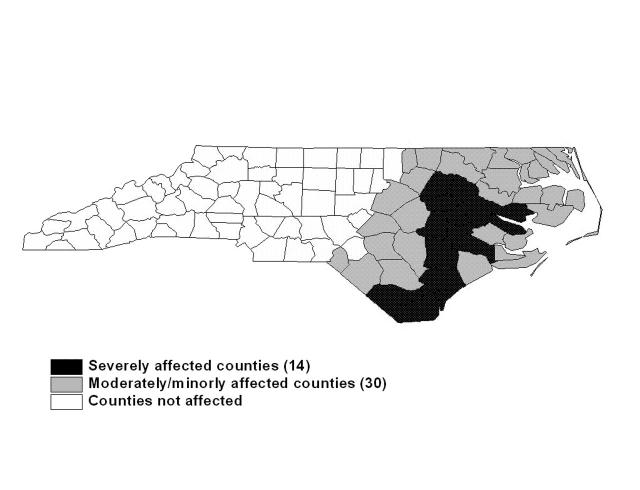
Objectives: We measured the effect of Hurricane Floyd on Medicaid enrollment and health services use in the most severely affected counties of North Carolina.
Methods: We used differences-in-differences models on balanced panels of Medicaid claims and enrollment data.
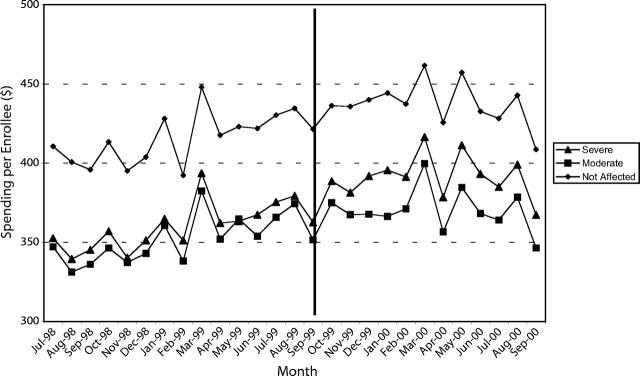
Results: Overall spending per enrollee showed little short-term effect but demonstrated a moderate increase 1 year after the storm. We found very modest short-term increases in Medicaid enrollment, a small long-term decrease in enrollment, and large increases in the long-term use of emergency room and outpatient services.
Conclusions: Our findings suggest that hurricane victims experienced substantial changes in patterns of care that endured for much longer than the initial crisis period. These findings can have important implications for the management of disaster relief for this population.
Figures
References
-
- Attia MW. The blizzard of 1996: a pediatric emergency department. Prehosp Emerg Care. 1998;2:285–288. - PubMed
-
- Brewer RD, Morris PD, Cole TB. Hurricanerelated emergency department visits in an inland area: an analysis of the public health impact of Hurricane Hugo in North Carolina. Ann Emerg Med. 1994;23:731–736. - PubMed
-
- Noji EK, Toole MJ. The historical development of public health responses to disaster. Disasters. 1997;21:366–376. - PubMed
-
- Pointer JE, Michaelis J, Saunders C, et al. The 1989 Loma Prieta earthquake: impact on hospital patient care. Ann Emerg Med. 1992;21:1228–1233. - PubMed
Publication types
MeSH terms
LinkOut - more resources
Full Text Sources
Medical