Heat or eat? Cold-weather shocks and nutrition in poor American families
- PMID: 12835201
- PMCID: PMC1447925
- DOI: 10.2105/ajph.93.7.1149
Heat or eat? Cold-weather shocks and nutrition in poor American families
Abstract
Objectives: The authors sought to determine the effects of cold-weather periods on budgets and nutritional outcomes among poor American families.
Methods: The Consumer Expenditure Survey was used to track expenditures on food and home fuels, and the Third National Health and Nutrition Examination Survey was used to track calorie consumption, dietary quality, vitamin deficiencies, and anemia.
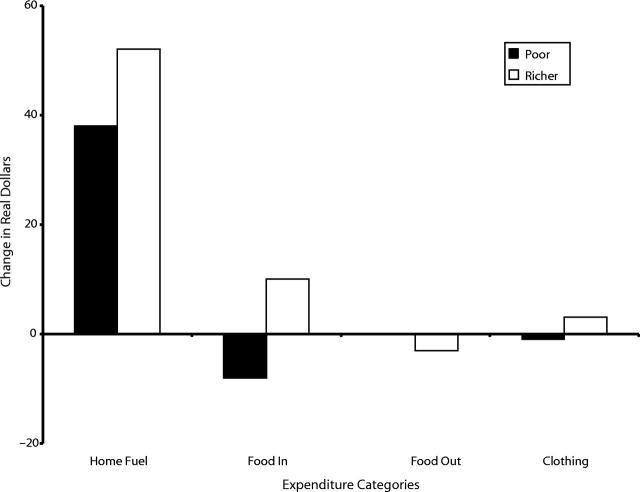
Results: Both poor and richer families increased fuel expenditures in response to unusually cold weather. Poor families reduced food expenditures by roughly the same amount as their increase in fuel expenditures, whereas richer families increased food expenditures.
Conclusions: Poor parents and their children spend less on and eat less food during cold-weather budgetary shocks. Existing social programs fail to buffer against these shocks.
Figures
References
-
- Becker E. Millions eligible for Food Stamps aren’t applying. New York Times. February 26, 2001:A1.
-
- Bhattacharya J, Currie J. Youths at nutritional risk: misnourished or malnourished? In: Gruber J, ed. Risky Behavior Among Youths. Chicago, Ill: University of Chicago Press; 2001:483–521.
-
- Devaney BL, Gordon AR, Burghardt JA. Dietary intakes of students. Am J Clin Nutr. 1995;61(suppl 1):205S–212S. - PubMed
-
- Middleman AB, Emans SJ, Cox J. Nutritional vitamin B12 deficiency and folate deficiency in an adolescent patient presenting with anemia, weight loss, and poor school performance. J Adolesc Health. 1996;19:76–79. - PubMed
-
- Centers for Disease Control and Prevention. Guidelines for school health programs to promote lifelong healthy eating. MMWR Recomm Rep. 1996;45(RR-9):1–41. - PubMed
Publication types
MeSH terms
Substances
Grants and funding
LinkOut - more resources
Full Text Sources