DNA replication: a complex matter
- PMID: 12835753
- PMCID: PMC1326325
- DOI: 10.1038/sj.embor.embor886
DNA replication: a complex matter
Erratum in
- EMBO Rep. 2003 Aug;4(8):766
Abstract
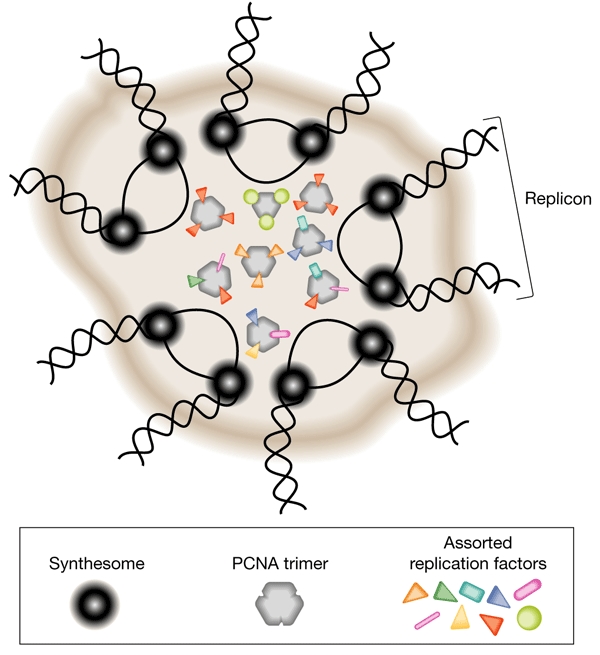
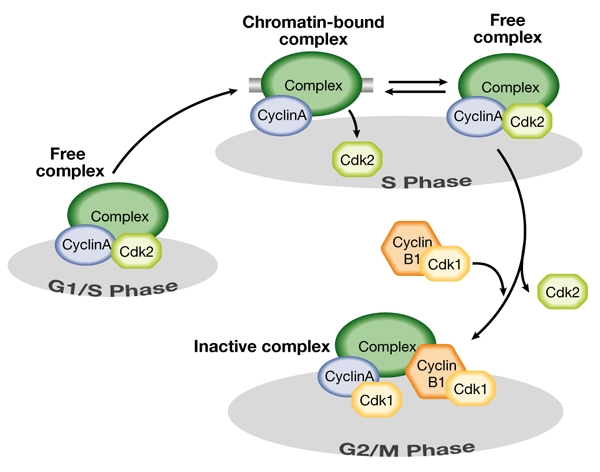
In eukaryotic cells, the essential function of DNA replication is carried out by a network of enzymes and proteins, which work together to rapidly and accurately duplicate the genetic information of the cell. Many of the components of this DNA replication apparatus associate with other cellular factors as components of multiprotein complexes, which act cooperatively in networks to regulate cell cycle progression and checkpoint control, but are distinct from the pre-replication complexes that associate with the origins and regulate their firing. In this review, we summarize current knowledge about the composition and dynamics of these large multiprotein complexes in mammalian cells and their relationships to the replication factories.
Figures
References
-
- Ayyagari R., Gomes X.V., Gordenin D.A. & Burgers P.M. (2003) Okazaki fragment maturation in yeast. I. Distribution of functions between FEN1 and DNA2. J. Biol. Chem., 278, 1618–1625. - PubMed
-
- Bae S.H., Bae K.H., Kim J.A. & Seo Y.S. (2001) RPA governs endonuclease switching during processing of Okazaki fragments in eukaryotes. Nature, 412, 456–461. - PubMed
-
- Boldogh I., Milligan D., Lee M.S., Bassett H., Lloyd R.S. & McCullough A.K. (2001) hMYH cell cycle-dependent expression, subcellular localization and association with replication foci: evidence suggesting replication-coupled repair of adenine:8-oxoguanine mispairs. Nucleic Acids Res., 29, 2802–2809. - PMC - PubMed
-
- Cardoso M.C., Leonhardt H. & Nadal-Ginard B. (1993) Reversal of terminal differentiation and control of DNA replication: cyclin A and cdk2 specifically localize at subnuclear sites of DNA replication. Cell, 74, 979–992. - PubMed
-
- Chuang L.S.-H., Ian H.-I., Koh T.-W., Ng H.-H., Xu G. & Li B.F.L. (1997) Human DNA-(cytosine-5) methyltransferase–PCNA complex as a target for p21WAF1. Science, 277, 1996–2000. - PubMed
Publication types
MeSH terms
Substances
LinkOut - more resources
Full Text Sources
Molecular Biology Databases