


Characterization of adapt33, a stress-inducible riboregulator
- PMID: 12837039
- PMCID: PMC5991141
- DOI: 10.3727/000000003108748982
Characterization of adapt33, a stress-inducible riboregulator
Abstract
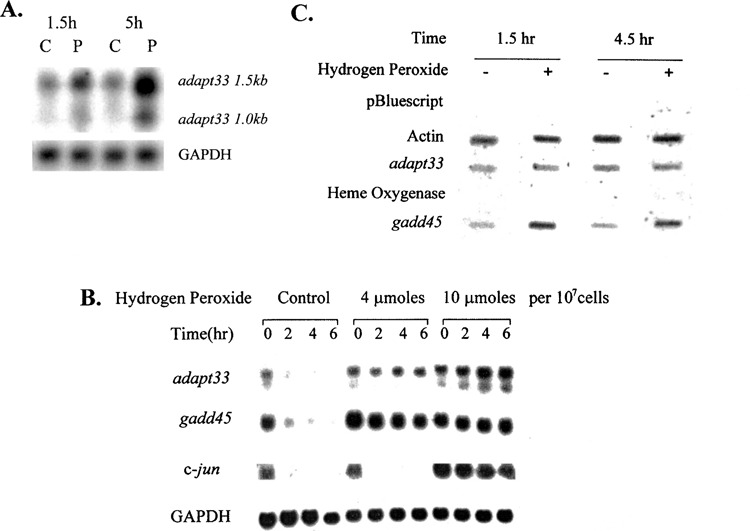
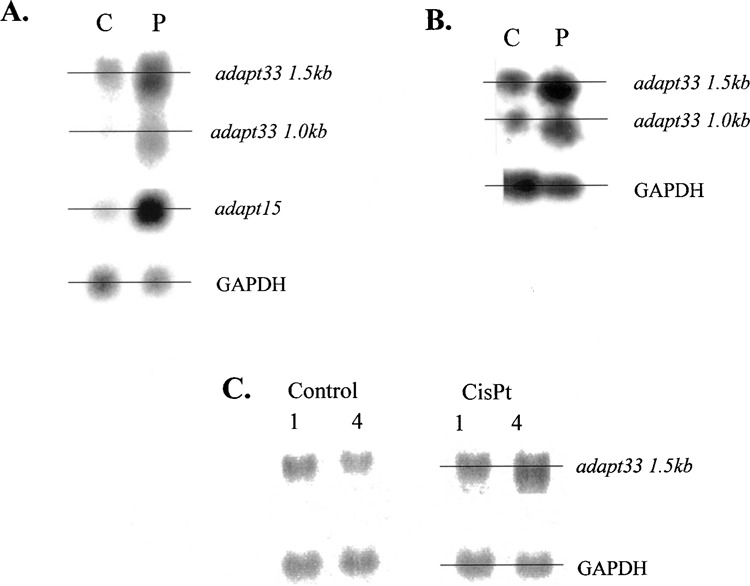
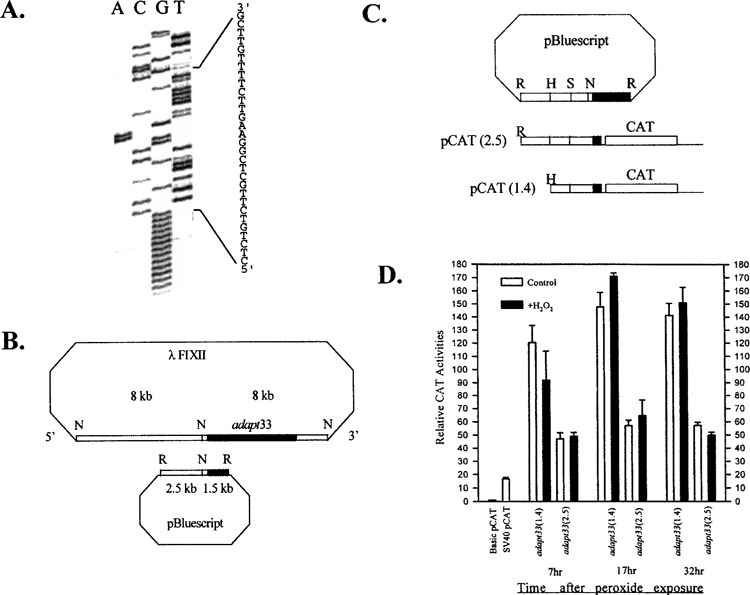
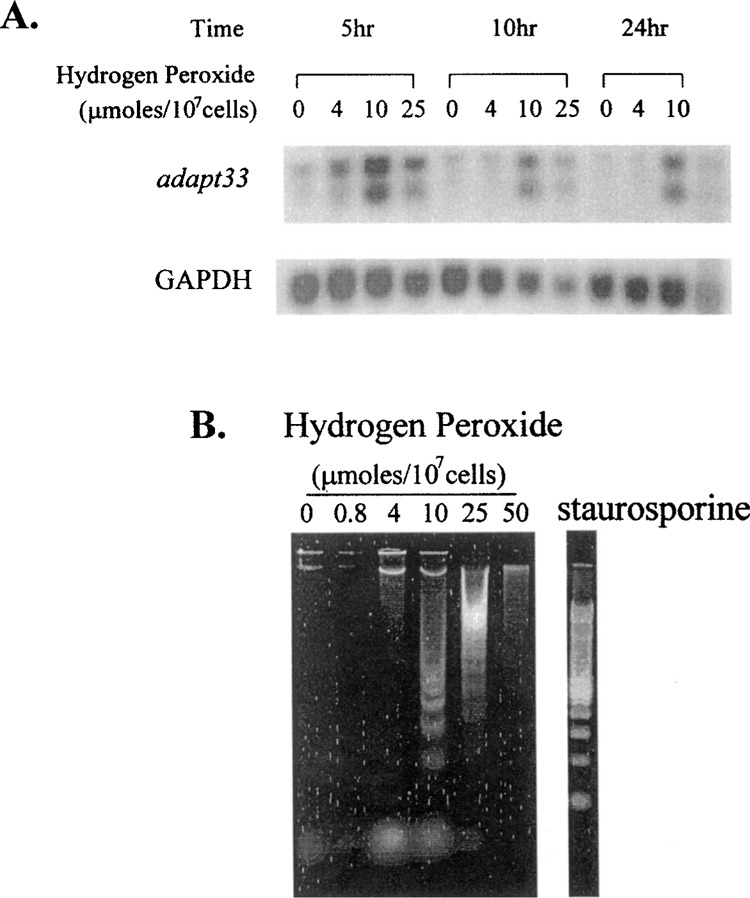
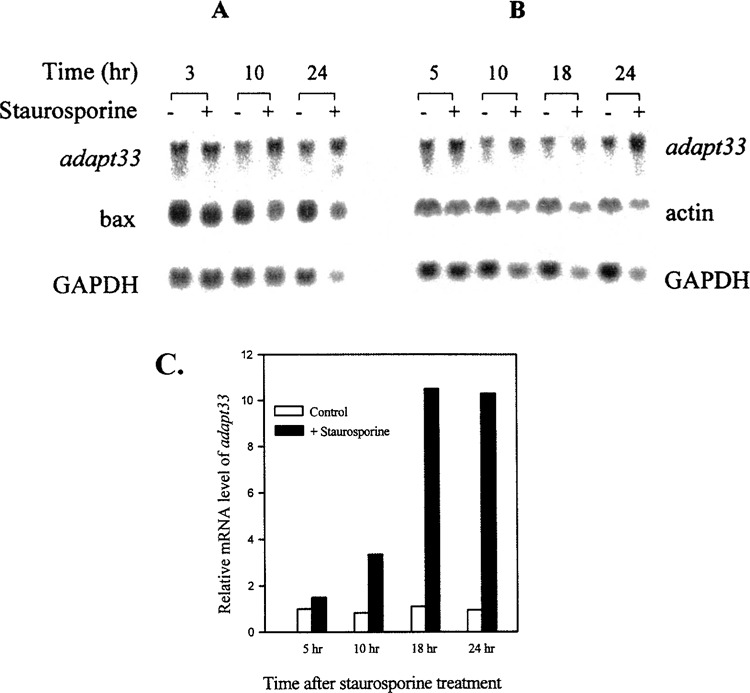
We have identified adapt33 as a multiple stress-responsive gene that is induced under conditions of a cytoprotective "adaptive response." adapt33 RNA does not contain any appreciable open reading frame nor produce a protein product and is therefore classified as a stress-inducible riboregulator. Although a number of oxidant stress-modulated, protein-encoding genes have been reported and characterized, very few stress-inducible riboregulator RNAs are known. Here we extend previous studies toward understanding the underlying regulation of expression and function of this rare mammalian riboregulator. mRNA stability and transcription studies determined that adapt33 induction by hydrogen peroxide is at the mRNA stability level, and that adapt33 has a very short half-life. Surprisingly, adapt33 mRNA also exhibits altered electrophoretic migration in response to both hydrogen peroxide and cis-platinum treatment. Although no transcriptional modulation in response to hydrogen peroxide was observed, fusion promoter constructs revealed that adapt33 has an unusually strong promoter that is active in both hamster and human cells. Analysis of expression following the stimulation of apoptosis with hydrogen peroxide and staurosporine revealed a strong correlation with apoptosis, suggesting a possible novel, noncoding RNA component of the apoptotic mechanism. We conclude that adapt33 is a stress-inducible, apoptosis-associated RNA with unique structural and gene promoter characteristics.
Figures
References
-
- Bargonetti J.; Manfredi J. J. Multiple roles of the tumor suppressor p53. Curr. Opin. Oncol. 14:86–91; 2002. - PubMed
-
- Brockdorff N. A.; Ashworth G. F.; Kay V. M.; McCabe D. P.; Norris P. J.; Cooper S. S.; Rastan S. The product of the mouse Xist gene is a 15 kb inactive X-specific transcript containing no conserved ORF and located in the nucleus. Cell 71:515–526; 1992. - PubMed
-
- Brunkow M. E.; Tilghman S. M. Ectopic expression of the H19 gene in mice causes prenatal lethality. Genes Dev. 5:1092–1101; 1991. - PubMed
MeSH terms
Substances
LinkOut - more resources
Full Text Sources