


Randomly amplified polymorphic DNA as a valuable tool for epidemiological studies of Paracoccidioides brasiliensis
- PMID: 12843011
- PMCID: PMC165335
- DOI: 10.1128/JCM.41.7.2849-2854.2003
Randomly amplified polymorphic DNA as a valuable tool for epidemiological studies of Paracoccidioides brasiliensis
Abstract
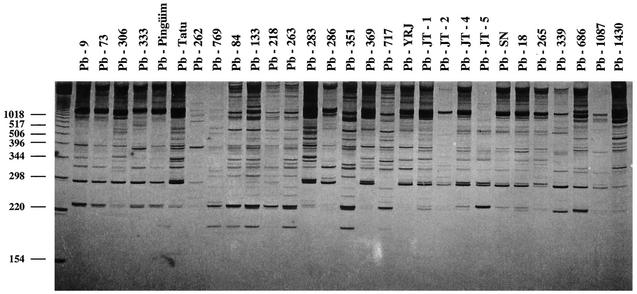
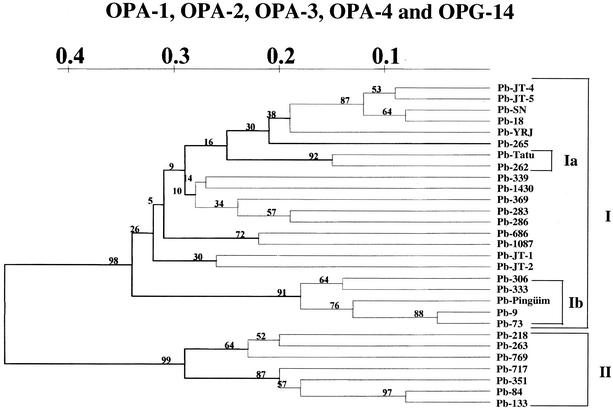
Randomly amplified polymorphic DNA (RAPD) has been successfully used to detect genetic variations among isolates of Paracoccidioides brasiliensis. However, the usefulness of this technique for assessing important parasitic properties is still unconfirmed. In the present work we further investigated the applicability of RAPD in revealing important intrinsic and extrinsic features of this fungus associated with geographical origin, time of isolation, source of clinical specimen, clinical forms of human disease and also in vitro and in vivo susceptibility to antimicrobial and antifungal drugs. The RAPD patterns allowed us to distinguish all of the analyzed strains, which included 26 clinical isolates, 2 animal isolates, and 1 environmental isolate of P. brasiliensis obtained from different geographic regions, confirming the strong discriminating power of this technique. A phenetic tree, build from the RAPD data, showed that although the two nonclinical Brazilian strains were set together the majority of the clinical Brazilian strains were randomly distributed through different sub-branches of a major cluster without any correlation to any of the parameters analyzed. A second major cluster, however, has grouped isolates from Mato Grosso and Roraima (Brazil) that not only were susceptible in vitro to trimethoprim-sulfamethoxazole but also produced a good in vivo response. These results open new vistas for epidemiological and clinical studies of P. brasiliensis.
Figures
References
-
- Borges, M. J., M. O. Azevedo, R. Bonatelli, M. S. S. Felipe, and S. Astolfi-Filho. 1990. A practical method for the preparation of DNA from filamentous fungi. Fungal Genet. Newsl. 10:11.
-
- Efron, B., and G. Gong. 1983. A leisurely look at the bootstrap, the jacknife, and croos validation. Am. Stat. 37:36-48.
-
- Fava-Netto, C. 1995. Estudos quantitativos sobre a fixação do complemento na blastomicose Sul Americana com antígeno polissacarídico. Arq. Cir. Exp. 18:197-254. - PubMed
Publication types
MeSH terms
Substances
LinkOut - more resources
Full Text Sources
