


Cognitive strategies dependent on the hippocampus and caudate nucleus in human navigation: variability and change with practice
- PMID: 12843299
- PMCID: PMC6741255
- DOI: 10.1523/JNEUROSCI.23-13-05945.2003
Cognitive strategies dependent on the hippocampus and caudate nucleus in human navigation: variability and change with practice
Abstract
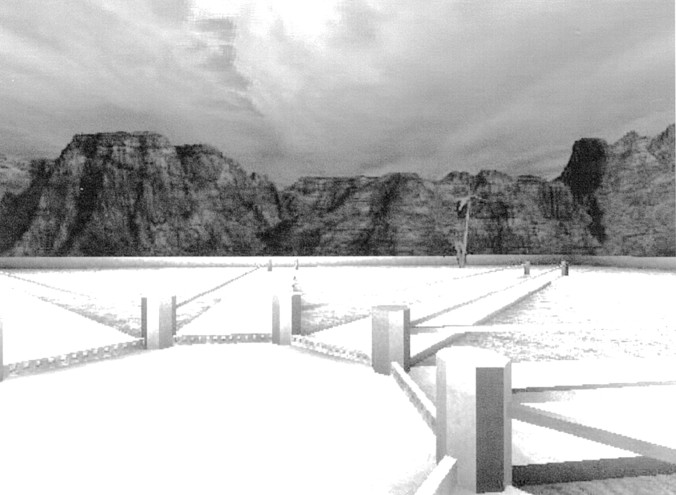
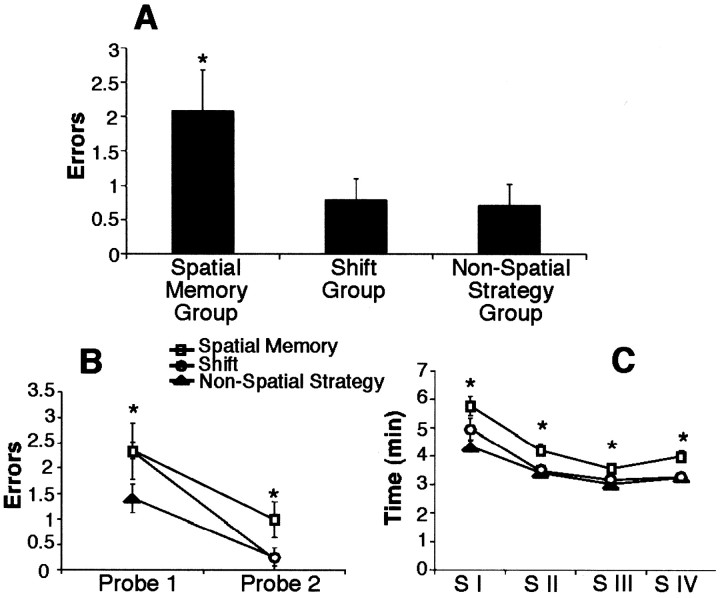
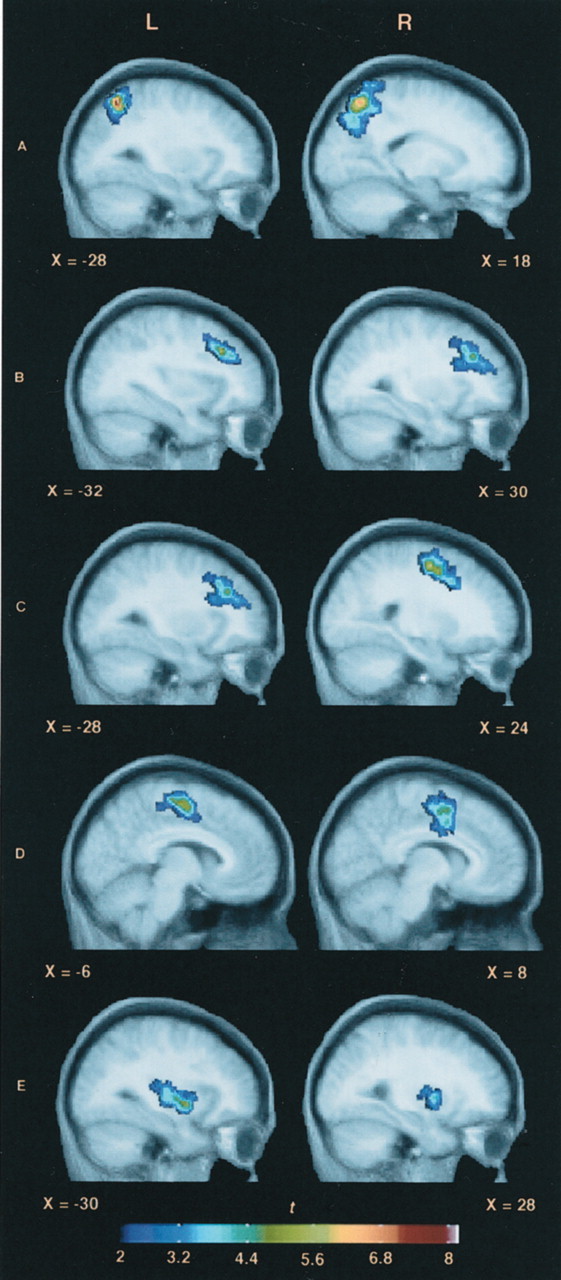
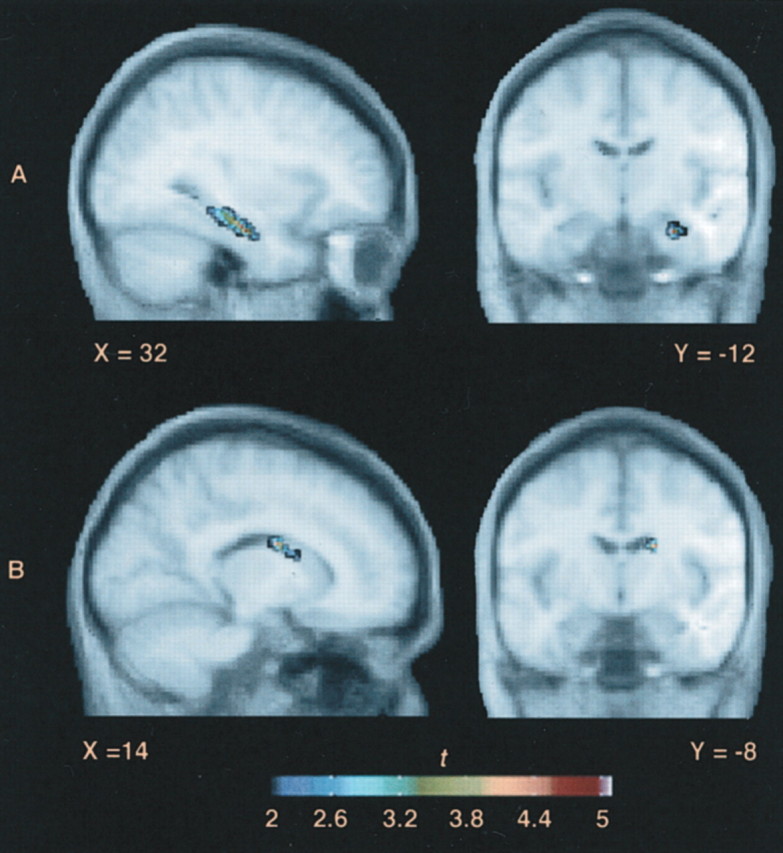
The human brain activity related to strategies for navigating in space and how it changes with practice was investigated with functional magnetic resonance imaging. Subjects used two different strategies to solve a place-learning task in a computer-generated virtual environment. One-half of the subjects used spatial landmarks to navigate in the early phase of training, and these subjects showed increased activation of the right hippocampus. The other half used a nonspatial strategy and showed, with practice, sustained increased activity within the caudate nucleus during navigation. Activation common to both groups was observed in the posterior parietal and frontal cortex. These results provide the first evidence for spontaneous variability and shift in neural mechanisms during navigation in humans.
Figures
References
-
- Abrahams S, Pickering A, Polkey CE, Morris RG ( 1997) Spatial memory deficits in patients with unilateral damage to the right hippocampal formation. Neuropsychologia 35: 11-24. - PubMed
-
- Aguirre GK, Detre JA, Alsop DC, D'Esposito M ( 1996) The parahippocampus subserves topographical learning in man. Cereb Cortex 6: 823-829. - PubMed
-
- Andersen R, Gnadt JW ( 1989) Role of posterior parietal cortex in saccadic eye movements. In: The neurobiology of saccadic eye movement (Wurtz RH, Goldberg ME, eds), pp 315-335. Amsterdam: Elsevier.
-
- Berthoz A ( 2001) Neural basis of spatial orientation and memory of routes: topokinetic memory or topokinesthesic memory. Rev Neurol (Paris) 157: 779-789. - PubMed
-
- Bohbot VD, Kalina M, Stepankova K, Spackova N, Petrides M, Nadel L ( 1998) Spatial memory deficits in patients with lesions to the right hippocampus and to the right parahippocampal cortex. Neuropsychologia 36: 1217-1238. - PubMed
Publication types
MeSH terms
LinkOut - more resources
Full Text Sources
Other Literature Sources
Medical
