. 2003 Jul 8:3:9.
doi: 10.1186/1472-6947-3-9. Epub 2003 Jul 8.

EURISWEB--Web-based epidemiological surveillance of antibiotic-resistant pneumococci in day care centers

Affiliations

EURISWEB--Web-based epidemiological surveillance of antibiotic-resistant pneumococci in day care centers

Sara Silva et al. BMC Med Inform Decis Mak. .

Abstract

Background: EURIS (European Resistance Intervention Study) was launched as a multinational study in September of 2000 to identify the multitude of complex risk factors that contribute to the high carriage rate of drug resistant Streptococcus pneumoniae strains in children attending Day Care Centers in several European countries. Access to the very large number of data required the development of a web-based infrastructure - EURISWEB - that includes a relational online database, coupled with a query system for data retrieval, and allows integrative storage of demographic, clinical and molecular biology data generated in EURIS.

Methods: All components of the system were developed using open source programming tools: data storage management was supported by PostgreSQL, and the hypertext preprocessor to generate the web pages was implemented using PHP. The query system is based on a software agent running in the background specifically developed for EURIS.

Results: The website currently contains data related to 13,500 nasopharyngeal samples and over one million measures taken from 5,250 individual children, as well as over one thousand pre-made and user-made queries aggregated into several reports, approximately. It is presently in use by participating researchers from three countries (Iceland, Portugal and Sweden).

Conclusion: An operational model centered on a PHP engine builds the interface between the user and the database automatically, allowing an easy maintenance of the system. The query system is also sufficiently adaptable to allow the integration of several advanced data analysis procedures far more demanding than simple queries, eventually including artificial intelligence predictive models.


Figures
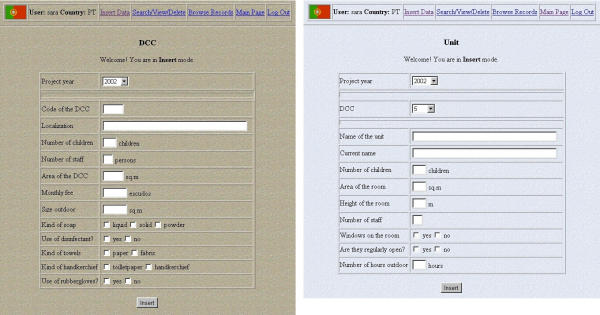
Figure 1
Figure 1
Data entry forms Data entry forms for the DCC and room (unit within the DCC) questionnaires. Upon pressing the Insert button, the validation procedure checks the data and either inserts it in the database or informs the user about errors in the data.
Figure 2
Figure 2
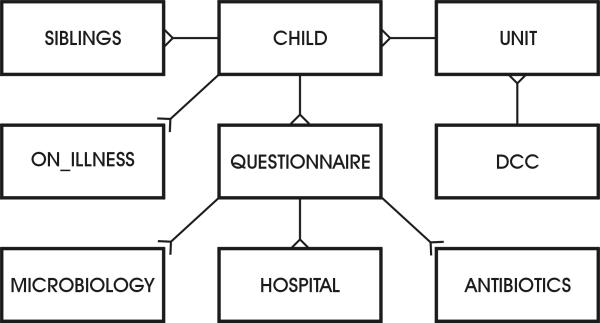
Database structure Boxes represent tables and lines represent the relations between them. There is a similar set of tables for each country. There is only one type of relation in this structure, which is "one-to-many". The single line represents the "one" side and the split line represents the "many" side. A one-to-many relation between two tables signifies that one record from one table can be associated to several records from the other table.
Figure 3
Figure 3
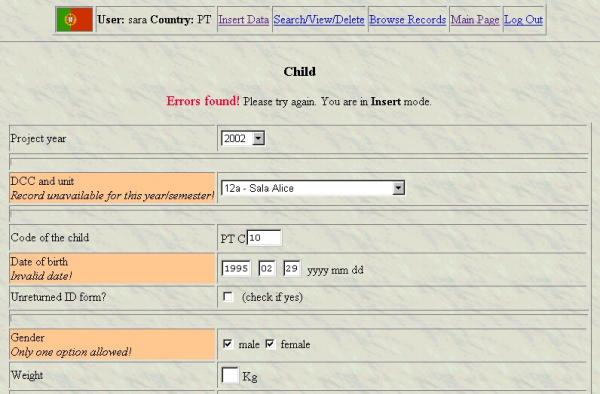
Validation checks Example of data entry form for the child records with error warnings to the user. The user must correct all the errors before being able to insert the record.
Figure 4
Figure 4
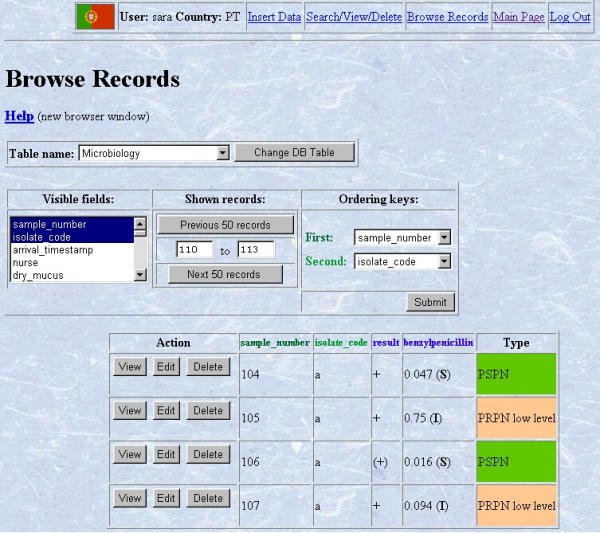
Browsing records Browsing page for microbiology records. Here the user can browse through several records of the same table. Selection of visible fields and ordering by one or two fields is possible. Direct access to individual records is provided by the View, Edit, and Delete buttons.
Figure 5
Figure 5
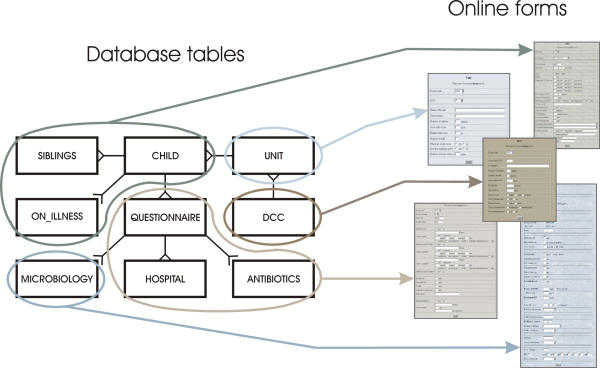
Tables versus forms Relationship between database tables and online forms. The optimal data organization in a relational database may not be agreeable to the user. There may be several database tables behind each online form.
Figure 6
Figure 6
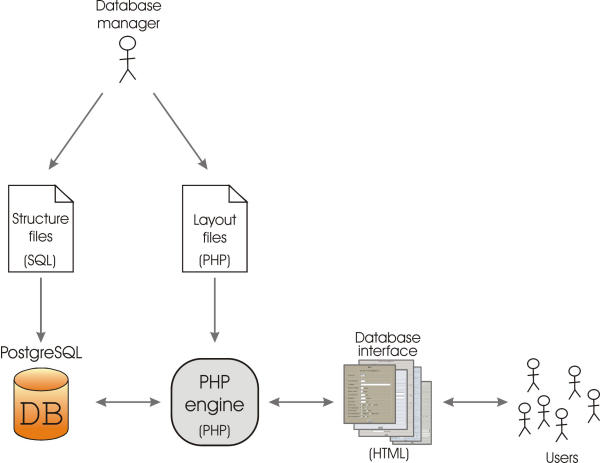
Operational model – database Operational model of the EURISWEB database. The arrows represent flow of information between the various entities. The database manager builds the layout files, used by the PHP engine to build the online forms, and the structure files, used to define the structure of tables and fields in the database. Layout and structure must be in accordance with each other. The PHP engine manages all the interactions between the database and the users.
Figure 7
Figure 7
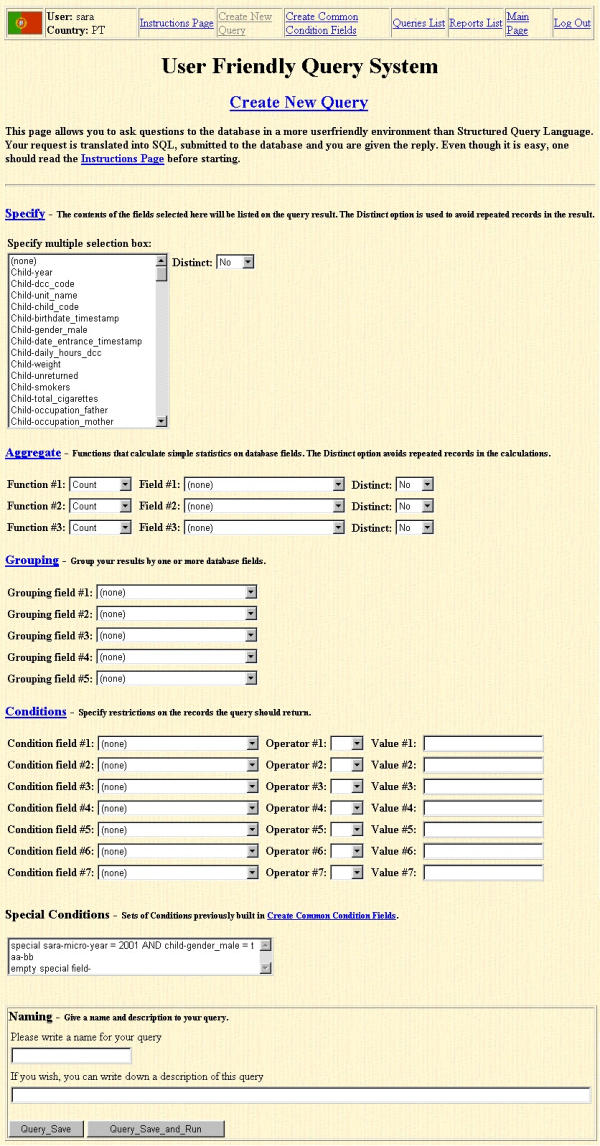
User-Friendly Query System interface Interface where the users build their queries, which are then translated into SQL. Saved queries can be rerun, edited, deleted, or grouped into reports. Commonly used sets of restrictions can also be saved and later applied to new queries.
Figure 8
Figure 8
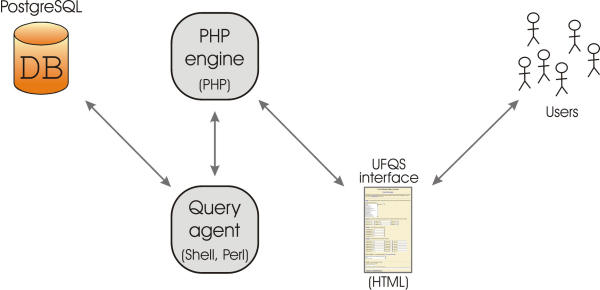
Operational model – query system Operational model of the EURISWEB query system. The arrows represent flow of information between the various entities. The user makes a request through the interface, which is translated into SQL by the PHP engine and sent to the query management agent. The query agent interacts with the database in background and informs the users, by e-mail, about the state of their requests.
Figure 9
Figure 9
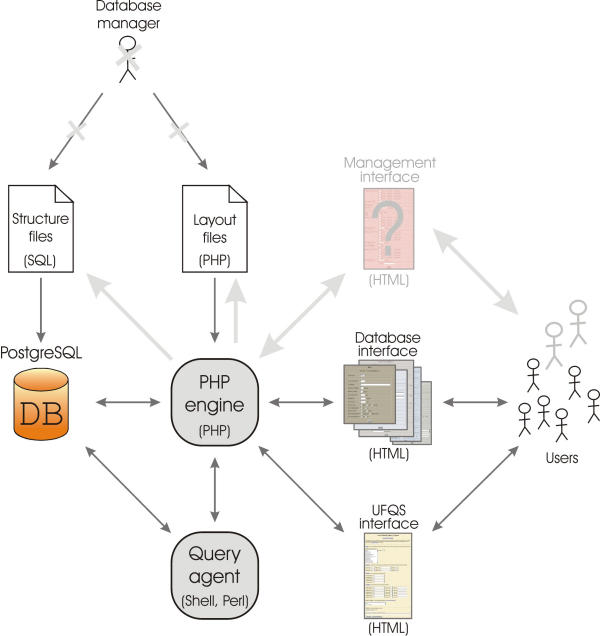
Operational model – the whole picture and hypothetical scenario Operational model of the whole EURISWEB infrastructure, by joining Figures 6 and 8, plus the hypothetical scenario where the database manager could be replaced by an extension to the PHP engine that would allow privileged users to manage both the layout and structure files through web pages.

References

    1. Gray BM, Turner ME, Dillon HC., Jr Epidemiologic studies of Streptococcus pneumoniae in infants. The effects of season and age on pneumococcal acquisition and carriage in the first 24 months of life. Am J Epidemiol. 1982;116:692–703. - PubMed
    1. Yagupsky P, Porat N, Fraser D, Prajgrod F, Merires M, McGee L, Klugman KP, Dagan R. Acquisition, carriage, and transmission of pneumococci with decreased antibiotic susceptibility in young children attending a day care facility in southern Israel. J Infect Dis. 1998;177:1003–1012. - PubMed
    1. Butler JC, Dowell SF, Breiman RF. Epidemiology of emerging pneumococcal drug resistance: implications for treatment and prevention. Vaccine. 1998;16:1693–1697. doi: 10.1016/S0264-410X(98)00132-7. - DOI - PubMed
    1. Reichler MR, Allphin AA, Breiman RF, Schreiber JR, Arnold JE, McDougal LK, Facklam RR, Boxerbaum B, May D, Walton RO, Jacobs MR. The spread of multiply resistant Streptococcus pneumoniae at a day care center in Ohio. J Infect Dis. 1992;166:1346–1353. - PubMed
    1. Arason VA, Kristinsson KG, Sigurdsson JA, Stefansdottir G, Molstad S, Gudmundsson S. Do antimicrobials increase the carriage rate of penicillin resistant pneumococci in children? Cross sectional prevalence study. BMJ. 1996;313:387–391. - PMC - PubMed

Publication types

MeSH terms