


Characterizing the functional significance of the neonatal rat vibrissae prior to the onset of whisking
- PMID: 12850825
- PMCID: PMC1868535
- DOI: 10.1080/0899022031000105190
Characterizing the functional significance of the neonatal rat vibrissae prior to the onset of whisking
Abstract
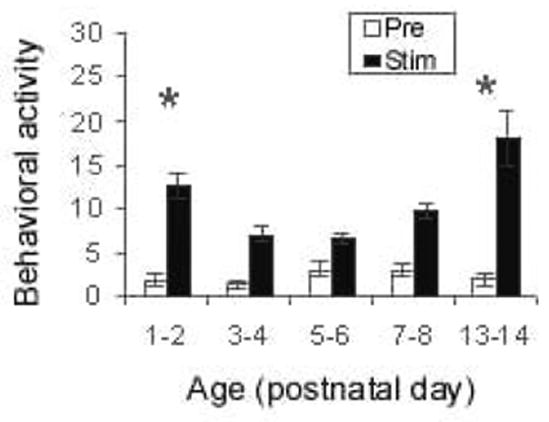
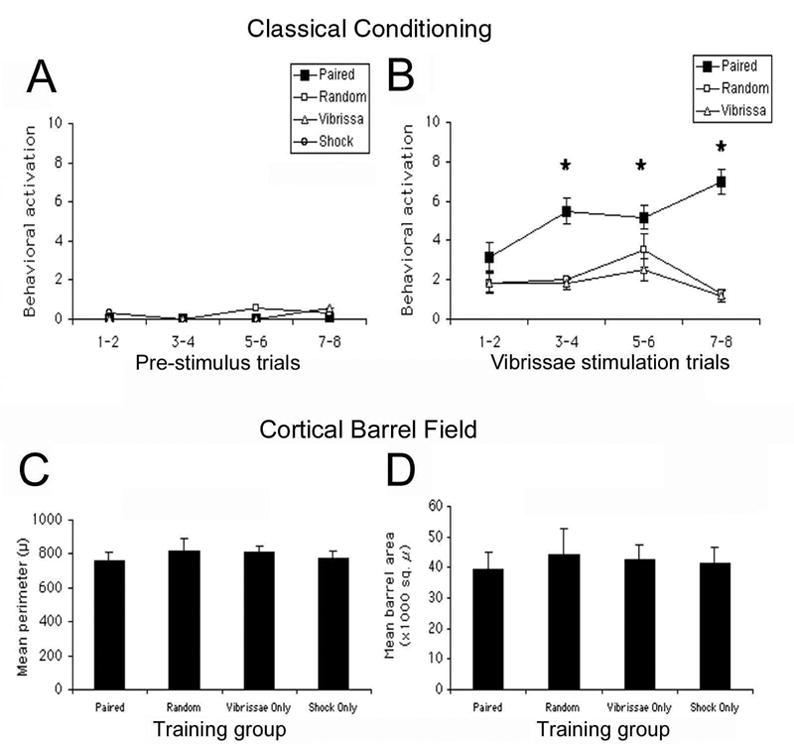
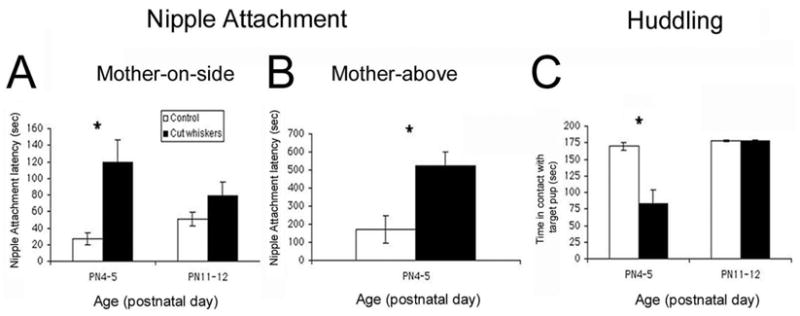
The present series of experiments assessed how information from the whiskers controls and modulates infant rat behavior during early learning and attachment. Passive vibrissal stimulation can elicit behavioral activity in pups throughout the first two postnatal weeks, although orienting to the source of stimulation is evident only after ontogenetic emergence of whisking. In addition, while pups were capable of demonstrating learning in a classical conditioning paradigm pairing vibrissa stimulation with electric shock, no corresponding changes were detected in the anatomy of the barrel cortex as determined by cytochrome oxidase (CO) staining. Finally, the role of whiskers in a more naturalistic setting was determined in postnatal day (PN)3-5 and PN11-12 pups. Our results showed that both nipple attachment and huddling were disrupted in whisker-clipped PN3-5 pups but only marginally altered in PN1I 1-12 pups. Together, these results suggest that the neonatal whisker system is behaviorally functional and relevant for normal mother-infant interactions, though it lacks the sophistication of a mature whisker system that evokes very specific and directed responses.
Figures
References
-
- Alberts JR, May B. Nonnutritive, thermotactile induction of filial huddling in rat pups. Dev Psychobiol. 1984;17:161–181. - PubMed
-
- Brunjes PC, Alberts JR. Olfactory stimulation induces filial preferences for huddling in rat pups. J Comp Physiol Psychol. 1979;93:548–555. - PubMed
-
- Campbell BA. Reflections on the ontogeny of learning and memory. In: Kail R, Spear NE, editors. Comparative Perspectives on the Development of Memory. Lawrence Erlbaum Associates; Hillsdale, NJ: 1984. pp. 23–35.
-
- Crair MC, Malenka RC. A critical period for long-term potentiation at thalamocortical synapses. Nature. 1995;375:325–328. - PubMed
Publication types
MeSH terms
Grants and funding
LinkOut - more resources
Full Text Sources
