


Non-enveloped HCV core protein as constitutive antigen of cold-precipitable immune complexes in type II mixed cryoglobulinaemia
- PMID: 12869035
- PMCID: PMC1808767
- DOI: 10.1046/j.1365-2249.2003.02204.x
Non-enveloped HCV core protein as constitutive antigen of cold-precipitable immune complexes in type II mixed cryoglobulinaemia
Abstract
Hepatitis C virus (HCV) infection has been detected in a large proportion of patients with mixed cryoglobulinaemia (MC). Circulating 'free' non-enveloped HCV core protein has been demonstrated in HCV-infected patients, and this suggests its possible involvement in the formation of cryoprecipitable immune complexes (ICs). Thirty-two anti-HCV, HCV RNA-positive patients with type II MC were evaluated. Non-enveloped HCV core protein, HCV RNA sequences, total IgM, rheumatoid factor (RF) activity, IgG and IgG subclasses, C3 and C4 fractions, C1q protein and C1q binding activity were assessed in both cryoprecipitates and supernatants. Non-enveloped HCV core protein was demonstrated in 30 of 32 (93.7%) type II MC patients. After separation of cold-precipitable material, the protein was removed completely from supernatant in 12 patients (40%), whereas it was enriched in the cryoprecipitates of the remaining 18. In addition, HCV RNA and IgM molecules with RF activity were concentrated selectively in the cryoprecipitates. Differential precipitation was found for both total IgG and IgG subclasses, as they were less represented in the cryoglobulins and no selective enrichment was noted. Immunological characterization of HCV core protein-containing cryoprecipitating ICs after chromatographic fractionation showed that the IgM monoclonal component had RF activity, whereas anti-HCV core reactivity was confined to the IgG fraction. C1q enrichment in addition to high avidity of ICs for C1q binding in the cryoprecipitates suggest that complement activation may occur through the C1q protein pathway. The present data demonstrate that non-enveloped HCV core protein is a constitutive component of cryoprecipitable ICs in type II MC patients.
Figures
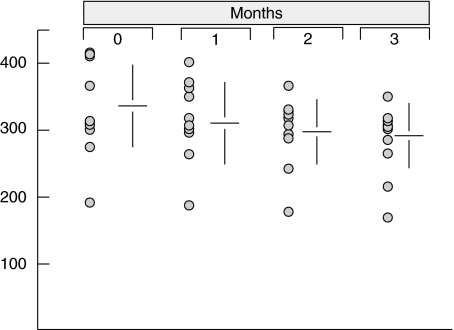
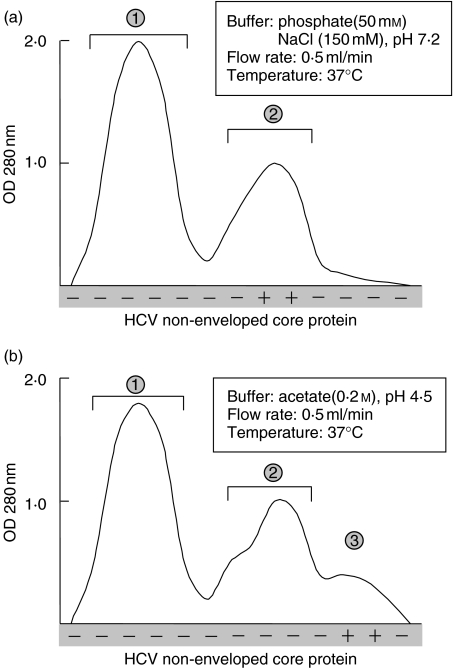

 ) or irrelevant IgG (○). HCV core protein was premixed with purified IgM with RF activity.
Comment in
-
Cryoglobulins in chronic hepatitis C virus infection.Clin Exp Immunol. 2003 Aug;133(2):153-5. doi: 10.1046/j.1365-2249.2003.02198.x. Clin Exp Immunol. 2003. PMID: 12869018 Free PMC article. Review. No abstract available.
References
-
- Gorevic PD, Kassab HJ, Levo Y, et al. Mixed cryoglobulinemia. clinical aspects and long-term follow-up of 40 patients. Am J Med. 1980;60:287–308. - PubMed
-
- Miescher PA, Huang YP, Izui S. Type II cryoglobulinaemia. Semin Hematol. 1995;32:80–5. - PubMed
-
- Gorevic PD, Frangione B. Mixed cryoglobulinemia cross-reactive idiotypes. Implications for the relationship of MC to rheumatic and lymphoproliferative diseases. Semin Hematol. 1991;28:79–94. - PubMed
-
- Ferri C, Greco F, Longombardo G, et al. Antibodies to hepatitic C virus in patients with mixed cryoglobulinemia. Arthritis Rheum. 1991;34:1606–10. - PubMed
-
- Agnello V, Chung RT, Kaplan LM. A role for hepatitis C virus infection in type II cryoglobulinemia. N Engl J Med. 1992;327:1490–5. - PubMed
Publication types
MeSH terms
Substances
LinkOut - more resources
Full Text Sources
Miscellaneous
