


4-Hydroxy-3-methoxybenzoic acid methyl ester: a curcumin derivative targets Akt/NF kappa B cell survival signaling pathway: potential for prostate cancer management
- PMID: 12869308
- PMCID: PMC1502412
- DOI: 10.1016/S1476-5586(03)80057-X
4-Hydroxy-3-methoxybenzoic acid methyl ester: a curcumin derivative targets Akt/NF kappa B cell survival signaling pathway: potential for prostate cancer management
Abstract
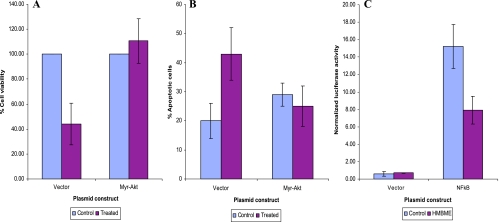
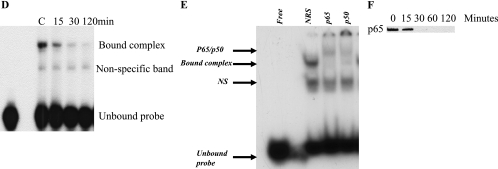
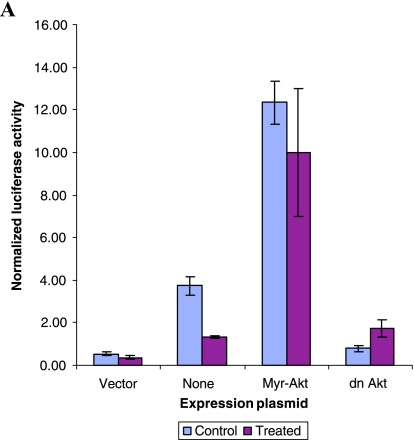
Transcription factor NFkappaB and the serine/threonine kinase Akt play critical roles in mammalian cell survival signaling and have been shown to be activated in various malignancies including prostate cancer (PCA). We have developed an analogue of curcumin called 4-hydroxy-3-methoxybenzoic acid methyl ester (HMBME) that targets the Akt/NFkappaB signaling pathway. Here, we demonstrate the ability of this novel compound to inhibit the proliferation of human and mouse PCA cells. HMBME-induced apoptosis in these cells was tested by using multiple biochemical approaches, in addition to morphologic analysis. Overexpression of constitutively active Akt reversed the HMBME-induced growth inhibition and apoptosis, illustrating the direct role of Akt signaling in HMBME-mediated growth inhibition and apoptosis. Further, investigation of the molecular events associated with its action in LNCaP cells shows that: 1) HMBME reduces the level of activated form of Akt (phosphorylated Akt); and 2) inhibits the Akt kinase activity. Further, the transcriptional activity of NFkappaB, the DNA-binding activity of NFkappaB, and levels of p65 were all significantly reduced following treatment with HMBME. Overexpression of constitutively active Akt, but not the kinase dead mutant of Akt, activated the basal NFkappaB transcriptional activity. HMBME treatment had no influence on this constitutively active Akt-augmented NFkappaB transcriptional activity. These data indicate that HMBME-mediated inhibition of Akt kinase activity may have a potential in suppressing/decreasing the activity of major survival/antiapoptotic pathways. The potential use of HMBME as an agent that targets survival mechanisms in PCA cells is discussed.
Figures



References
-
- American Cancer Society, author. Cancer Facts and Figures. 2002. ( http://www.cancer.org)
-
- Garnick MB. Prostate cancer: screening, diagnosis, and management. Ann Intern Med. 1993;118:804–818. - PubMed
-
- Huggins C, Hodges CV. Studies on prostate cancer: I.The effect of estrogen and of androgen injection on serum phosphatase in metastatic prostate cancer. Cancer Res. 1941;1:293–297.
-
- Scher HI, Steineck G, Kelly WK. Hormone refractory (D3) prostate cancer: refining the concept. Urology. 1995;46:142–148. - PubMed
-
- Pratt DE. Antioxidants and cancer prevention. In: M-T Huang, C-T Ho, CY Lee., editors. Phenolic Compounds in Food and their Effect on Health II ACS Symposium Series 507. Washington, DC: American Chemical Society; 1992. pp. 54–71. (Chapter 5)
Publication types
MeSH terms
Substances
Grants and funding
LinkOut - more resources
Full Text Sources
Other Literature Sources
Medical
Miscellaneous
