Efficacy of knee tape in the management of osteoarthritis of the knee: blinded randomised controlled trial
- PMID: 12869456
- PMCID: PMC165705
- DOI: 10.1136/bmj.327.7407.135
Efficacy of knee tape in the management of osteoarthritis of the knee: blinded randomised controlled trial
Abstract
Objectives: To test the hypotheses that therapeutic taping of the knee improves pain and disability in patients with osteoarthritis of the knee and that benefits remain after stopping treatment.
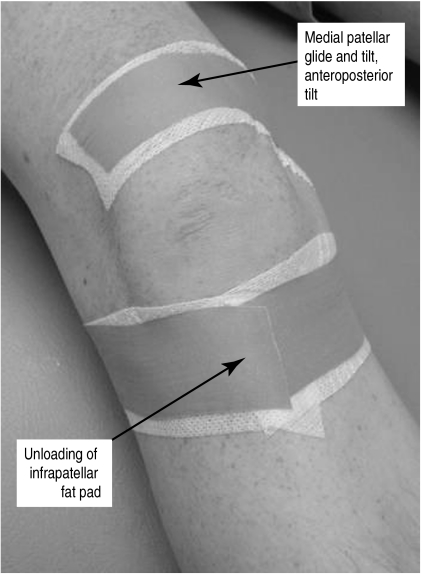
Design: Randomised single blind controlled trial with three intervention arms (therapeutic tape, control tape, and no tape) of three weeks' duration and three week follow up.
Setting: Outcome assessment was performed in a university based laboratory. Taping interventions were applied by eight physiotherapists in metropolitan private practice.
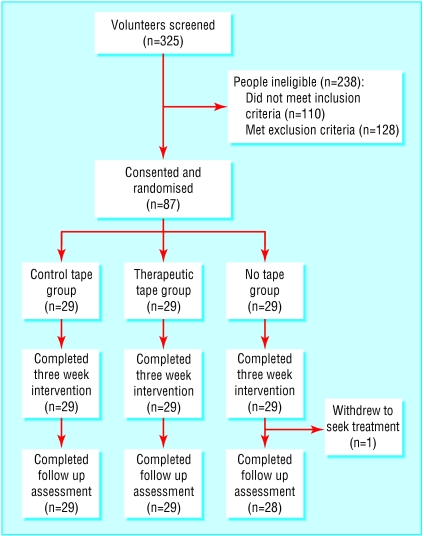
Participants: 87 patients with symptoms of knee osteoarthritis as defined by the American College of Rheumatology.
Main outcome measures: Primary outcome measure was pain as measured by visual analogue scale and participant perceived rating of change. Secondary measures of pain and disability included the Western Ontario and MacMaster Universities osteoarthritis index, knee pain scale, and the SF-36.
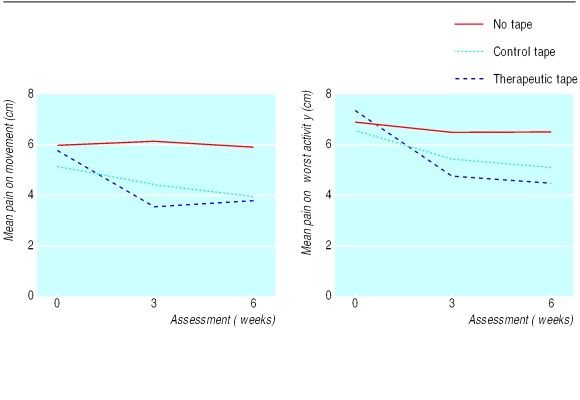
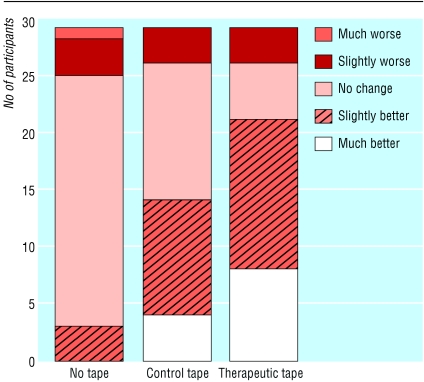
Results: The therapeutic tape group reported a greater reduction in pain on all primary outcomes than either of the other two groups. A significant association was evident between intervention and change in pain at three weeks (P=0.000), with 73% (21/29) of the therapeutic tape group reporting improvement compared with 49% (14/29) of the control tape group and 10% (3/29) of the no tape group. Significantly greater improvement in pain and disability was observed on most secondary outcomes in the therapeutic tape group compared with the no tape group. Benefits of therapeutic tape were maintained three weeks after stopping treatment.
Conclusions: Therapeutic knee taping is an efficacious treatment for the management of pain and disability in patients with knee osteoarthritis.
Figures
Comment in
-
Therapeutic knee taping decreases pain from knee osteoarthritis.J Fam Pract. 2003 Dec;52(12):920-3. J Fam Pract. 2003. PMID: 14653971 No abstract available.
-
Therapeutic knee taping improved pain and disability in osteoarthritis of the knee.ACP J Club. 2004 Jan-Feb;140(1):17. ACP J Club. 2004. PMID: 14711288 No abstract available.
References
-
- Arthritis Foundation of Australia. The prevalence, cost and disease burden of arthritis in Australia. Canberra: Access Economics, 2001.
-
- American College of Rheumatology Subcommittee on Osteoarthritis Guidelines. Recommendations for the medical management of osteoarthritis of the hip and knee. 2000 update. Arth Rheum 2000;43: 1905-15. - PubMed
Publication types
MeSH terms
LinkOut - more resources
Full Text Sources
Medical