


Elucidation of the transmission patterns of an insect-borne bacterium
- PMID: 12902222
- PMCID: PMC169131
- DOI: 10.1128/AEM.69.8.4403-4407.2003
Elucidation of the transmission patterns of an insect-borne bacterium
Abstract
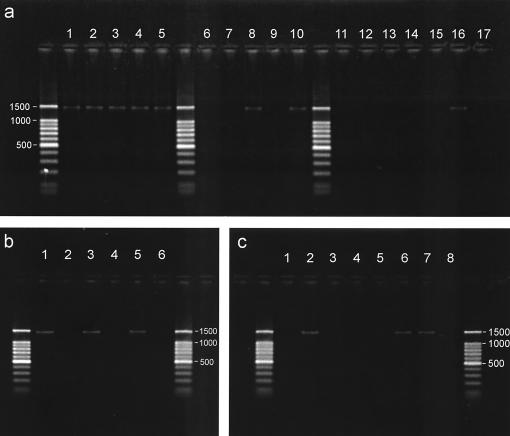
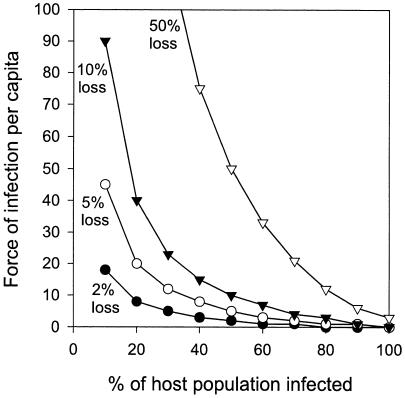
Quantitative data on modes of transmission are a crucial element in understanding the ecology of microorganisms associated with animals. We investigated the transmission patterns of a gamma-proteobacterium informally known as pea aphid Bemisia-like symbiont (PABS), also known as T-type, which is widely but not universally distributed in natural populations of the pea aphid, Acyrthosiphon pisum. The vertical transmission of PABS to asexual and sexual morphs and sexually produced eggs was demonstrated by a diagnostic PCR-based assay, and the maximum estimated failure rate was 2%. Aphids naturally lacking PABS acquired PABS bacteria administered via the diet, and the infection persisted by vertical transmission for at least three aphid generations. PABS was also detected in two of five aphid honeydew samples tested and in all five siphuncular fluid samples tested but in none of 15 samples of salivary secretions from PABS-positive aphids. However, PABS-negative aphids did not acquire PABS when they were cocultured with PABS-positive aphids; the maximal estimated level of horizontal transmission was 18%. A deterministic model indicated that the force of infection by a horizontal transmission rate of 3% is sufficient to maintain a previously described estimate of the prevalence of PABS-positive aphids (37%), if the vertical transmission rate is 98%. We concluded that PABS infections in A. pisum can be maintained by high vertical transmission rates and occasional horizontal transmission, possibly via the oral route, in the absence of selection either for or against aphids bearing this bacterium.
Figures
References
-
- Boman, H. G. 2000. Innate immunity and the normal microflora. Immunol. Rev. 173:5-16. - PubMed
-
- Buchner, P. 1966. Endosymbiosis of animals with plant microorganisms. John Wiley & Sons, New York, N.Y.
-
- Chen, D.-Q., and A. H. Purcell. 1997. Occurrence and transmission of facultative endosymbionts in aphids. Curr. Microbiol. 34:220-225. - PubMed
-
- Chen, D.-Q., C. B. Montllor, and A. H. Purcell. 2000. Fitness effects of two facultative endosymbiotic bacteria on the pea aphid, Acyrthosiphon pisum, and the blue alfalfa aphid, A. kondoi. Entomol. Exp. Appl. 95:315-323.
-
- Darby, A. C., L. M. Birkle, S. L. Turner, and A. E. Douglas. 2001. An aphid-borne bacterium allied to the secondary symbionts of whitefly. FEMS Microbiol. Ecol. 36:43-50. - PubMed
Publication types
MeSH terms
LinkOut - more resources
Full Text Sources
