


Quality of life and understanding of disease status among cancer patients of different ethnic origin
- PMID: 12915871
- PMCID: PMC2376912
- DOI: 10.1038/sj.bjc.6601159
Quality of life and understanding of disease status among cancer patients of different ethnic origin
Abstract
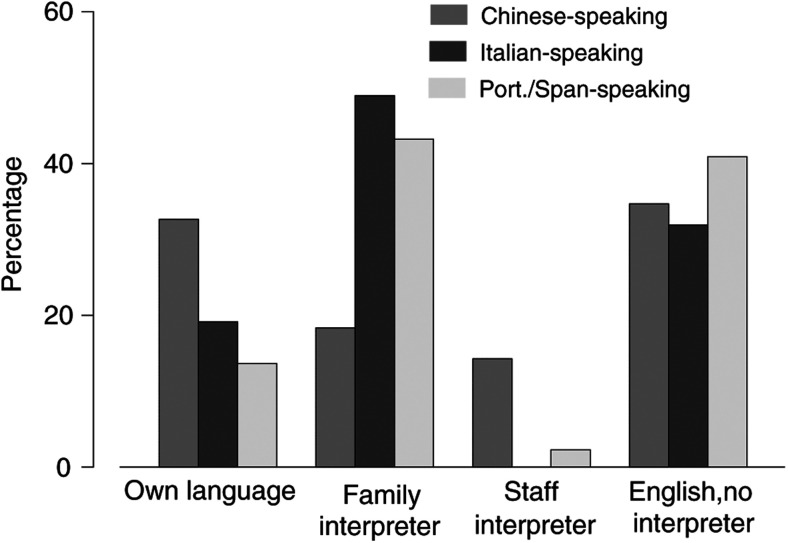
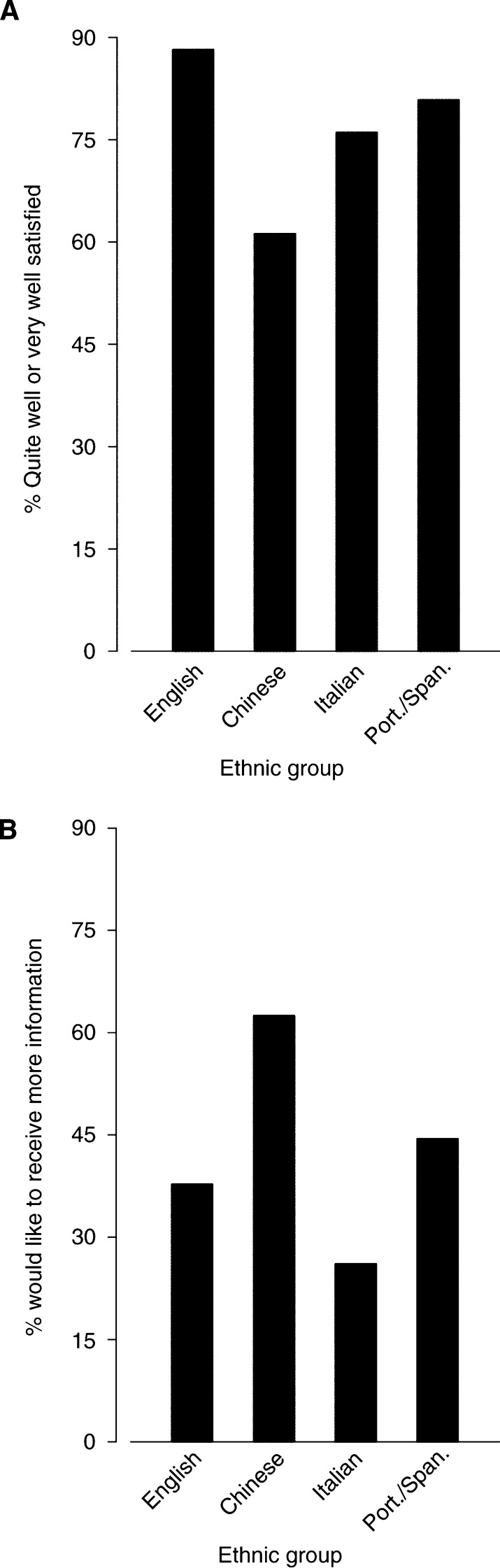
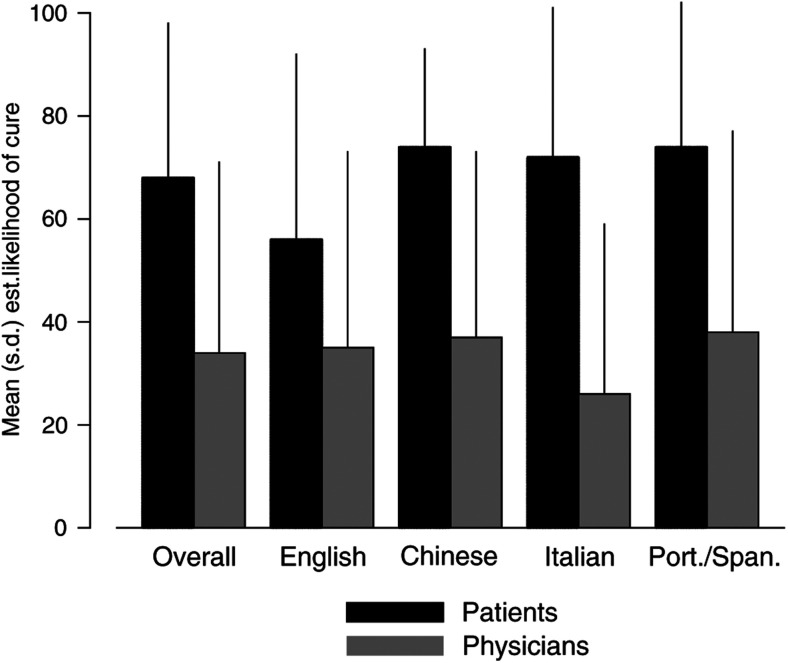
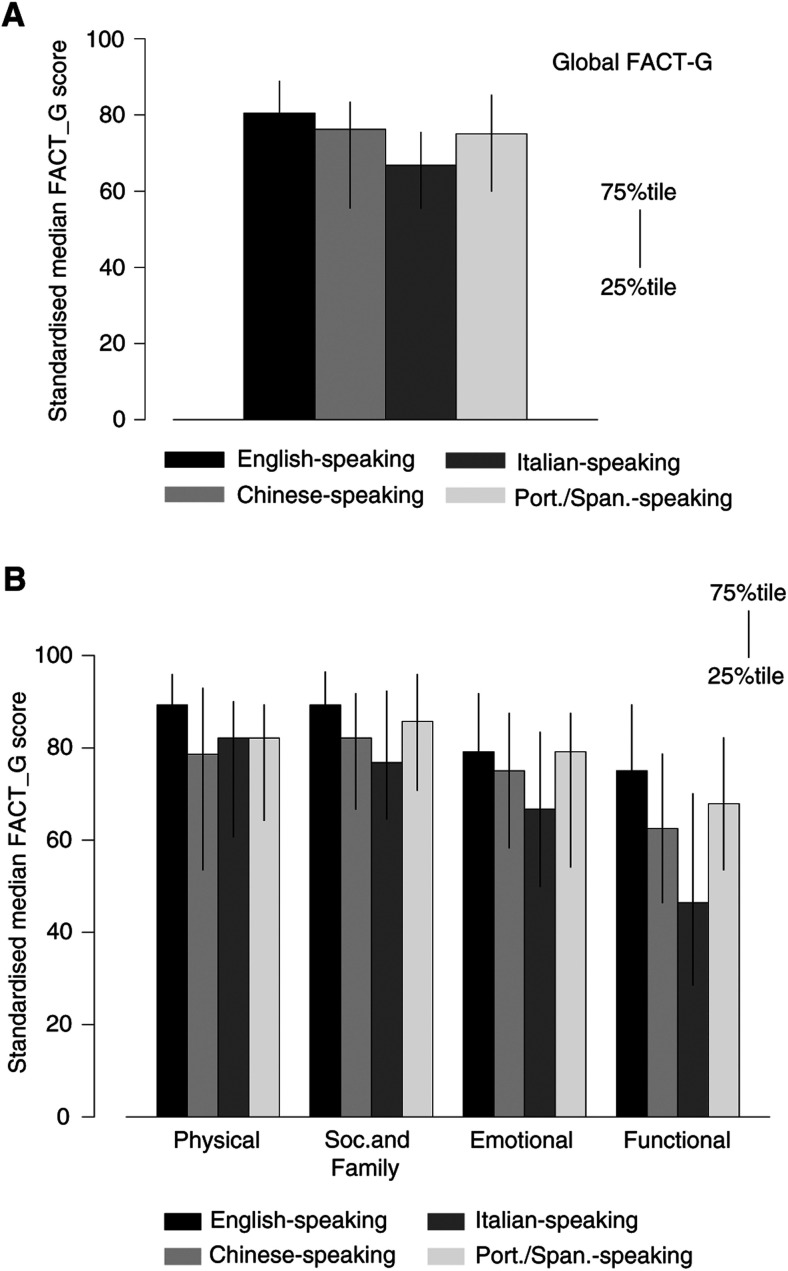
Patients managed in European or North American cancer centres have a variety of ethnic backgrounds and primary languages. To gain insight into the impact of ethnic origin, we have investigated understanding of disease status and quality of life (QoL) for 202 patients. Patients completed questionnaires in their first language (52 English, 50 Chinese, 50 Italian, 50 Spanish or Portuguese), including the Functional Assessment of Cancer Therapy - General (FACT-G) QoL instrument, questions about disease status, expectations of cure and the language and/or type of interpretation used at initial consultation. Physicians also evaluated their status of disease and expectation of cure, and performance status was estimated by a trained health professional. The initial consultation was usually provided in English (except for 32% of Chinese-speaking patients); interpretation was provided by a family member for 34% of patients with limited English proficiency (LEP) and by a bilingual member of staff for 21%. Patients underestimated their extent of disease and overestimated their probability of cure (P=0.001 and <0.0001, respectively). Estimates of probability of cure by the English speakers were closer to those of their physicians than the other groups (P=0.02). English-speaking patients reported better and Italian-speaking patients poorer overall QoL (P<0.001 for Italian vs other groups). Performance status was correlated with QoL and most closely related with the extent of disease. Understanding of cultural differences is important for optimal management of patients with cancer.
Figures
References
-
- Aaronson NK, Acquadro C, Alonso J, Apolone G, Bucquet D, Bullinger M, Bungay K, Fukuhara S, Gandek B, Keller S, Razavi D, Sanson-Fisher R, Sullivan M, Wood-Daupheree S, Wagner A, Ware Jr JE (1992) International Quality of Life Assessment (IQOLA) Project. Qual Life Res 1: 349–351 - PubMed
-
- Adler NE, Boyce T, Chesney MA, Cohen S, Folkman S, Kahn RL, Syme SL (1994) Socioeconomic status and health. The challenge of the gradient. Am Psychol 49: 15–24 - PubMed
-
- Bernhard J, Hurny C, Coates AS, Peterson HF, Castiglione-Gertsch M, Gelber RD, Galligioni E, Marini G, Thurlimann B, Forbes JF, Goldhirsch A, Senn HJ, Rudenstam CM (1998) Factors affecting baseline quality of life in two international adjuvant breast cancer trials. International Breast Cancer Study Group (IBCSG). Br J Cancer 78: 686–693 - PMC - PubMed
-
- Bonomi AE, Cella DF, Hahn EA, Bjordal K, Sperner-Unterweger B, Gangeri L, Bergman B, Willems-Groot J, Hanquet P, Zittoun R (1996) Multilingual translation of the Functional Assessment of Cancer Therapy (FACT) quality of life measurement system. Qual Life Res 5: 309–320 - PubMed
-
- Bottorff JL, Johnson JL, Bhagat R, Grewal S, Balneaves LG, Clarke H, Hilton BA (1998) Beliefs related to breast health practices: the perceptions of South Asian women living in Canada. Soc Sci Med 47: 2075–2085 - PubMed
Publication types
MeSH terms
LinkOut - more resources
Full Text Sources
Miscellaneous
