


Modification of bitter taste in children
- PMID: 12918091
- PMCID: PMC2799510
- DOI: 10.1002/dev.10127
Modification of bitter taste in children
Abstract
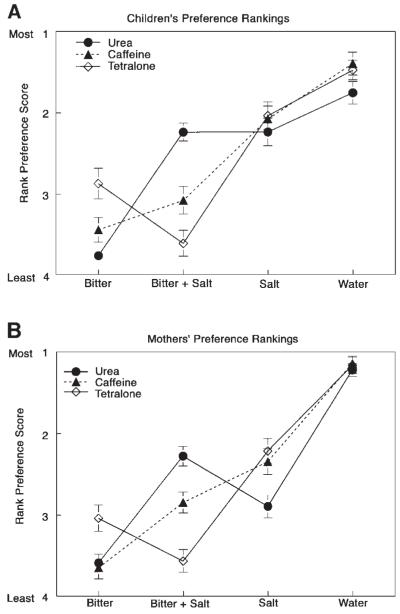
The palatability of oral medications, many of which are quite bitter, plays an important role in achieving compliance in pediatric patients. We tested the hypothesis that the addition of a sodium salt to some, but not all, bitter tasting liquids enhances acceptance and reduces the perceived bitterness in 7- to 10-year-old children and their mothers. For both children and adults, sodium gluconate significantly suppressed the perceived bitterness and enhanced the acceptance of urea and caffeine whereas the reverse was true for another bitter stimulus, Tetralone. Because children preferred salted solutions more than did adults, these data suggest that the use of sodium salts may be an especially effective strategy for reducing the bitterness of some medicines and facilitating compliance among pediatric populations. However, based on sodium's differential ability to inhibit bitterness, as has been shown here with children and adults, clearly each drug of interest must be evaluated separately.
Copyright 2003 Wiley Periodicals, Inc. Dev Psychobiol 43: 120-127, 2003.
Figures
References
-
- Adler E, Hoon MA, Mueller KL, Chandrashekar J, Ryba NJ, Zuker CS. A novel family of mammalian taste receptors. Cell. 2000;17:693–702. - PubMed
-
- Bartoshuk LM. Sensory analysis of the taste of NaCl. In: Kare MR, Fregly MJ, Bernard RA, editors. Biological and behavioral aspects of salt intake. Academic Press; New York: 1980. pp. 83–98.
-
- Berning CK, Griffith JF, Wild JE. Research on the effectiveness of denatonium benzoate as a deterrent to liquid detergent ingestion by children. Fundamental and Applied Toxicology. 1982;2:44–48. - PubMed
-
- Brand JG. Within reach of an end to unnecessary bitterness? Lancet. 2000;358:1371–1372. - PubMed
-
- Breslin PAS, Beauchamp GK. Suppression of bitterness by sodium: Variation among bitter taste stimuli. Chemical Senses. 1995;20:609–623. - PubMed
Publication types
MeSH terms
Grants and funding
LinkOut - more resources
Full Text Sources
Other Literature Sources
Medical
