


Induction of human gamma globin gene expression by histone deacetylase inhibitors
- PMID: 12920038
- PMCID: PMC2808412
- DOI: 10.1182/blood-2003-02-0478
Induction of human gamma globin gene expression by histone deacetylase inhibitors
Abstract
We investigated the induction of human gamma globin gene activity by 3 classes of histone deacetylase inhibitors: amide analogues of trichostatin A, hydroxamic acid analogues of trapoxin, and scriptaid and its analogues. The screening consisted of measuring the effects of these compounds on gamma and beta human gene promoter activity by using cultures of GM979 cells stably transfected with a construct containing a gamma promoter linked to firefly luciferase and a beta promoter linked to renilla luciferase. Compounds belonging to all 3 classes induced gamma gene promoter activity in the screening assay in low micromolar concentrations. Histone deacetylase (HDAC) inhibitors increased acetylation of histone H4 and induced the expression of endogenous murine embryonic genes. They also increased the levels of gamma mRNA and the frequency of fetal hemoglobin-containing erythroblasts in erythroid burst-forming unit (BFUe) cultures from healthy adult individuals. Compounds that displayed very similar degrees of inhibition of the HDAC activity in an HDAC enzymatic assay differed strikingly on their effects on gamma gene promoter activity, raising the possibility of selectivity of HDACs that interact with the gamma globin gene chromatin.
Figures
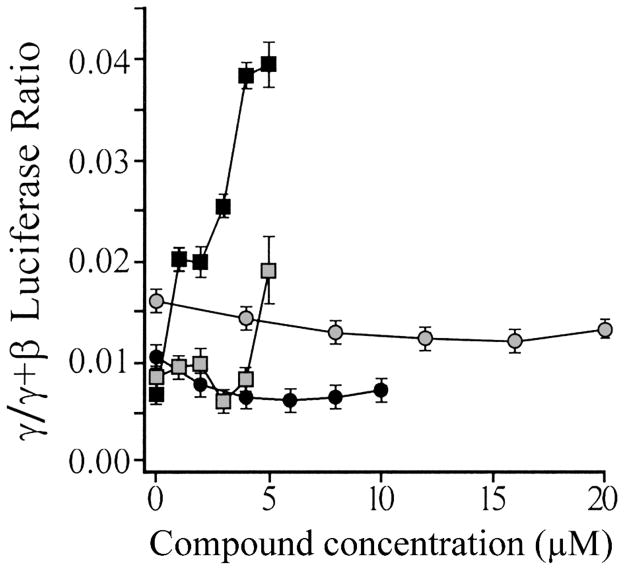
 ), MD85 (●), and M355 (
 ). Each data point is based on triplicate determinations done in 3 separate experiments. For M344 and M360, concentrations greater than those presented in the figure were severely toxic to the cells. Vertical bars indicate SEM.
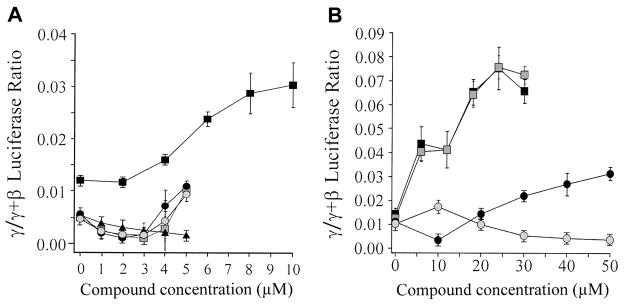 ), SW187 (▲), SW188 (●), and SW189 (). (B) Data from compounds SW68 (■), SW70 (), SW99 (●), and SW86 (). Each data point is based on triplicate determinations done in 3 separate experiments. Except for M232, concentrations greater than those presented in the figure were toxic to the cells. Error bars indicate SEM.
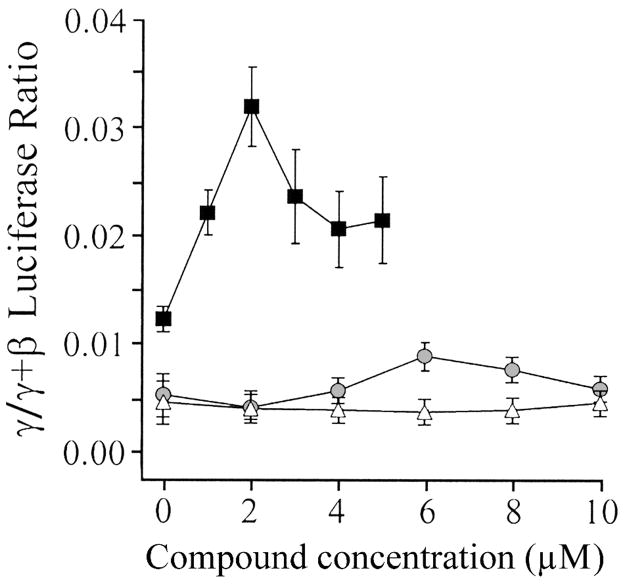 ), and HR10 (△). Each data point is based on triplicate determinations done in 3 separate experiments. Except for HR10, concentrations greater than those presented in the figure were toxic to the cells. Error bars indicate SEM.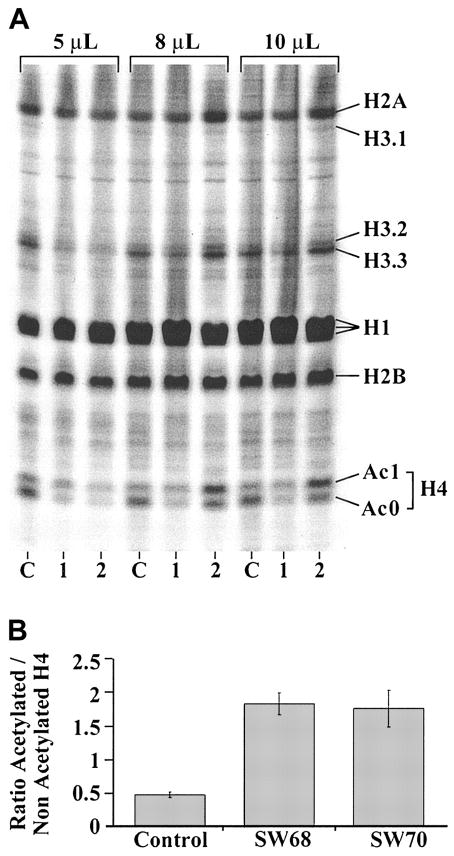
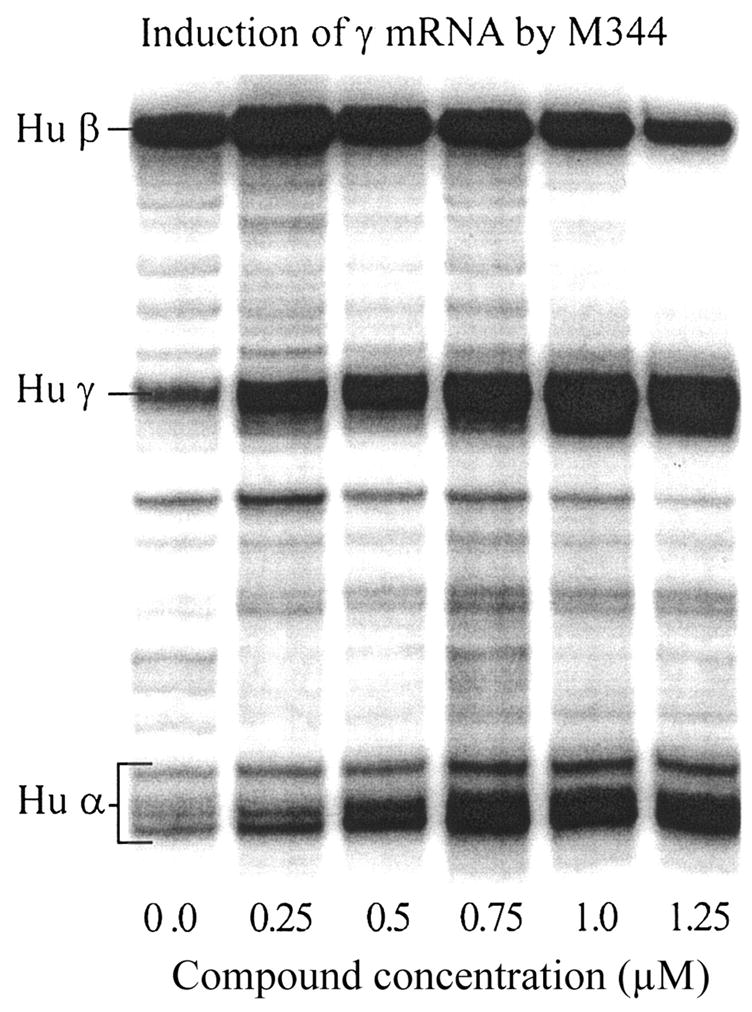
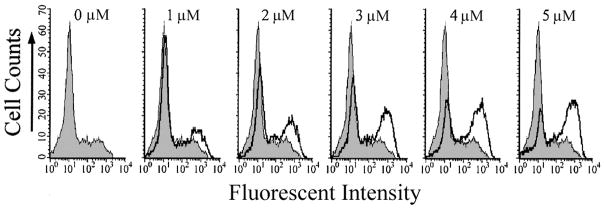
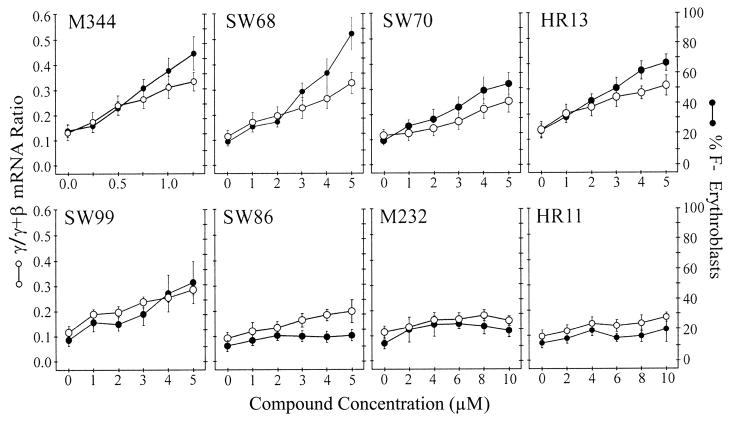
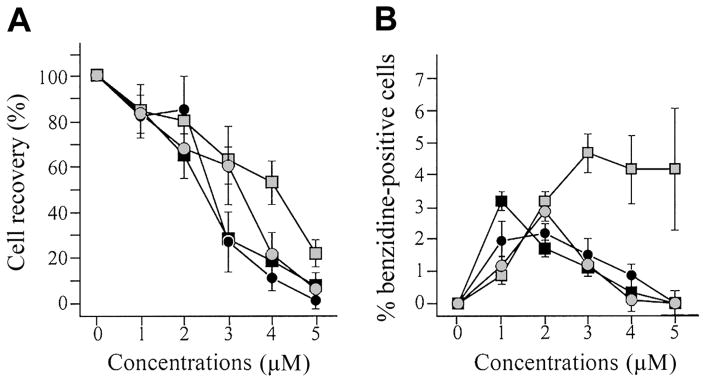 ), SW188 (●), and SW189 (). (B) Induction of erythroblast maturation as detected by measurements of benzidine-positive GM979 cells. SW183 (■), SW187 (), SW188 (●), and SW189 (). Error bars indicate SEM.
References
-
- Stamatoyannopoulos G, Grosveld F. Hemoglobin switching. In: Stamatoyannopoulos G, Majerus PW, Perlmutter RM, Varmus H, editors. The Molecular Basis of Blood Diseases. Philadelphia, PA: Saunders; 2001. pp. 135–185.
-
- Marianna P, Kollia P, Akel S, Papassotiriou Y, Stamoulakatou A, Loukopoulos D. Valproic acid, trichostatin and their combination with hemin preferentially enhance gamma-globin gene expression in human erythroid liquid cultures. Haematologica. 2001;86:700–705. - PubMed
-
- Swank RA, Skarpidi E, Papayannopoulou T, Stamatoyannopoulos G. The histone deacetylase inhibitor, Trichostatin A, reactivates the developmentally silenced γ globin expression in somatic cell hybrids and induces γ gene expression in adult BFUe cultures. Blood Cells Mol Dis. 2003;30:254–257. - PubMed
Publication types
MeSH terms
Substances
Grants and funding
LinkOut - more resources
Full Text Sources
Other Literature Sources
Medical
