


Nuclear reprogramming and stem cell creation
- PMID: 12920185
- PMCID: PMC304092
- DOI: 10.1073/pnas.1834207100
Nuclear reprogramming and stem cell creation
Abstract
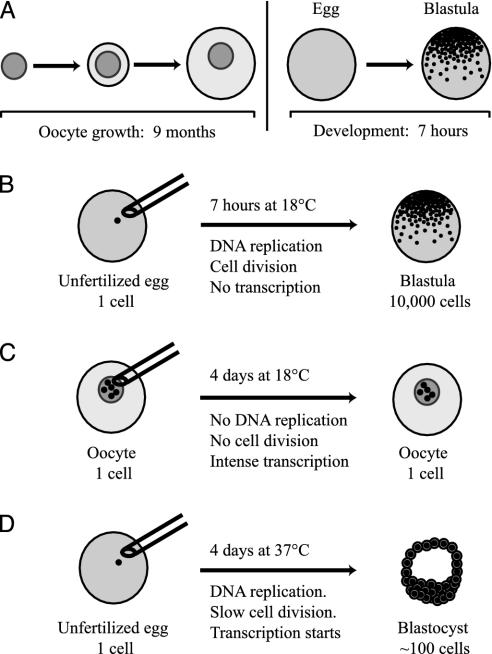
The transplantation of a somatic cell nucleus to an enucleated egg results in a major reprogramming of gene expression and switch in cell fate. We review the efficiency of nuclear reprogramming by nuclear transfer. The serial transplantation of nuclei from defective first-transfer embryos and the grafting of cells from such embryos to normal host embryos greatly increases the proportion of nuclei that can be seen to have been reprogrammed. We discuss possible reasons for the early failure of most nuclear transfers from differentiated cells and describe the potential value of growing oocytes, rather than unfertilized eggs, as a source of nuclear reprogramming molecules and for the eventual identification of these molecules. Nuclear transfer provides a possible route for the creation of stem cells from adult somatic cells.
Figures
References
Publication types
MeSH terms
LinkOut - more resources
Full Text Sources
Other Literature Sources
Medical
