


Measuring the impact of diagnostic decision support on the quality of clinical decision making: development of a reliable and valid composite score
- PMID: 12925549
- PMCID: PMC264434
- DOI: 10.1197/jamia.M1338
Measuring the impact of diagnostic decision support on the quality of clinical decision making: development of a reliable and valid composite score
Abstract
Objective: Few previous studies evaluating the benefits of diagnostic decision support systems have simultaneously measured changes in diagnostic quality and clinical management prompted by use of the system. This report describes a reliable and valid scoring technique to measure the quality of clinical decision plans in an acute medical setting, where diagnostic decision support tools might prove most useful.
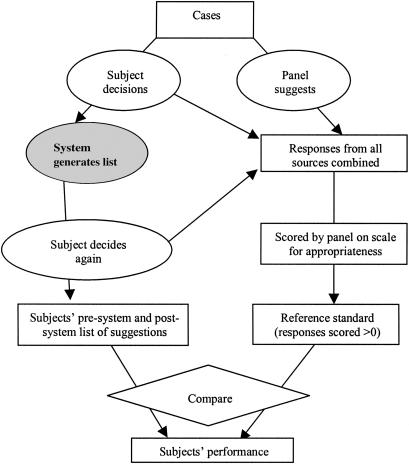
Design: Sets of differential diagnoses and clinical management plans generated by 71 clinicians for six simulated cases, before and after decision support from a Web-based pediatric differential diagnostic tool (ISABEL), were used.
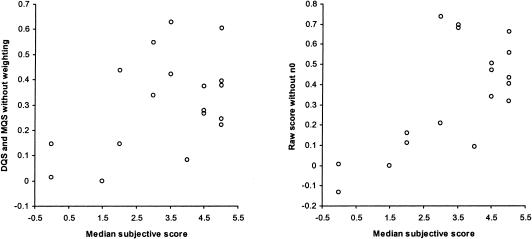
Measurements: A composite quality score was calculated separately for each diagnostic and management plan by considering the appropriateness value of each component diagnostic or management suggestion, a weighted sum of individual suggestion ratings, relevance of the entire plan, and its comprehensiveness. The reliability and validity (face, concurrent, construct, and content) of these two final scores were examined.
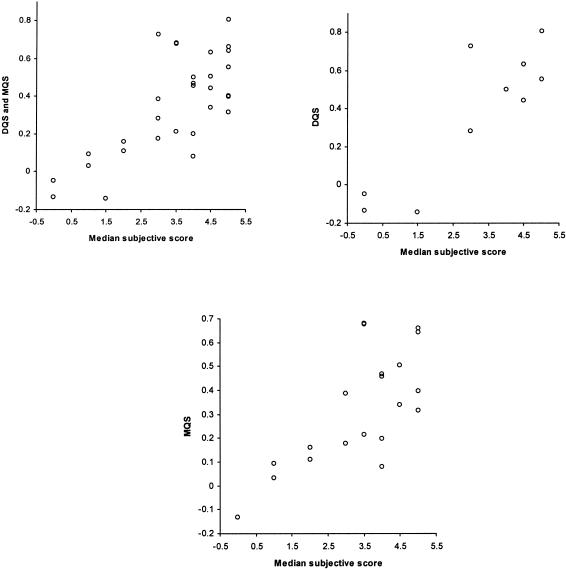
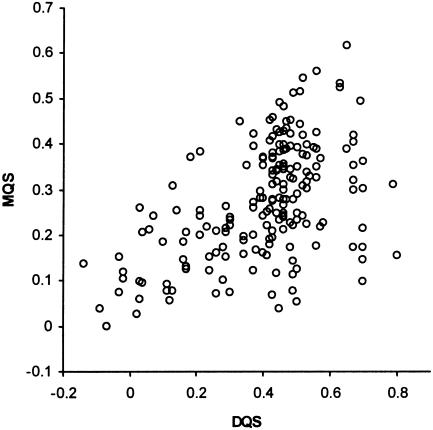
Results: Two hundred fifty-two diagnostic and 350 management suggestions were included in the interrater reliability analysis. There was good agreement between raters (intraclass correlation coefficient, 0.79 for diagnoses, and 0.72 for management). No counterintuitive scores were demonstrated on visual inspection of the sets. Content validity was verified by a consultation process with pediatricians. Both scores discriminated adequately between the plans of consultants and medical students and correlated well with clinicians' subjective opinions of overall plan quality (Spearman rho 0.65, p < 0.01). The diagnostic and management scores for each episode showed moderate correlation (r = 0.51).
Conclusion: The scores described can be used as key outcome measures in a larger study to fully assess the value of diagnostic decision aids, such as the ISABEL system.
Figures
Comment in
-
Diagnostic decision support systems: how to determine the gold standard?J Am Med Inform Assoc. 2003 Nov-Dec;10(6):608-10. doi: 10.1197/jamia.M1416. J Am Med Inform Assoc. 2003. PMID: 14613944 Free PMC article. No abstract available.
References
-
- Barnett GO, Cimino JJ, Hupp JA, Hoffer EP. DXplain: an evolving diagnostic decision-support system. JAMA. 1987;258:67–74. - PubMed
-
- Miller R, Masarie FE, Myers JD. Quick medical reference (QMR) for diagnostic assistance. MD Comput. 1986;3(5):34–48. - PubMed
-
- Rubeck RF. ILIAD: a medical diagnostic expert system. Teach Learn Med. 1989;1:221–2.
-
- Warner HR, Haug P, Bouhaddou O, et al. ILIAD as an expert consultant to teach differential diagnosis. In: Proc Annu Symp Comput Appl Med Care. 1988:371–6.
Publication types
MeSH terms
LinkOut - more resources
Full Text Sources
Other Literature Sources
