


The glycine transporter type 1 inhibitor N-[3-(4'-fluorophenyl)-3-(4'-phenylphenoxy)propyl]sarcosine potentiates NMDA receptor-mediated responses in vivo and produces an antipsychotic profile in rodent behavior
- PMID: 12930797
- PMCID: PMC6740762
- DOI: 10.1523/JNEUROSCI.23-20-07586.2003
The glycine transporter type 1 inhibitor N-[3-(4'-fluorophenyl)-3-(4'-phenylphenoxy)propyl]sarcosine potentiates NMDA receptor-mediated responses in vivo and produces an antipsychotic profile in rodent behavior
Abstract
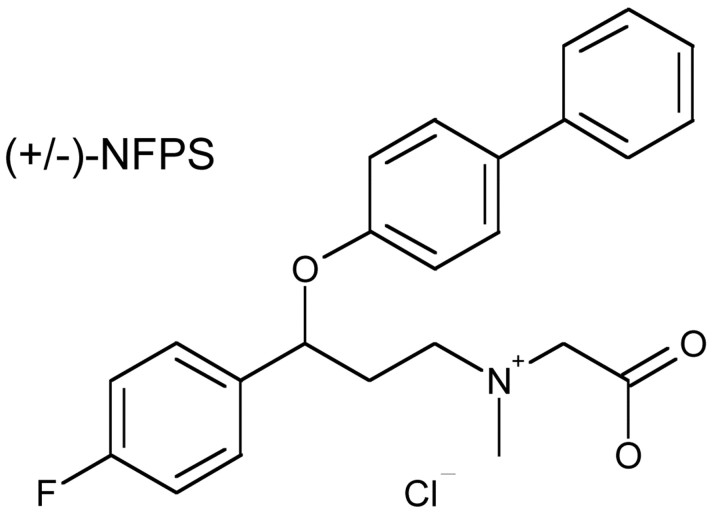
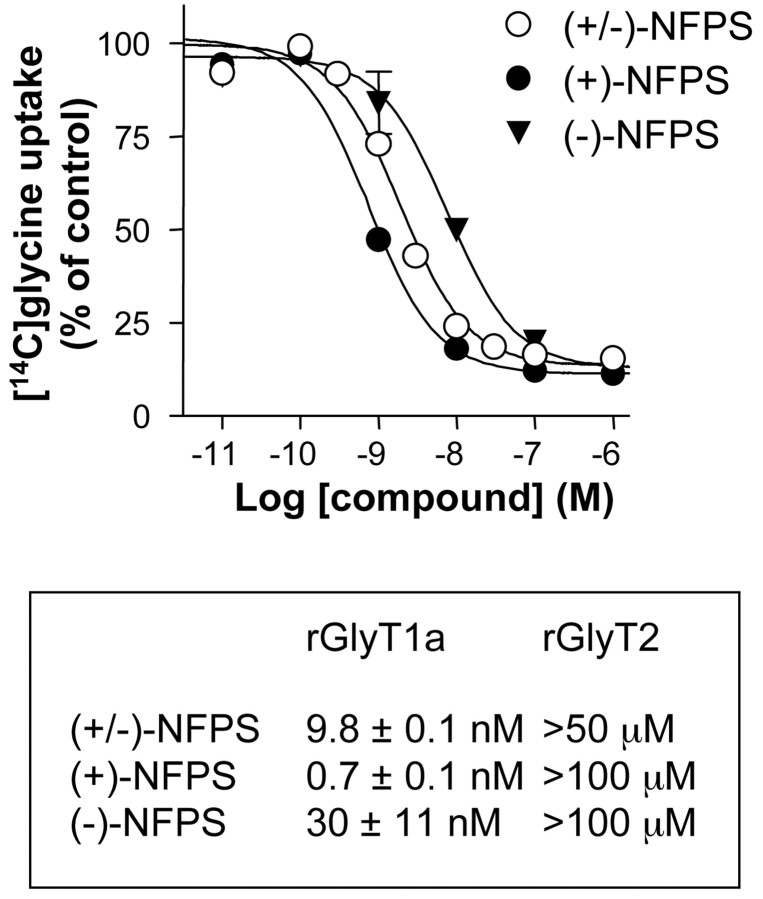
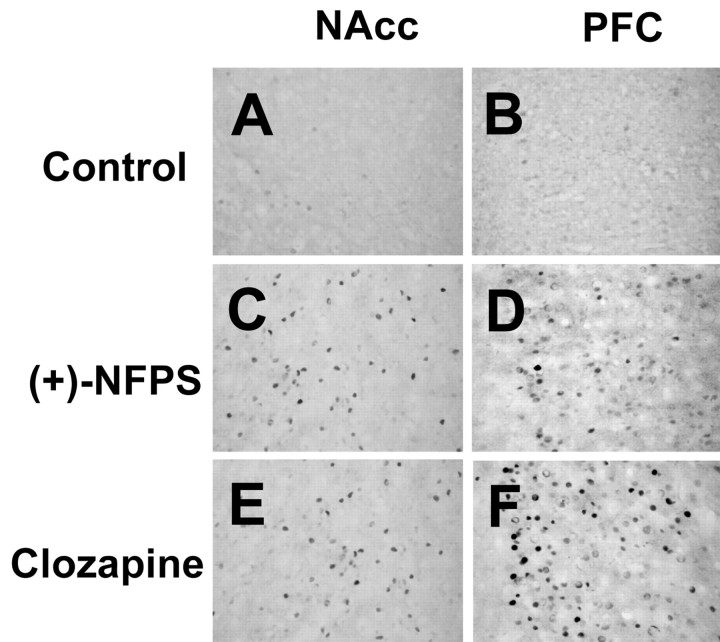
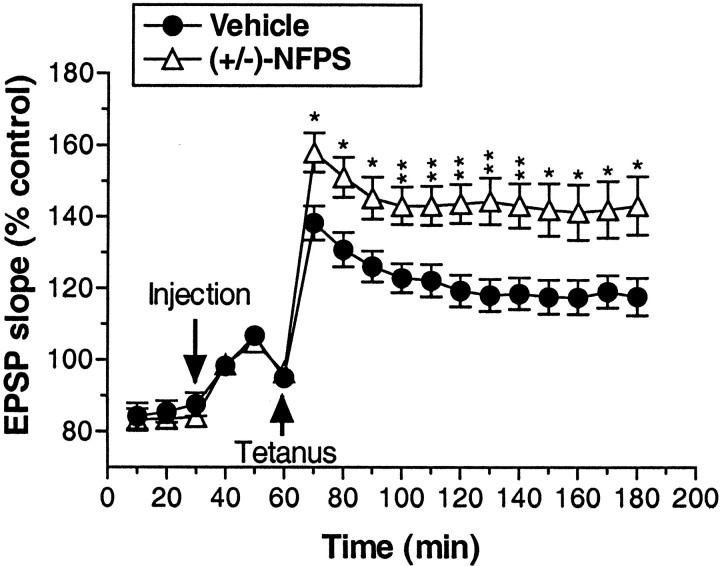
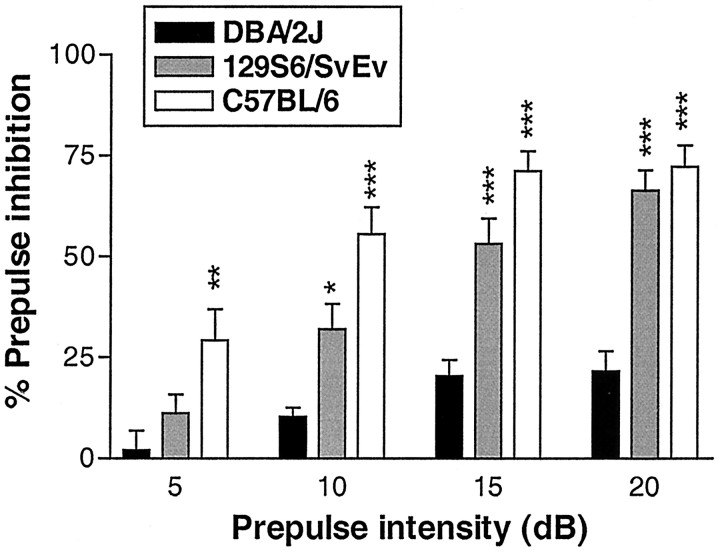
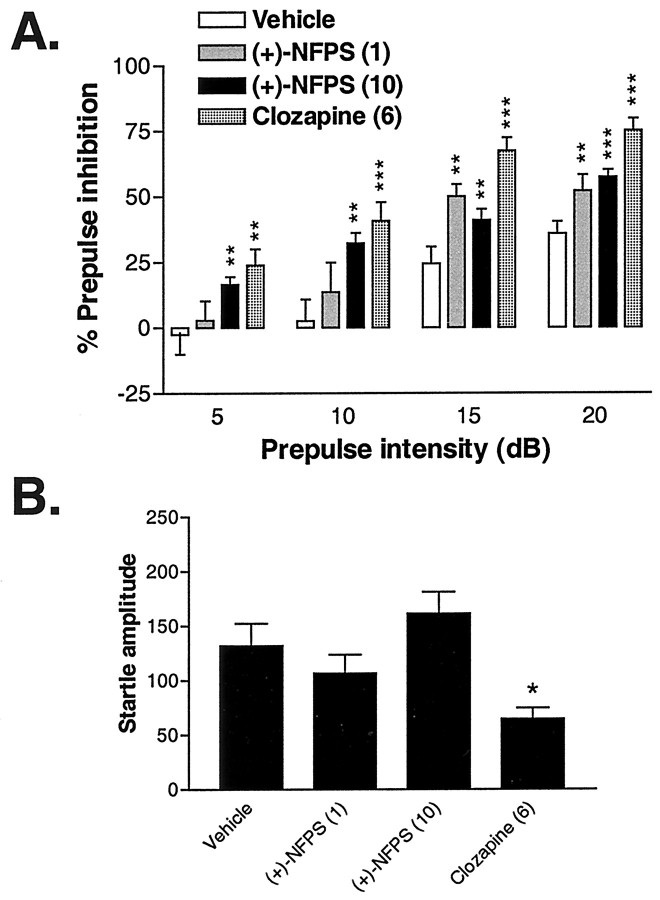
Glycine acts as a necessary coagonist for glutamate at the NMDA receptor (NMDAR) complex by binding to the strychnine-insensitive glycine-B binding site on the NR1 subunit. The fact that glycine is normally found in the brain and spinal cord at concentrations that exceed those required to saturate this site has led to the speculation that glycine normally saturates NMDAR-containing synapses in vivo. However, additional lines of evidence suggest that synaptic glycine may be efficiently regulated in synaptic areas by the glycine transporter type 1 (GlyT1). The recent description of a potent and selective GlyT1 inhibitor (N-[3-(4'-fluorophenyl)-3-(4'-phenylphenoxy)propyl]sarcosine [NFPS]) provides a tool for evaluation of the hypothesis that inhibition of GlyT1 may increase synaptic glycine and thereby potentiate NMDAR function in vivo. In the present study, we found that (+)-NFPS demonstrated >10-fold greater activity in an in vitro functional glycine reuptake assay relative to the racemic compound. In vivo, (+/-)-NFPS significantly enhanced long-term potentiation in the hippocampal dentate gyrus induced by high-frequency electrical stimulation of the afferent perforant pathway. Furthermore, (+)-NFPS induced a pattern of c-Fos immunoreactivity comparable with the atypical antipsychotic clozapine and enhanced prepulse inhibition of the acoustic startle response in DBA/2J mice, a strain with low basal levels of prepulse inhibition. Collectively, these data suggest that selective inhibition of GlyT1 can enhance NMDAR-sensitive activity in vivo and also support the idea that GlyT1 may represent a novel target for developing therapeutics to treat disorders associated with NMDAR hypofunction.
Figures
References
-
- Abraham WC, Mason SE ( 1988) Effects of the NMDA receptor/channel antagonist CPP and MK801 on hippocampal field potentials and long-term potentiation in anesthetized rats. Brain Res 462: 40-46. - PubMed
-
- Arvanov VL, Liang X, Schwartz J, Grossman S, Wang RY ( 1997) Clozapine and haloperidol modulate N-methyl-d-aspartate- and non-N-methyl-d-aspartate receptor-mediated neurotransmission in rat prefrontal cortical neurons in vitro J Pharmacol Exp Ther 283: 226-234. - PubMed
-
- Atkinson BN, Bell SC, De Vivo M, Kowalski LR, Sechner SM, Ognyanov VI, Tham C-S, Tsai C, Jia J, Ashton D, Klitenick MA ( 2001) ALX 5407: a potent, selective inhibitor of the hGlyT1 glycine transporter. Mol Pharmacol 60: 1414-1420. - PubMed
-
- Berger AJ, Dieudonne S, Ascher P ( 1998) Glycine uptake governs glycine site occupancy at NMDA receptors of excitatory synapses. J Neurophysiol 80: 3336-3340. - PubMed
MeSH terms
Substances
LinkOut - more resources
Full Text Sources
Other Literature Sources
