


Cold Modalities With Different Thermodynamic Properties Produce Different Surface and Intramuscular Temperatures
- PMID: 12937469
- PMCID: PMC155508
Cold Modalities With Different Thermodynamic Properties Produce Different Surface and Intramuscular Temperatures
Abstract
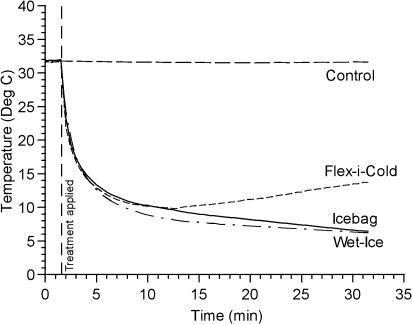
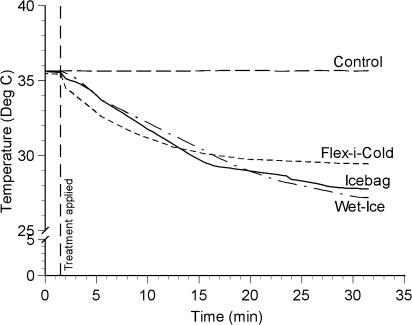
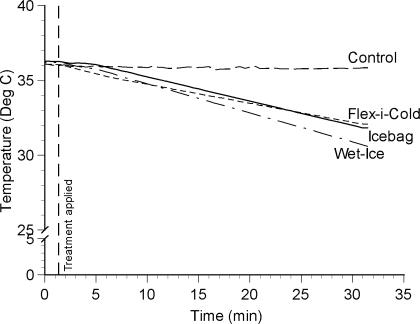
OBJECTIVE: To compare surface cooling and deep cooling produced by 3 common forms of cryotherapy. DESIGN AND SETTING: We used a 3 x 4 x 4 factorial with repeated measures on measurement depth and treatment. Independent variables were measurement depth (surface, fat + 1 cm, and fat + 2 cm), treatment (ice bag, Wet-Ice, Flex-i-Cold, and control), and treatment order (first, second, third, and fourth). The lowest temperature recorded was the dependent variable. The treatment order was counterbalanced using a Latin square. Data were analyzed with a repeated-measures analysis of variance. SUBJECTS: Fifteen collegiate volunteers who were free of lower extremity abnormalities. MEASUREMENTS: Thigh skin and thigh intramuscular temperatures (1- and 2-cm subadipose) were measured at 30-second intervals both before and during the 30-minute treatments using fine-wire implantable and surface thermocouples. The coldest recorded temperatures were analyzed. RESULTS: Statistical differences were observed for the depth-by-treatment interaction as well as for the depth and treatment main effects. During cold treatments, superficial depths were colder than deeper depths, and all cold treatments were colder than controls at all depths. For the interaction effect at both the skin surface and at 1-cm subadipose, the ice-bag and Wet-Ice treatments were colder than the Flex-i-Cold treatment. For the interaction at 2-cm subadipose, the cold treatments did not differ from each other. Order of treatments did not produce a significant effect. CONCLUSIONS: During a 30-minute cryotherapy treatment, modalities that undergo a phase change caused lower skin and 1-cm intramuscular temperatures than cold modalities that do not possess these properties. These differences were not seen at 2-cm subadipose but may become apparent with longer treatments.
Figures
References
-
- Merrick MA, Rankin JM, Andres FA, Hinman CL. A preliminary examination of cryotherapy and secondary injury in skeletal muscle. Med Sci Sports Exerc. 1999;31:1516–1520. - PubMed
-
- Knight KL. Cryotherapy in Sports Injury Management. Champaign, IL: Human Kinetics; 1995.
-
- Knight KL. Effects of hypothermia on inflammation and swelling. Athl Train J Natl Athl Train Assoc. 1976;11:7–10.
-
- Guyton AC. Textbook of Medical Physiology. 8th ed. Philadelphia, PA: WB Saunders; 1991.
LinkOut - more resources
Full Text Sources
Other Literature Sources